Address
Nanlang Industrial Zone, Xingtan Town, Shunde District, Foshan, Guangdong, China
Work Hours
Mon–Fri, 9:00 AM – 6:00 PM (CST/UTC+8). We aim to respond to all inquiries within 48 hours.

Address
Nanlang Industrial Zone, Xingtan Town, Shunde District, Foshan, Guangdong, China
Work Hours
Mon–Fri, 9:00 AM – 6:00 PM (CST/UTC+8). We aim to respond to all inquiries within 48 hours.

A single misunderstood specification can ruin a production run. I once saw a buyer assume “3%” meant the same thing as “30%” on a shrinkage tolerance line. The result was a batch of shirts that fit like toddlers’ hand-me-downs after one home wash.
Spec sheets are rarely written for clarity. They are packed with test codes, tolerance ranges, and material abbreviations that look like they were translated through three different dialects. If you do not know what to look for, you are essentially guessing with other people’s money.
This guide cuts through the noise. We will walk through lab reports, decode the numbers that actually matter, and show you how to match paper specifications to the garments you are trying to build. I will share the trial-and-error lessons I picked up cutting fabric by hand and managing bulk orders, so you can avoid the same headaches.
Specifications are not just paperwork. They are the contract between your design intent and the factory floor. A two percent miscalculation in shrinkage tolerance on a ten thousand unit order can easily push rework costs past fifty thousand dollars. That is not a typo.
When suppliers and buyers speak the same technical language, production moves smoothly. Specs translate raw textile capabilities into purchasable, predictable products. They protect your brand from quality failures that show up as pilling cuffs or faded logos after the first cycle.
Legally, these documents matter just as much. They provide the evidence you need if a fabric fails to meet agreed standards. Most importantly, they prevent the communication breakdowns that cause the majority of factory delays.
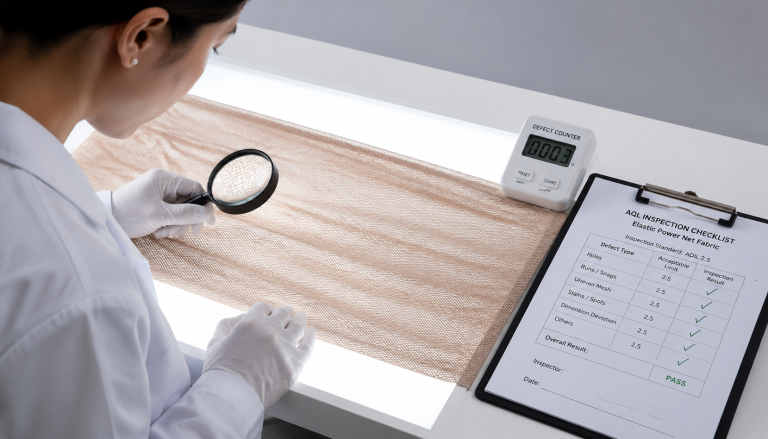
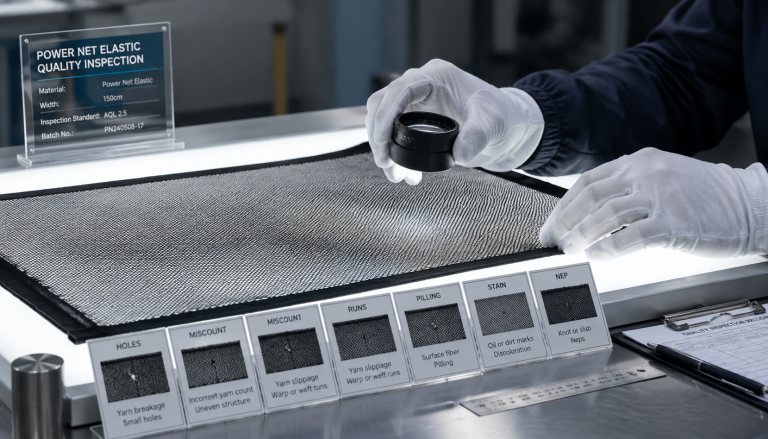
Before you ship anything, cross-reference your incoming goods against a Quality Control Checklist for Shipment. It keeps your verification process tight and stops vague assumptions from becoming finished goods.
Grams per square meter is the industry standard for a reason. It removes guesswork about density. A fabric labeled 150 GSM will feel noticeably different from one at 90 GSM, regardless of fiber type. Weight dictates drape, warmth, and how much the material will hold up during repetitive washing.
New buyers often get tripped up by imperial measurements. One ounce per square yard equals roughly 33.91 GSM. I still keep a conversion card taped to my cutting table because mixing up the two during pattern grading is a quick way to ruin seam allowances.
Weight alone does not tell the whole story. A 200 GSM single jersey drapes completely differently than a 200 GSM ponte knit. Construction and yarn twist do the heavy lifting here. Always look at weight alongside construction type.
For a deeper breakdown of how weight influences hand feel and cost, check out our Understanding Fabric Weight and GSM guide. It walks through the practical differences you will notice when you actually hold the material.
| 30-70 GSM | Sheer overlays, linings, lightweight scarves |
| 70-110 GSM | Summer shirts, light dresses, underlayers |
| 110-150 GSM | Standard tees, medium dresses, casual shirting |
| 150-400+ GSM | Denim, canvas, heavy fleece, outerwear shells |
The first fiber listed is always the highest percentage. Anything above five percent must be declared. If a blend shows Polyester 65% and Cotton 35%, the polyester dictates the primary behavior. That means faster drying, lower shrinkage, and a tendency to wrinkle less than pure cotton.
Abbreviations on spec sheets look like airport codes until you memorize them. PES is polyester. CO is cotton. PA stands for polyamide, which is nylon. EL is elastane or spandex. VI is viscose, MD is modal, and LY is lyocell. I write these out on my initial sketches because mixing up PA and PES during dye lot selection has cost me hours of rework.
Elastane percentages change everything. Two percent gives you just enough recovery for a relaxed fit. Jump to twenty percent or higher, and you are looking at compression gear that fights back against the body. The ratio matters for washing behavior too. High synthetic blends tolerate heat better, while heavy cotton loads need cooler cycles to prevent fiber breakdown.
Trademarked fibers like Lycra, TENCEL, or Coolmax signal proprietary finishes or specific performance traits. They are not just marketing. They usually mean consistent quality control from the fiber mill down to the yarn spinners. When comparing blends, read our Cotton vs Polyester vs Blends breakdown to see how fiber ratios shift performance in real garments.
Construction determines how a fabric moves, tears, and wears over time. Plain weave is the most economical and structurally sound for shirts and linings. Twill creates that diagonal rib you see in denim, making it more flexible and resistant to showing dirt. Satin floats create smoothness but sacrifice tear strength. Jacquard adds complexity but increases production cost significantly.
Knit terminology works differently. Single jersey is lightweight but curls at the edges, which can frustrate pattern cutters. Rib knit stretches widthwise and holds shape, making it ideal for cuffs and neckbands. Interlock is stable on both sides and resists rolling. Ponte is a double knit that feels firm and drapes heavily.
Thread count and PPI measure density in wovens, but higher numbers do not always mean better quality. Sometimes tight thread counts just mean thinner yarns. In knitting, gauge matters more. Sixteen gauge uses coarse needles for bulky sweaters. Twenty-eight gauge produces fine, lightweight fabrics. I always check gauge before committing to a knit pattern because needle size affects how stitches lock together.
If you are navigating the basics, the Understanding Knit vs Woven Fabrics page explains how construction choices impact stretch, drape, and sewing behavior. It saves time when you are grading blocks for different garment types.
Color fastness tells you how well a dye will hold up under stress. Fading, bleeding, and rubbing transfer are the usual suspects. A garment that looks perfect off the rack can become a shade mismatch disaster after three washes if the fastness ratings are low.
Crocking measures rubbing resistance. Dry crocking grades of four or five are excellent. Wet crocking usually needs at least a three for dark colors to prevent dye transfer onto skin or lighter garments. Washing fastness tracks color change and staining after repeated cycles. Light fastness uses a blue wool scale from one to eight. Higher numbers mean better UV resistance, which matters for outdoor apparel or home decor.
Perspiration fastness is critical for activewear. Body chemistry varies wildly, and acidic or alkaline sweat can break down dyes quickly. Chlorine resistance matters for swimwear. Standard polyester holds color better than cationic dyeable polyester in pool environments. I learned this the hard way when a batch of rash guards turned pink after a season of resort use.
Maintaining consistent dye lots across large runs requires careful tracking. Visit our Color Matching in Textile Production guide to see how we align lab dips, pilot batches, and bulk rolls to prevent shade drift.
Shrinkage is where most first-time buyers lose money. Standard allowances sit between three and five percent for untreated fabrics. Pre-washed or garment-dyed materials should show zero to two percent. Untreated naturals can easily hit five to eight percent.
Warp and weft shrink differently. Lengthwise shrinkage affects hem placement. Widthwise shrinkage ruins armhole ease. Both must be accounted for during pattern grading. I once graded a blouse using only warp tolerance and ended up with sleeves that pinched at the shoulders after the first wash. Pattern makers must overcut based on expected shrinkage, not guess.
Test methods vary. ASTM D2359 follows a standard wash cycle. ISO 6330 is the international benchmark. Some labs run five or ten cycles to simulate real home use. Sanforization treats fabric to lock fibers and push shrinkage under one percent. Recovery also matters. Some knits shrink temporarily then bounce back. Residual shrinkage is the permanent loss that stays.
For a technical breakdown of how shrinkage tests are run and how to compensate in grading, read Fabric Shrinkage Explained. It covers the mechanical reasons fibers contract and how to build tolerance into your block patterns.
Case Study: The Denim Shrinkage Compromise
Two years ago, we developed a vintage-stretch denim line. The designer wanted raw, unsanforized fabric for that traditional shrink-to-fit behavior. Factories warned of eight percent shrinkage. Buyers wanted consistent sizing. I ran three test batches. The first shrunk unevenly across warp and weft. The second used a resin finish that stiffened the hand feel. The third balanced a light enzyme wash with partial sanforization, landing at four percent residual shrinkage with maintained stretch. We documented the tolerance range, adjusted the grading rules, and added a care label warning. It was messy, but the compromise saved the collection from fit complaints.
Pilling happens when short fibers work loose, tangle, and ball up against mechanical friction. It is not just a cosmetic issue. It signals fiber breakdown. The Martindale method rubs fabric in circles until pills appear. Ratings run from one to five. Five means virtually no pilling. One means severe balling after minimal use.
Upholstery demands thirty thousand plus rubs. Workwear sits around ten thousand. Casual apparel usually requires five thousand. Performance sportswear needs ten thousand plus, often with anti-pilling chemical finishes. Acrylic pills aggressively. Polyester performs better when spun from high-tenacity yarn. Wool pills initially but sheds naturally over time.
When pilling becomes a customer complaint, check the yarn twist level first. Loose twists release fibers faster. Switch to a tighter twist or request a siliconized anti-pill finish. I keep a rubbing test kit at my desk because visual inspection alone misses early fiber fatigue.
For a complete breakdown of testing methods and finish options, see the Fabric Pilling Resistance Guide. It includes troubleshooting steps for when lab results do not match real-world wear.
Tensile strength measures the force required to break a fabric panel. Results appear in Newtons or pounds-force. Grab tests use a narrower grip and often show lower numbers than strip tests, which pull the full width. Both are valid, but you must compare matching methods.
Tear strength matters for denim, bags, and workwear. It measures how much force propagates an existing cut. Seam strength tracks how well stitched joins hold under stress. Stitch type, thread weight, and needle size all influence the result. Bursting strength applies to knits. It measures pressure until rupture, reported in PSI or kilopascals.
Activewear needs moderate tensile strength paired with high elasticity. Workwear demands high tear and seam resistance. Linings can tolerate lower strength. Elongation and recovery percentages tell you how much a fabric stretches and how well it returns to shape. I always cross-reference burst strength with elongation for compression gear because overstretching ruins recovery.
Learn how these tests are calibrated and what numbers actually mean for your garments in Fabric Strength Testing Explained. It covers equipment setup, common grading mistakes, and how to interpret low scores.
Test methods dictate results. Measuring the same property with different standards produces different numbers. Always compare apples to apples. ISO covers global markets. ASTM dominates the US. BS standards appear in UK and Commonwealth regions. DIN governs European manufacturing.
ISO 6330 aligns closely with ASTM D2359 for washing. ISO 105 matches AATCC standards for color fastness. Lab reports list the method, equipment, test conditions, and final values. Validity usually lasts six to twelve months. New dye lots or yarn sources require fresh testing.
I keep a conversion sheet for common standards because switching suppliers often means switching test codes. Misaligned methods cause false pass/fail readings. Always verify the lab’s calibration date and accreditation before accepting results.
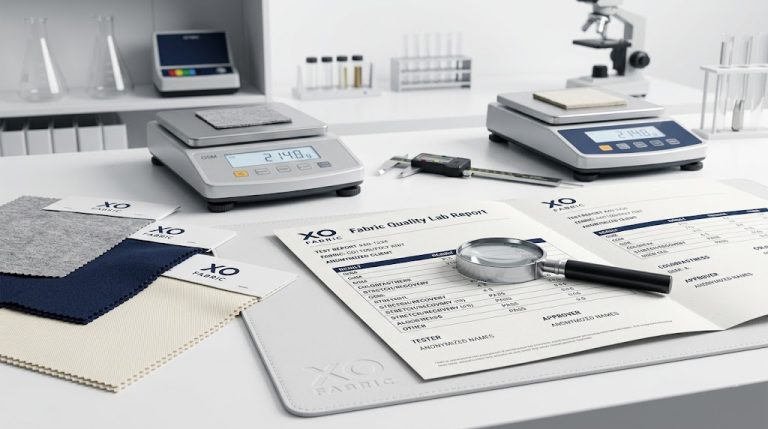
For a step-by-step breakdown of lab report layouts, visit How to Read Fabric Lab Reports. It explains how to spot missing variables, outdated timestamps, and inconsistent grading scales.
Start with the header. Supplier name, fabric designation, article number, and date should be clearly visible. Move to the physical properties table. Weight, width, composition, and construction sit here. Tolerance ranges follow, like GSM plus or minus five percent or width plus or minus two centimeters.
Performance results come next. Color fastness grades, shrinkage percentages, and strength values should include the exact test method used. Care instructions appear as standard symbols. Fine print covers minimum order quantities, lead times, and sampling requirements. Watch for red flags. Missing test methods, vague descriptions, or reports older than a year should trigger a request for updated data.
Ordering requirements shift based on spec complexity. Read Understanding MOQ and Strategies to see how tolerance ranges and custom finishes impact bulk commitments.
Activewear demands moisture-wicking fibers, four-way stretch with at least fifteen percent elongation, quick-dry behavior, and high pilling resistance. Workwear requires heavy tensile and tear strength, color fastness to industrial laundering, and sometimes chemical or flame resistance. Children’s clothing needs Oeko-Tex certification, low shrinkage, saliva-fast dyes, and a soft hand feel.
Formal wear prioritizes drape, color depth, and minimal pilling. Outdoor technical fabrics require water repellency, UV protection, and temperature regulation layers. I always map the garment’s lifecycle before locking specs. A trail running jacket faces different stressors than a boardroom blazer.
Case Study: Technical Outerwear Decision Process
We developed a softshell line for alpine conditions. The initial spec called for 350 GSM fabric with a DWR coating and ten thousand rub pilling rating. Factory samples failed breathability tests. I requested three alternatives. The first dropped GSM to 280 but added a porous membrane. Breathability improved, but wind resistance dropped. The second kept 350 GSM but switched to a brushed interior, sacrificing packability. The third used a hybrid weave at 310 GSM with a laminated barrier. It passed wind and breathability tests while meeting pilling standards. We accepted a two-week delay for the laminated option because the performance trade-off justified it. Compromising on weight saved the garment’s function.
For sportswear-specific requirements, explore Choosing Fabrics for Sportswear. It breaks down stretch recovery, moisture management, and abrasion needs by activity type.
Knit fabrics range widely. T-shirt jerseys sit between 120 and 160 GSM. Polo shirts run 160 to 200. Sweatshirt fleece lands at 280 to 350. Swimwear requires 190 to 210 for chlorine resistance and stretch control. Athletic compression needs 230 to 280 for firm support.
Woven fabrics follow different ranges. Shirting runs 80 to 120. Suiting sits at 200 to 300. Denim spans 300 to 400. Canvas reaches 300 to 500. Linings stay light at 50 to 90. Specialty tech fleece covers 180 to 300. Softshell spans 250 to 350. Hardshell membranes run 100 to 150.
Climate dictates adjustments. Lighter GSM breathes better in heat. Heavier weights trap warmth and block wind. I always request a mid-range sample first, then scale up or down based on drape tests. For a complete weight breakdown, revisit Understanding Fabric Weight and GSM.
| Knit | 120-350 GSM | Teens, polos, fleece, compression |
| Woven | 50-500 GSM | Shirting, suiting, denim, canvas |
| Specialty | 100-350 GSM | Softshell, hardshell, tech fleece |
Minimum order quantities shift with complexity. Basic solid colors usually start at 300 to 500 kilograms. Custom dyes push 500 to 1,000 kg. Specialty weaves require 500 to 1,500 kg. Performance coatings often demand 1,000 to 2,000 kg.
Below-MOQ options exist but carry trade-offs. Stock services offer flexibility. Combining orders with other buyers reduces costs. Surcharges apply for partial runs. Fabric width affects yield. Wider rolls mean more usable square meters per linear meter. Sampling runs use lower quantities. Bulk orders hit full MOQ thresholds.
Custom specs add two to four weeks to standard lead times. I always build buffer weeks into production schedules when dye matches or finishes require lab validation. For a complete breakdown of ordering thresholds and planning strategies, read Understanding MOQ and Strategies.
Confusing weight with thickness is the most frequent error. A dense 150 GSM fabric feels heavier than a loose 180 GSM weave. Ignoring tolerances causes grading failures. A plus or minus five percent GSM range on a 200 GSM fabric means acceptable rolls sit between 190 and 210.
Forgetting care requirements leads to customer complaints. Specs rarely include washing symbols. Comparing different test methods produces false conclusions. ASTM and ISO washing cycles yield different shrinkage numbers. Not specifying end-use conditions leaves factories guessing. Factory wash cycles differ from home laundering.
Assuming one test covers everything is risky. Comprehensive specs require color, strength, shrinkage, and abrasion data. Skipping physical samples is dangerous. Paper specs cannot convey hand feel, drape, or true color depth. Always request cutting samples before approving bulk rolls.
For step-by-step guidance on securing physical tests, visit How to Request Fabric Samples. It covers sample types, turnaround times, and how to document physical findings.
Ask for comprehensive spec sheets. Vague descriptions lead to mismatched expectations. Request third-party lab reports for independent verification. Physical samples validate paper data. Discuss tolerances openly before placing orders. Negotiate acceptable ranges that match your grading rules.
Require pre-production approval. Sign off on actual production fabric before full runs begin. Build specifications into purchase contracts. Include test methods, tolerance ranges, and remedy clauses. Clear documentation protects both sides when variations occur.
When you need consistent technical data and expert consultation, partner with a mill that prioritizes transparency. Learn more about our XO Fabric Quality Control Process to see how we align testing, documentation, and production standards.
Spec sheets are living documents. They change with new yarn sources, dye batches, and finish applications. I still keep a physical copy of my first approved spec next to my digital archive because paper does not auto-update. Check tolerances before cutting. Cross-reference test methods before approving. And never skip the actual fabric in your hands.
The numbers guide you. Your judgment closes the gap. When you know what to look for, the acronyms stop looking like code and start looking like instructions.