Address
Nanlang Industrial Zone, Xingtan Town, Shunde District, Foshan, Guangdong, China
Work Hours
Mon–Fri, 9:00 AM – 6:00 PM (CST/UTC+8). We aim to respond to all inquiries within 48 hours.

Address
Nanlang Industrial Zone, Xingtan Town, Shunde District, Foshan, Guangdong, China
Work Hours
Mon–Fri, 9:00 AM – 6:00 PM (CST/UTC+8). We aim to respond to all inquiries within 48 hours.
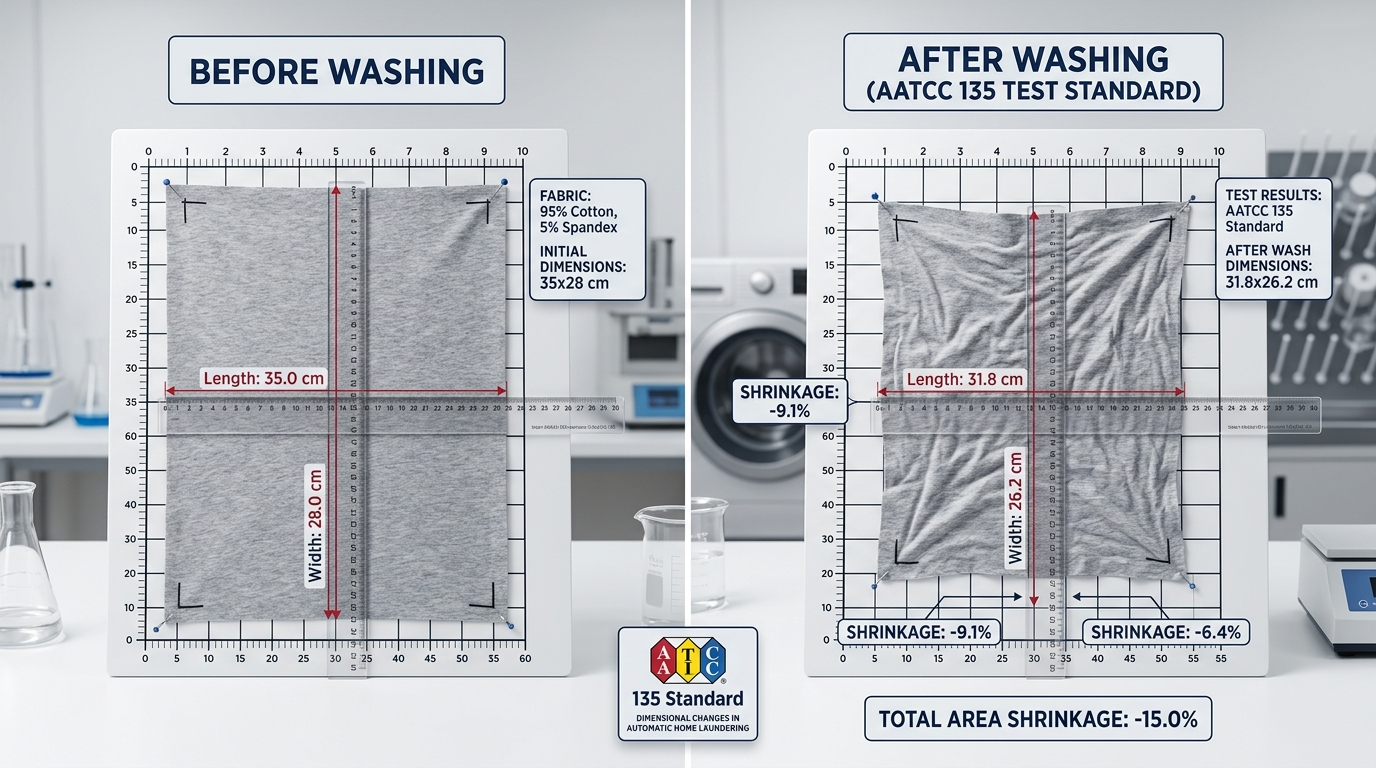
You’ve sewn a beautiful garment, then after the first wash, it’s two sizes smaller. Fabric shrinkage is the invisible enemy of apparel quality.
Many new brands ignore shrinkage specifications, leading to customer complaints and returns. Uncontrolled shrinkage can ruin garment fit, damage brand reputation, and cost thousands in returns. This guide explains fabric shrinkage — its causes, testing methods, and prevention — and how XO Fabric controls shrinkage for consistent quality.
Shrinkage means fabric dimensions change after washing or drying, usually a reduction. We express it as a percentage: 3% shrinkage means the fabric shortens by 3% after a standard wash cycle.
Direction matters. Warp shrinkage (lengthwise) and weft shrinkage (crosswise) often behave differently. A knit might shrink 4% in the warp but 7% in the weft. That asymmetry can twist a garment’s silhouette if you don’t plan for it.
There are three main types. Relaxation shrinkage happens when manufacturing tensions release during the first wash — this is the most common. Consolidation shrinkage comes from mechanical agitation in the wash cycle, where fibers pack tighter. Felting shrinkage is wool-specific, where scales on fibers interlock and contract irreversibly.
Our focus is controlling relaxation and consolidation shrinkage through process controls. For context on how fabric weight interacts with dimensional stability, heavier fabrics may shrink more. Read our Fabric Weight guide for more context.
Tolerance varies by garment type. Woven shirting typically needs under 2% shrinkage to maintain collar fit. Knit t-shirts can handle under 5% warp and under 8% weft. We guarantee shrinkage within industry standards like AATCC 135.
| Garment Type | Acceptable Warp Shrinkage | Acceptable Weft Shrinkage |
| Woven shirting | <2% | <2% |
| Knit t-shirts | <5% | <8% |
| Heavyweight hoodies | <6% | <10% |
Fiber properties drive baseline behavior. Natural fibers like cotton and wool absorb water, causing fibers to swell and the fabric structure to contract. Cotton can shrink 5-8% if untreated. Polyester, being hydrophobic, typically stays under 2%. Blends fall somewhere in between, depending on the ratio.
Manufacturing tensions store energy in the fabric. Knitting or weaving stretches yarn under tension. The first wash releases that tension, and the fabric contracts to its relaxed state. We control tension during knitting to minimize this effect, but it’s never zero.
Finishing processes matter. Compressive shrinking mechanically pre-shrinks fabric by forcing it through a shrinking range. Heat setting stabilizes synthetics. For cotton knits, we run in-house pre-shrinking to lock in dimensions before the fabric leaves our facility.
Washing and drying methods at home amplify or reduce shrinkage. Hot water increases fiber swelling. High-heat tumble drying accelerates contraction. That’s why we test using AATCC 135, which simulates typical home laundering. Fiber content directly impacts shrinkage. Read our Cotton vs. Polyester comparison guide for deeper insight.
If a garment shrinks more than expected, check these factors first:
Sometimes the fix is simple: adjust your care label. Other times, you need to re-source fabric with tighter shrinkage control. I’ve seen brands panic over a 6% shrinkage result, only to realize their target market hand-washes everything. Know your customer.
Lab testing follows standardized methods. AATCC 135 covers home laundering shrinkage for textiles. ISO 5077 is the international equivalent. We run in-house AATCC 135 testing on every dyelot to ensure consistency.
You can run a DIY test with basic tools. Cut a 50x50cm fabric swatch. Mark a 40x40cm square with a permanent marker. Wash at 40°C, tumble dry on medium. Measure the marked square again and calculate the percentage change. Pro tip: test three swatches and average the results to account for fabric variation.
Interpreting results requires context. Warp and weft shrinkage usually differ. Acceptable thresholds vary by garment type and brand standards. For cotton knits, we aim for under 5% warp and under 8% weft. If you’re reviewing lab data, learn how to interpret shrinkage test data in our Read Fabric Lab Report guide. Shrinkage is one of many fabric tests. Read our Fabric Testing Standards guide for the full picture.
When to reject fabric? If shrinkage exceeds 5% for woven shirting or 8% for knit t-shirts, reconsider the batch. Also watch for inconsistent shrinkage across the fabric width — that signals uneven finishing.
A client came to us with a recurring issue: their 180 GSM cotton jersey t-shirts were twisting at the side seams after wash. Initial tests showed 7% warp shrinkage but 12% weft. That asymmetry was pulling the garment.
We traced it to two factors. First, the fabric hadn’t been pre-shrunk. Second, the knitting tension was slightly higher in the weft direction, storing more energy. The fix wasn’t just pre-shrinking — we adjusted the knitting machine settings to balance tension, then ran a compressive shrink finish.
The decision wasn’t straightforward. Pre-shrinking adds cost and lead time. The client had to choose between absorbing the cost or risking returns. They chose quality. Post-fix, shrinkage landed at 4.2% warp and 6.8% weft. Returns dropped by 90%. Sometimes the messy middle — trial, error, compromise — is where real solutions live.
Pre-shrinking treatments are your first line of defense. Compressive shrinking mechanically compacts the fabric. Heat setting works for synthetics. Chemical anti-shrink finishes exist but can affect hand feel. For cotton knits, we pre-shrink all batches to lock in dimensions before shipment.
Fiber and blend selection sets the ceiling for shrinkage control. Polyester stays under 2%. Cotton-polyester blends reduce shrinkage versus 100% cotton. For shrinkage-sensitive garments like fitted dresses, we often recommend blends or 100% polyester. It’s a trade-off: breathability versus stability.
Garment construction techniques can compensate. Pre-wash fabric before cutting if you’re using 100% cotton without pre-shrinking. Add ease to your pattern to account for expected shrinkage. Always specify maximum acceptable shrinkage in your purchase order — don’t leave it to assumption.
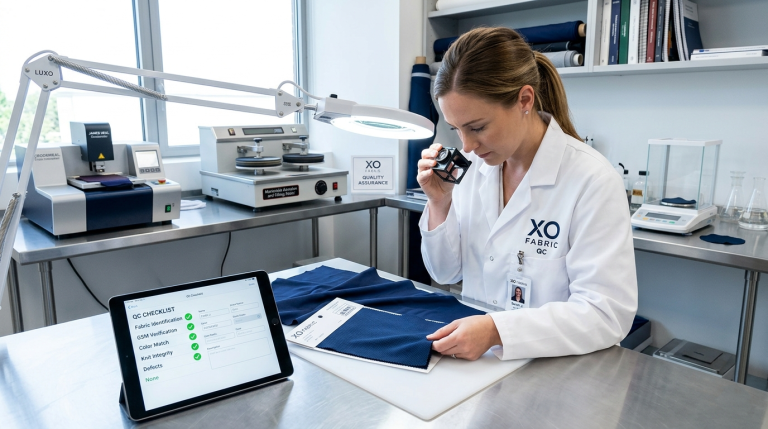
Quality control in production catches issues early. Monitor shrinkage in-process, not just at the end. We have 50+ technicians checking shrinkage on every dyelot. We provide shrinkage test reports upon request so you can verify before cutting.
| Prevention Method | Best For | Limitation |
| Compressive shrinking | Cotton knits | Adds 3-5 days to lead time |
| Heat setting | Polyester, nylon | Less effective on naturals |
| Pre-washing fabric | Small batches, samples | Not scalable for bulk |
| Pattern ease adjustment | All garments | Requires accurate shrinkage data |
One designer tested our pre-shrunk cotton jersey against an untreated sample. The difference in hand feel was subtle, but the shrinkage data was clear: 3.8% vs. 9.2%. She adjusted her entire production plan based on that one test. Small data, big impact.
Pre-shrinking capability is core to our process. We run in-house pre-shrinking for cotton knits, targeting consistent shrinkage control under 5% warp and under 8% weft. Test reports following AATCC 135 are available for every batch.
Our fiber expertise spans 20+ years handling cotton, polyester, and blends. We recommend low-shrinkage options for sensitive garments and can customize blend ratios to hit your exact shrinkage target. It’s not just about selling fabric — it’s about solving fit problems before they happen.
Quality assurance runs deep. With 50+ technicians for in-process inspection and shrinkage monitoring on every dyelot, we catch variation early. Our 2,000㎡ finished goods warehouse means quick delivery without sacrificing QC checks.
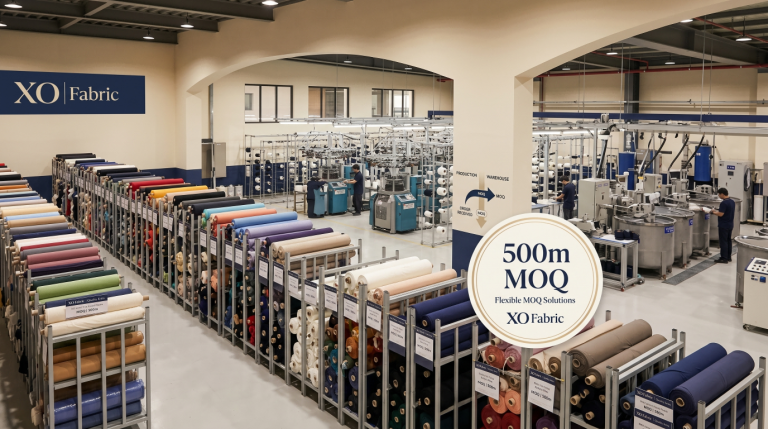
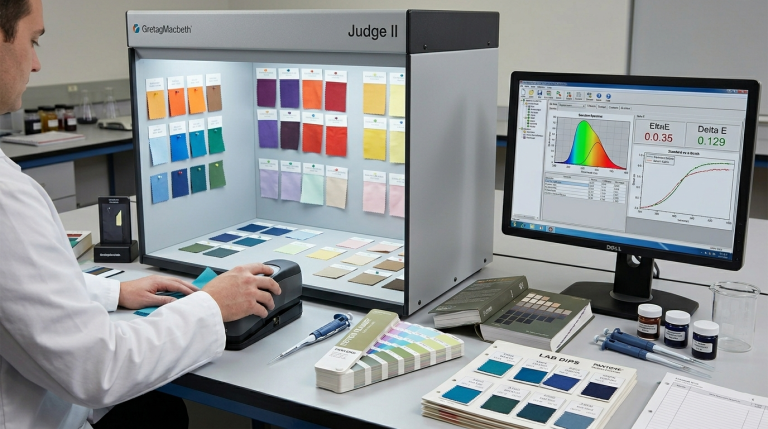
We keep MOQs accessible: 500m for most knits. Our sample program lets you test shrinkage before bulk ordering. Lab dip service ensures color accuracy alongside dimensional stability. Browse our Knit Base Fabrics collection with controlled shrinkage. Ready to source shrinkage-controlled fabrics? Request Samples to discuss your needs with our team.
A streetwear brand wanted a heavyweight 320 GSM cotton fleece for hoodies. Initial tests showed 8.5% warp shrinkage — too high for their oversized fit spec. They faced three choices: accept the shrinkage and size up patterns, switch to a cotton-poly blend, or invest in additional pre-shrinking.
We ran trials for each option. Sizing up patterns risked inconsistent grading across sizes. Blends changed the hand feel they loved. Additional pre-shrinking added cost but preserved the 100% cotton spec. After two rounds of sampling and cost modeling, they chose the pre-shrinking route.
The compromise? A slightly longer lead time and a 7% price increase. But the final shrinkage landed at 4.9% warp, 7.1% weft — within spec. The collection launched with zero shrinkage-related returns. Real decisions aren’t clean. They involve trade-offs, data, and sometimes gut feeling. That’s where experience matters.
Fabric shrinkage is a critical quality parameter that impacts garment fit and customer satisfaction. Understanding its causes and prevention methods helps you make informed fabric choices. At XO Fabric, we pre-shrink cotton knits and test every dyelot for shrinkage. Our 20+ years of experience ensure consistent quality. Contact us today to request fabrics with controlled shrinkage and receive test reports for your quality assurance.