Address
Nanlang Industrial Zone, Xingtan Town, Shunde District, Foshan, Guangdong, China
Work Hours
Mon–Fri, 9:00 AM – 6:00 PM (CST/UTC+8). We aim to respond to all inquiries within 48 hours.

Address
Nanlang Industrial Zone, Xingtan Town, Shunde District, Foshan, Guangdong, China
Work Hours
Mon–Fri, 9:00 AM – 6:00 PM (CST/UTC+8). We aim to respond to all inquiries within 48 hours.
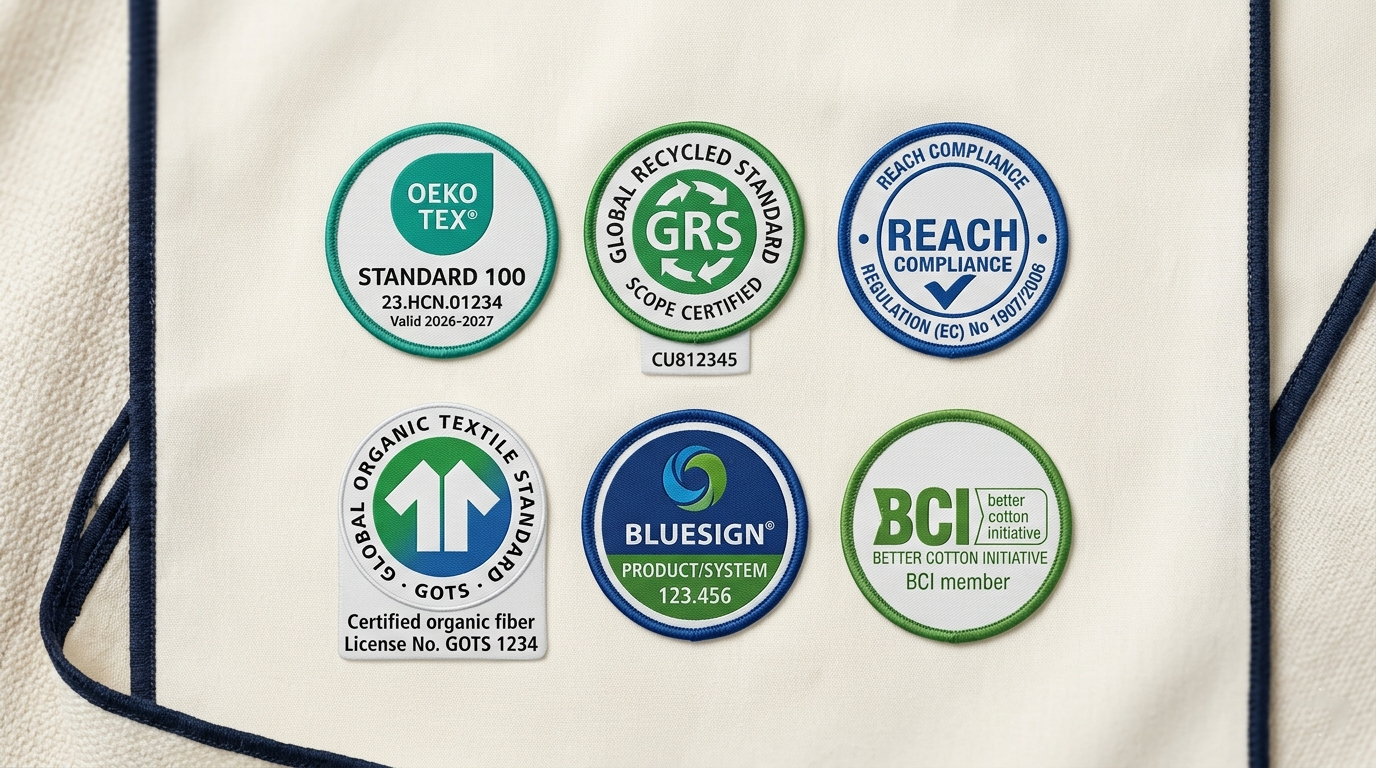
In 2026, fabric certifications are no longer optional. They are a baseline requirement for brands selling into major retail markets. Regulatory pressure has intensified globally. The EU updated its textile strategy. US states are tightening chemical restrictions. Marketplaces like Amazon and Zalando now demand documented compliance.
Meanwhile, consumers actually look for labels when they shop. They want proof of safety and sustainability. Without proper credentials, your products can get blocked at customs. Retailers will reject them. Watchdog organizations might flag your brand. That costs time, money, and reputation.
This guide breaks down every major fabric certification you need to know. You will learn what each one covers. We will cover how to verify supplier credentials. I will also show you how our certification portfolio supports your compliance needs. Let us dive straight into the details.
Oeko-Tex Standard 100 remains one of the world best-known labels for textiles. It focuses purely on testing for harmful substances. An independent system administers the process through the International Oeko-Tex Association. They base their operations in Switzerland and Germany.
The standard covers raw materials, intermediate goods, and end products. It applies at every processing stage. There are four distinct product classes. Class I targets baby textiles. Class II covers direct skin contact items. Class III addresses garments with no direct skin contact. Class IV handles decorative and furnishing fabrics.
| Class I | Baby products, saliva tested |
| Class II | Direct skin contact, sweat tested |
| Class III | Outerwear, no direct contact |
| Class IV | Decorative fabrics, furnishings |
What exactly does it test for? The panel runs through pH values, formaldehyde, and heavy metals. Lead, cadmium, and chromium sit at the top of the list. They also check pesticides and aromatic amines from azo dyes. Allergenic dyes, chlorinated phenols, and organotin compounds get flagged. Phthalates make the restricted list too.
Colorfastness evaluations matter just as much. They test resistance to sweat, rubbing, and saliva for baby items. The testing follows strict limit values. Those limits often exceed national legislation. Certificates stay valid for only one year. Annual re-testing is mandatory.
Brands need this certification for practical reasons. Many European and US retailers require it as a sourcing prerequisite. The consumer-facing label builds trust at checkout. Class I certification holds special value for baby apparel lines. It proves product safety without requiring a full GOTS or bluesign setup.
I will be honest about the limitations. The standard does not cover environmental impact. That is where GOTS or bluesign step in. It focuses strictly on chemical safety of the finished textile. It does not audit labor conditions or social compliance.
When you run certified dyes through your production line, the chemistry changes. Lower pH ranges mean you might see a slight shift in wash shrinkage. We usually track around three percent shrinkage on knits. Using a 90/14 needle on heavier certified wovens helps prevent seam slippage. Our Piece Dyeing Service – Custom Colors uses certified processes. This ensures your custom fabrics meet strict safety standards.
The Global Recycled Standard verifies recycled content in finished products. Textile Exchange administers the framework. You need a minimum of twenty percent recycled material to qualify. Higher tiers exist at fifty percent and above. The standard covers the entire supply chain. It runs from the recycler all the way to the final garment.
Key requirements go beyond simple material claims. You must trace recycled input through every step. Transaction certificates document the flow. Environmental practices face strict scrutiny. Restricted chemical use, wastewater treatment, and energy management all get audited. Waste reduction targets carry weight.
Social requirements anchor the standard. They align with ILO conventions. Forced labor is prohibited. Child labor gets banned. Safe working conditions and fair wages are non-negotiable. Chain of custody demands full documentation. You can display the GRS logo with the declared recycled percentage.
Why does this matter for 2026? Regulatory push is accelerating. The EU Strategy for Sustainable and Circular Textiles mandates recycled content targets. Consumer surveys show over sixty percent prefer labeled recycled products. Marketplaces increasingly favor certified suppliers. It builds a strong ESG story for investors.
I once worked with a startup trying to launch a recycled nylon line. They assumed buying certified yarn was enough. The dye house lacked chain of custody documentation. Their entire batch got flagged during a retailer audit. It taught me that paperwork travels with the physical material. You cannot separate the two.
Our Antibacterial Fabrics can be produced with GRS-certified recycled yarn. This combines functional performance with verified sustainability. Brands looking to merge tech features with circular goals should explore this route. The audit trail keeps you protected during compliance reviews.
REACH stands for Registration, Evaluation, Authorisation and Restriction of Chemicals. It operates under EU Regulation EC No 1907/2006. The rule applies to all chemicals manufactured or imported into the EU. Quantities above one tonne per year trigger the requirements. For textiles, it restricts specific Substances of Very High Concern.
Non-compliance carries heavy penalties. Product recalls happen fast. Fines accumulate quickly. Market bans can shut down your entire EU distribution. You need to monitor the SVHC candidate list regularly. It updates frequently. Suppliers must adapt their formulations accordingly.
| Heavy Metals | Lead, cadmium, chromium VI |
| Phthalates | PVC coatings, prints |
| Azo Dyes | Carcinogenic aromatic amines |
| Formaldehyde | Resin finishes, wrinkle resistance |
| PFAS / PFCs | Water and stain repellents |
How do brands ensure compliance? Start by requesting declarations from your suppliers. Conduct third-party testing on finished products. Focus heavily on goods destined for the EU market. Maintain a Restricted Substances List aligned with REACH. Add your own brand-specific requirements on top.
Regular re-testing becomes necessary when formulations change. Supplier switches demand fresh validation. I remember a brand struggling with DWR performance after PFAS restrictions tightened. They kept testing samples at room temperature. The coating never cured properly. We shifted to 175°F heat setting with a conveyor oven. Needle penetration improved. Seam sealing finally held up. It was a messy trial process. They had to compromise slightly on breathability to gain durability. That trade-off taught us to prioritize finish activation methods over chasing impossible lab specs.
Our Water-Resistant Coating Finish gets formulated to comply with REACH regulations. We actively monitor PFAS restrictions. This protects your brand and your customers from regulatory backlash. You can source with confidence knowing the chemistry meets current thresholds.
Better Cotton Initiative focuses on sustainable farming practices. It is not a product certification. The program covers water efficiency, soil health, and pesticide reduction. Fair labor principles run through the framework. BCI does not certify final fabrics. It traces mass balance cotton through the supply chain.
Brands use it to communicate responsible sourcing. The criticism remains valid though. Mass balance means BCI cotton often mixes with conventional supply. You cannot guarantee a specific garment contains only improved cotton. It works best as a long-term agricultural investment rather than a marketing badge.
Global Organic Textile Standard operates as the gold standard for organic textiles. It covers fiber, processing, packaging, and labeling. You need seventy percent certified organic fibers for the made with organic label. Ninety-five percent or higher earns the organic label. Environmental and social criteria both apply. Chemical restrictions and wastewater rules sit alongside fair wage requirements. Full supply chain certification is mandatory.
bluesign system takes a holistic approach. It focuses on the entire manufacturing process. The Input Stream Management approach screens chemicals before production begins. Five principles guide the system. Resource productivity, consumer safety, water emission, air emission, and occupational health all matter. Performance and outdoor apparel brands rely heavily on this standard.
Preventing problems at the source differs significantly from post-production testing. That preventive model reduces waste and improves consistency. If you are building a sustainable line, GOTS and bluesign complement each other well. One validates the material origin. The other secures the production environment.
Verification matters more than you might think. Certificates can be forged easily. Expired documents circulate widely. Some apply to different products or facilities than what you actually source. Due diligence protects your brand from compliance failures. Retailers and regulators increasingly request proof.
Start by requesting the certificate directly. Ask for the actual PDF document. Check the issuing body carefully. Verify it belongs to an accredited organization. Hohenstein handles Oeko-Tex. Control Union manages GOTS and GRS audits. Scope and validity must match your order.
Confirm the certificate covers the specific fabric you are buying. Expiration dates need constant monitoring. Cross-reference official databases when possible. Oeko-Tex offers a public label check. GOTS maintains a searchable registry. GRS verification runs through certification body portals. REACH candidates list updates on the ECHA website.
Request Transaction Certificates for recycled or organic claims. TCs trace specific shipments. They link raw material to finished goods. Third-party testing remains your safety net. Commission independent lab analysis on random samples for high-risk markets. It costs money upfront. It saves you massive headaches later.
Watch for these red flags closely. If a supplier struggles to provide basic paperwork, dig deeper. Compliance cannot be an afterthought. Build verification into your standard operating procedure. Make it a routine step before cutting patterns or launching pre-orders.
We maintain a robust compliance framework. Our portfolio includes Oeko-Tex Standard 100 coverage. We hold applicable product classes for both baby and direct skin contact textiles. GRS certification supports our recycled yarn options. REACH compliance applies across all finished products. We also align with ISO quality and environmental management standards.
This setup means streamlined sourcing for your brand. You can buy certified-ready fabrics immediately. Skip the certification hurdle on your end. Market access becomes straightforward. You can confidently sell into EU and US regulated territories. Brand credibility improves when you reference our credentials in your documentation. Independent testing requirements drop significantly.
Accessing our documents remains simple. Certificates are available on request. Our sales team handles distribution quickly. Transaction Certificates accompany each GRS-certified order. Lab test reports sit ready for Oeko-Tex products. Annual renewals keep everything current. We track expiration dates internally so you do not have to.
Our Piece Dyeing Service – Custom Colors runs on certified safe chemicals. You can request the latest compliance documents anytime. Our Antibacterial Fabrics are produced under certified conditions. Full traceability documentation travels with every roll. This removes guesswork from your sourcing pipeline.
Navigating fabric certifications feels overwhelming at first. The regulations stack up quickly. Yet they remain essential for market access and consumer trust. Oeko-Tex ensures chemical safety. GRS validates recycled content. REACH keeps you compliant with EU regulations. Standards like GOTS and bluesign cover responsible production. Understanding these frameworks separates reactive brands from proactive ones.
Whether you are launching sustainable activewear or scaling into European markets, certified sourcing is non-negotiable. XO Fabric maintains a comprehensive portfolio so you can proceed with confidence. Contact XO Fabric today to discuss your compliance needs. We will help you secure the right fabrics for your next collection.