Address
Nanlang Industrial Zone, Xingtan Town, Shunde District, Foshan, Guangdong, China
Work Hours
Mon–Fri, 9:00 AM – 6:00 PM (CST/UTC+8). We aim to respond to all inquiries within 48 hours.

Address
Nanlang Industrial Zone, Xingtan Town, Shunde District, Foshan, Guangdong, China
Work Hours
Mon–Fri, 9:00 AM – 6:00 PM (CST/UTC+8). We aim to respond to all inquiries within 48 hours.

Over 50 million plastic bottles hit recycling streams daily, yet most end up sitting in landfills rather than spinning into new yarn. It’s a weird gap, honestly. We’ve got the technology to turn that waste into high-performance textile, but the supply chain still moves like it’s stuck in traffic. Recycled polyester has quietly graduated from a niche eco-label to a baseline expectation across sportswear and contemporary fashion. If you’re sourcing materials right now, understanding how rPET actually works isn’t just about checking a sustainability box. It’s about staying competitive. This guide walks you through the full journey from bottle to bolt, breaks down certification realities, compares actual performance metrics, and gives you the practical framework to source without getting burned.
The market is shifting fast. We’re seeing double-digit annual growth, with projections pushing past $15 billion by 2030. Major labels aren’t just talking about it anymore. They’re rewriting their sourcing manuals. But it’s not purely altruistic. Regulatory pressure is mounting across Europe, pushing brands toward Sustainable Textiles Regulations 2026 compliance. Consumers have caught on too. Roughly two-thirds will actually pay a premium if the sustainability story holds up. The real shift happens when processing tech finally scaled up enough to handle commercial volumes. Suddenly, rPET isn’t a specialty order. It’s just another swatch on the table.
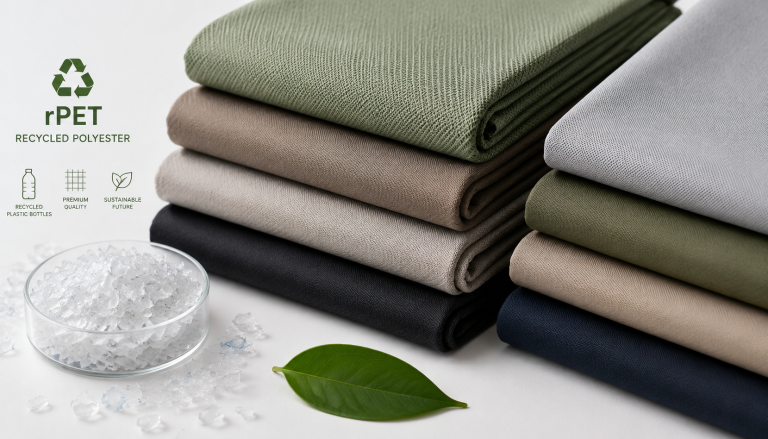
Most people picture a direct bottle-to-yarn pipeline, but the reality involves multiple transformation stages. Feedstock usually starts as post-consumer PET bottles or post-industrial trim waste. Collection relies heavily on reverse vending machines and municipal sorting facilities. Once gathered, materials go through rigorous delabeling and cap removal before shredding into uniform flakes. Those flakes aren’t ready for spinning yet. They need deep cleaning to strip residual adhesives and organic matter. After chelating and drying, the material melts and extrudes into polyester chips. Only then does it hit the spinning line. Consistency is the real challenge here. Virgin chips are predictable. Recycled batches carry natural variability that demands tighter QC checks.
Let’s break down what actually happens inside the facility. Collection happens first, pulling material from deposit schemes and waste networks. Sorting follows immediately. Optical sorters separate PET from PVC or HDPE, while manual stations catch contaminants. Bales get compressed and shipped to processing hubs. Shredders reduce bottles to roughly 10mm flakes. Washing uses hot water and friction drums to strip labels. A float-sink separation removes heavier plastics. Chelating agents bind metal ions, then dryers pull moisture below 0.1%. Extruders melt the clean flakes and push them through a filter screen. Pellets form as they cool. Spinning lines then adapt for POY or DTY production. Finally, knitting or weaving turns fiber into fabric. Each step introduces potential variance.
Not all recycled input is created equal. Post-consumer bottles dominate the market because collection infrastructure already exists. Post-industrial scrap offers higher consistency since it comes straight from cutting floors. Ocean-bound plastic gets the marketing buzz, but volume remains limited. You’ll also see pre-consumer and post-consumer percentages listed separately on certificates. Some mills blend virgin and recycled chips to stabilize quality. Virgin-partial blends usually run 30 to 70 recycled content. Chemical recycling is emerging as an alternative to traditional mechanical methods. It breaks polymers down completely, which helps with mixed waste streams. For now, mechanical recycling still handles the bulk of textile production.
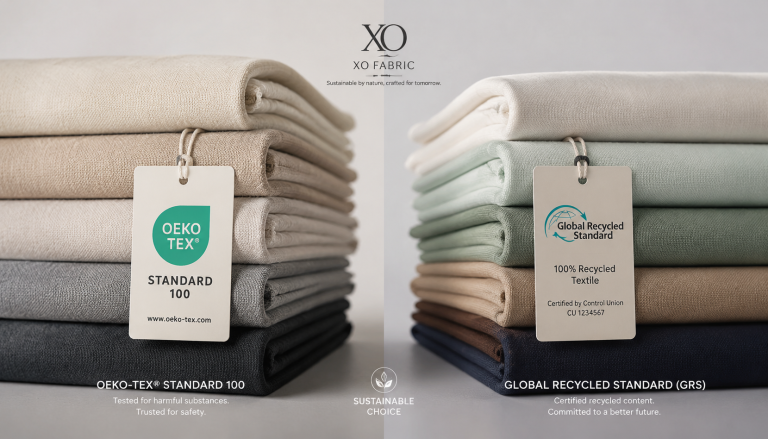
Navigating sustainability claims requires verified documentation. The Global Recycled Standard tracks material flow from source to finished garment. It’s voluntary, but most major buyers demand it. Certification requires a minimum of 20% recycled content, though 50% and 100% tiers exist. Third-party auditors review every supply chain node annually. You’ll need mass balance calculations and transaction certificates for each transfer. The standard also enforces social compliance and environmental management. Chemical handling and wastewater treatment get scrutinized. If you’re looking for broader context on textile compliance, checking out a Fabric Certifications Guide helps clarify the paperwork maze. Proper documentation protects both the brand and the consumer.
Some operations opt for the Recycled Claim Standard instead. It tracks recycled content similarly but drops the social and environmental mandates. The audit structure mirrors GRS, just with a narrower scope. Many facilities pursue dual certification to stay flexible. RCS focuses purely on chain of custody verification. Transaction certificates prove material movement. Labeling guidelines specify exactly how you can market the percentage. Small suppliers sometimes prefer RCS initially because the compliance overhead runs lower. Major brands accept it alongside GRS for specific product lines. It’s a practical stepping stone while building full compliance capacity.
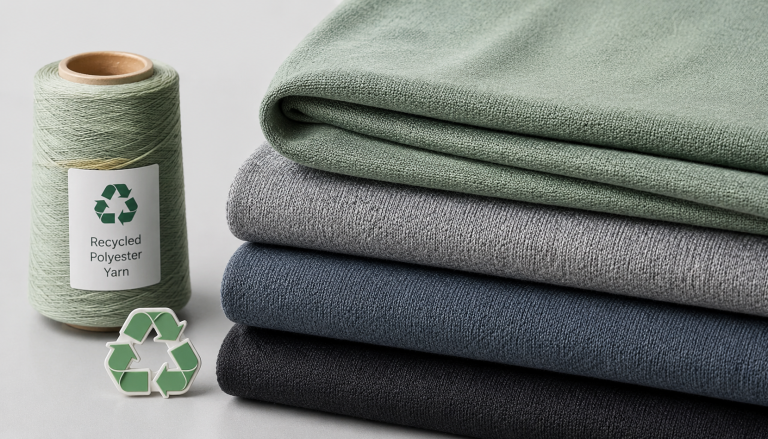
I used to assume recycled fibers would feel noticeably rougher. That turned out to be wrong. Modern spinning tech keeps tensile strength within 2% of virgin equivalents. Moisture wicking remains identical since the chemical structure doesn’t change. Dye uptake is where things get tricky. Recycled flakes often carry residual color, pushing natural dye ranges toward pastels or darks. I once spent three weeks adjusting dye baths just to hit a specific mid-tone gray. Softness depends heavily on draw texturing settings. UV resistance holds up fine for outdoor gear. Pilling rates actually improve when shorter staple lengths get properly blended. Shrinkage usually sits around 3 to 5% after proper heat setting. If you’re weighing base materials, reading through Cotton vs Polyester vs Blends gives useful context. Overall performance matches virgin stock when processed correctly.
When we developed a lightweight windbreaker, the initial 80 GSM rPET tricot started puckering at the armholes. The fabric mechanics were simple. Recycled fibers had slightly lower crimp recovery, causing tension during high-speed sewing. We didn’t just swap fabrics. We ran a full troubleshooting sequence. First, we switched to a 14/1 ballpoint needle to prevent fiber snags. Then we adjusted the stitch length from 2.8mm to 3.2mm to reduce thread tension. Pressing temperature dropped to 150°C to avoid melting the knit structure. We added a light tricot stay tape to the neckline. The compromise? We sacrificed 10% of the planned breathability for structural integrity. It was messy, but the final garment held up after 50 wash cycles.
Pricing usually runs 10 to 25% above virgin baseline. Feedstock collection and cleaning drive that premium. Certification fees add another layer. Volume discounts help narrow the gap. Large orders often drop the surcharge to single digits. Oil market volatility keeps virgin pricing unpredictable, which actually works in rPET’s favor long term. You have to factor in total ownership cost. Brand positioning and regulatory compliance offset the upfront difference. Partial recycled blends offer a middle ground for budget-conscious lines. Price parity will likely arrive as collection infrastructure scales. For now, the premium buys verified sustainability.
The numbers behind recycled polyester actually hold up under scrutiny. Production cuts CO2 emissions by roughly 30 to 50% compared to virgin synthesis. Energy consumption drops around 60%. Water usage shrinks significantly since polymerization skips the chemical synthesis phase. Every ton saved keeps about 1.5 tons of crude oil in the ground. Landfill diversion gets easier to quantify as collection networks expand. Microplastic shedding remains a shared challenge across all polyester types. Washing techniques and fabric construction matter more than the feedstock source. End-of-life recycling still relies heavily on mechanical processing. If you want to explore broader sustainability frameworks, Circular Fashion: Closing the Loop breaks down the systemic approach. Life cycle assessments prove the environmental advantage clearly.
| Metric | Virgin Polyester | Recycled Polyester |
| CO2 Emissions (kg/ton) | 5,800 | 2,900-3,500 |
| Energy Usage (GJ/ton) | 65 | 26 |
| Water Consumption (m³/ton) | 450 | 180 |
| Oil Displacement (tons) | 0 | 1.5 |
Tracking material movement requires disciplined documentation. Mass balance systems calculate recycled percentages through mixed batches. Transaction certificates accompany every material transfer. Chain of custody audits verify each node. Blockchain pilots are testing immutable record keeping. Supplier audits should extend beyond direct vendors. You need to verify the chip producers. Regional recycling infrastructure varies wildly. Some regions lack consistent sorting capability. Risk assessments help identify weak points in the network. Due diligence requires requesting recent audit reports. Proper record keeping satisfies compliance requirements. It also builds consumer trust when claims get questioned.
Early adopters proved recycled synthetics could meet performance demands. Sportswear giants scaled ocean plastic initiatives years ago. Outdoor brands embedded recycled content across entire line sheets. Fast fashion retailers introduced conscious collections that normalized the material. Private label retailers quietly shifted baseline specifications. Smaller labels now build their entire identity around recycled sourcing. Performance wear integrates rPET without compromising technical function. The shift moved from marketing gimmick to supply chain standard. Competition now drives faster adoption than sustainability pledges ever did.
Activewear benefits from the material’s moisture management. Outdoor shells handle weather exposure well. Swimwear resists chlorine degradation when properly finished. Home textiles use recycled yarn for upholstery and drapery. Bags rely on the fabric’s tensile strength. Workwear combines durability with lower environmental impact. Contemporary fashion leverages the material for streetwear positioning. Technical filtration uses recycled mesh effectively. Blending rPET with cotton or Tencel softens hand feel. If you’re developing performance lines, reviewing Choosing Fabrics for Sportswear Collection helps match properties to garment function. The material adapts surprisingly well across categories.
Quality consistency remains the biggest headache. Variable flake color restricts natural dye ranges. Traceability gets messy when multiple suppliers merge batches. Recycling infrastructure gaps cause regional shortages. Downcycling happens when fiber length degrades across cycles. Unverified claims damage consumer confidence. Processing lines need frequent filter changes to handle contaminants. End-of-life recycling still captures only a fraction of discarded garments. Chemical residues occasionally trigger failed compliance tests. Color matching across production runs requires careful batch management. I’ve learned to always request lab dips before committing to full runs.
One seasonal run showed a 4% color shift between the first and third batch. We caught it during pre-production sampling and adjusted the dye exhaust timing. Small adjustments save massive returns later.
Mechanical recycling hits limits with mixed or heavily contaminated waste. Chemical depolymerization breaks PET back to monomers. Hydrolysis and glycolysis methods produce virgin-quality output. The technology handles multi-layer packaging that mechanical sorters reject. Commercial scale remains limited right now. Energy requirements run higher than traditional mechanical processing. Cost structures favor established mechanical routes for now. Leading developers are optimizing catalyst efficiency. Mixed plastic waste finally becomes a viable feedstock. Chemical recycling will likely complement mechanical systems rather than replace them.
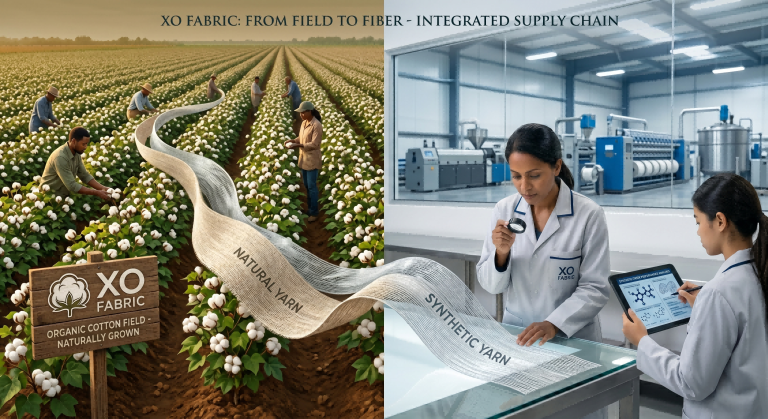
We maintain full GRS certification across our recycling lines. Long-term supplier partnerships guarantee consistent chip quality. Our QC protocols test every batch for intrinsic viscosity and moisture content. Production capacity scales to support both boutique orders and major wholesale runs. Complete chain of custody documentation ships with every roll. Custom development teams work directly with brands on specific recycled percentages. We blend rPET with organic cotton or Tencel to adjust hand feel. Environmental responsibility drives our broader operational standards. Sourcing here means verified transparency without compromising technical performance.
Start by asking suppliers for current certification documents. Verify certificate numbers through the official registry. Confirm exact recycled percentages before placing orders. Request third-party lab reports for every new batch. Schedule supply chain audits annually. Negotiate pricing based on verified compliance, not just marketing claims. Expect longer lead times due to collection variability. Minimum order quantities often run higher than virgin stock. Develop physical samples before cutting patterns. I usually test a small production run first. It catches hidden consistency issues before they hit the floor.
Market expansion looks steady through the end of the decade. Recycling efficiency improves as optical sorting tech advances. Government incentives will push mandatory recycled content quotas. Consumer expectations will treat recycled as baseline rather than premium. Bio-based polymers will eventually compete for market share. Closed-loop systems aim to turn old garments directly into new yarn. Digital product passports will standardize traceability reporting. Pricing will gradually converge with virgin baselines. The material isn’t going anywhere. It’s just getting better at what it does. For deeper insights on systemic shifts, Circular Fashion: Closing the Loop maps the long-term vision clearly.
Switching to recycled polyester requires patience and verified sourcing. The environmental and commercial benefits outweigh the initial learning curve. Partnering with certified suppliers streamlines compliance and quality control. Authentic marketing builds lasting consumer trust. If you’re ready to explore verified recycled options, check out the XO Fabric Advantage Partnership program. We’ll help you match technical requirements with sustainable supply chains. The transition takes planning, but the results speak for themselves.