Address
Nanlang Industrial Zone, Xingtan Town, Shunde District, Foshan, Guangdong, China
Work Hours
Mon–Fri, 9:00 AM – 6:00 PM (CST/UTC+8). We aim to respond to all inquiries within 48 hours.

Address
Nanlang Industrial Zone, Xingtan Town, Shunde District, Foshan, Guangdong, China
Work Hours
Mon–Fri, 9:00 AM – 6:00 PM (CST/UTC+8). We aim to respond to all inquiries within 48 hours.
Jacquard Knit Fabric: Patterned Construction for Premium Apparel. This guide covers key properties, real-world applications, and a practical sourcing checklist for B2B buyers.
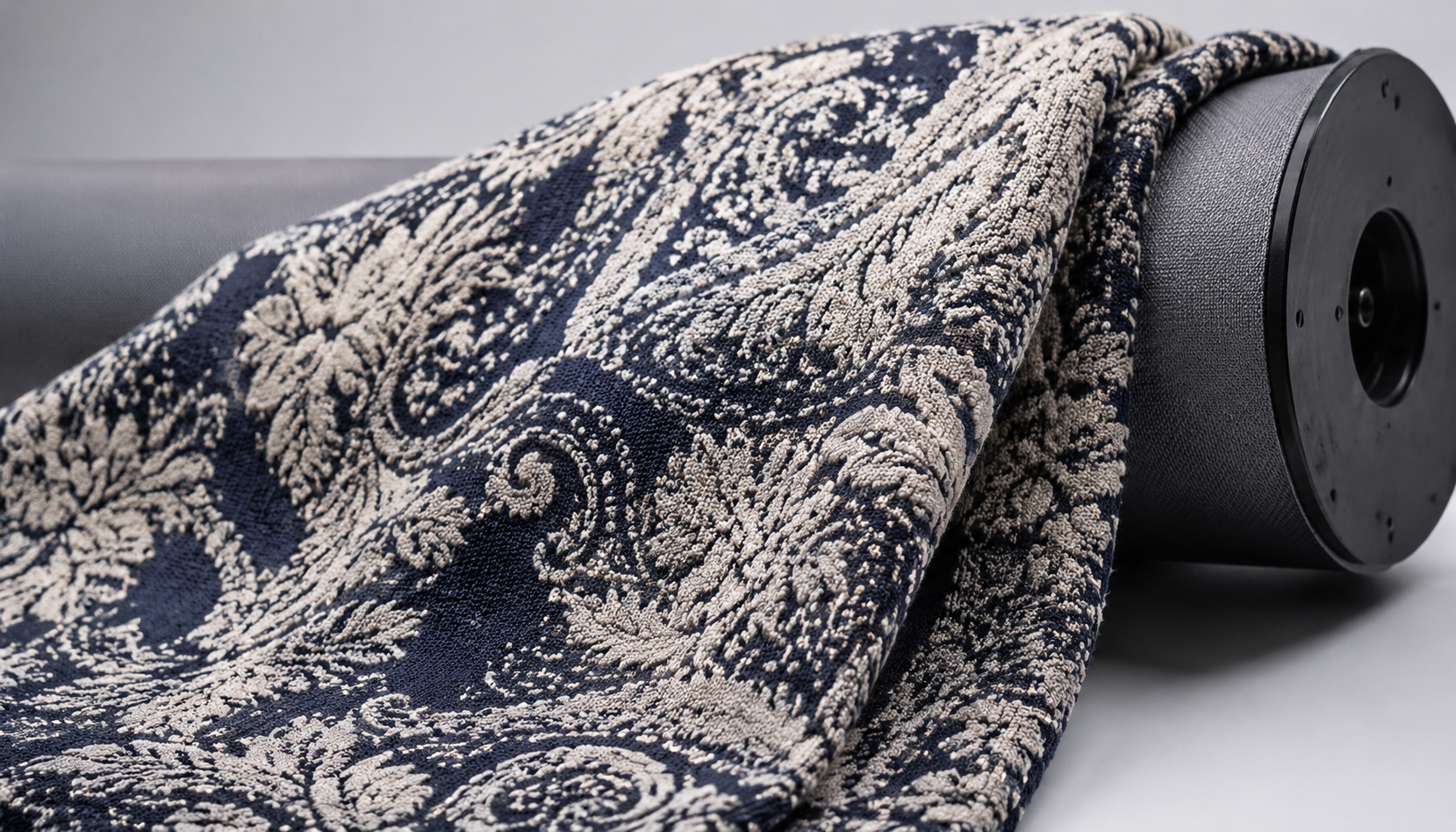
Imagine a Dubai-based garment exporter, excited about their first custom jacquard knit sweater collection. They approved a beautiful geometric pattern, but weeks later, received a call from the factory: the fabric’s shrinkage rate was 8%, nearly double the agreed 4.5% tolerance. The entire first batch was off-size, threatening a major claim. The root cause? They’d focused entirely on the design, completely overlooking how the knit structure and density parameters would behave post-wash. This is a classic, costly mistake in B2B textile procurement. This jacquard knit fabric guide is built to prevent it.
At its core, jacquard knit fabric is a textile where patterns are woven directly into the fabric structure during the knitting process, not printed or embroidered on afterward. This is achieved through an electronic needle selection mechanism on a circular knitting machine, allowing for complex, multi-color designs integral to the material itself. For a beginner’s jacquard knit fabric guide, understanding this fundamental distinction is the first step—it’s a structural fabric, not a surface-decorated one.
Unlike a simple printed knit, where ink sits on top of the yarns, a jacquard’s pattern is created by selectively knitting different yarns or colors into the face or back of the fabric. This means the design is part of the fabric’s DNA. It won’t crack, peel, or fade with washing in the same way a print might. However, this structural complexity introduces variables that directly impact performance, cost, and suitability for your end product.
Building a foundational knowledge of knit fabric types is essential for any procurement professional. While the list is extensive, here are ten common examples to establish your category map: Single Jersey, Rib Knit, Interlock, Piqué, French Terry, Fleece, Jacquard, Mesh Knit, Waffle Knit, and Ponte. Among these, jacquard occupies a unique position as a category that blends decorative patterning with structural functionality, making it a versatile yet complex choice for knitted fabric examples in premium apparel.
| Feature | Jacquard Knit | Printed Knit | Embroidered Knit |
|---|---|---|---|
| Pattern Formation | Integrated into knit structure | Applied to fabric surface | Stitched onto fabric surface |
| Durability | Excellent (part of fabric) | Good (can crack/peel over time) | Very Good (thread is durable) |
| Hand Feel | Can vary; may have floats on back | Smooth, may feel coated | Tactile, raised texture |
| Relative Cost | Higher (complex machinery) | Lower (standard print process) | High (labor-intensive) |
| Typical MOQ | 300-500m (328-547 yd) | 200-300m (219-328 yd) | 150-250m (164-273 yd) |
| Best For | Premium sweaters, activewear, home textiles | T-shirts, fashion basics, leggings | Logo placement, decorative details |
When sourcing, a frequent question is: “What are the main types of jacquard knit fabric?” While variations exist, the market is dominated by three primary constructions, each with distinct properties and ideal applications. Understanding these helps you match the right jacquard fabric to your product’s performance and aesthetic needs.
This is the most common and cost-effective type. The pattern is knitted on the face, while the back features yarn floats (loose threads spanning multiple stitches). This makes it relatively lightweight and elastic, but long floats can snag or feel uncomfortable against the skin. It’s a staple for jacquard knit sweater designs, patterned t-shirts, and lightweight casual wear where breathability is valued.
Here, both the face and back are fully knitted, creating a thicker, more stable fabric with no floats. The pattern can be visible on both sides, though often the back shows an inverse or different design. This construction offers superior dimensional stability, a more luxurious hand feel, and is ideal for outerwear, high-end sportswear, and structured garments where drape and durability are paramount.
This type combines a mesh ground fabric with jacquard patterning. The mesh provides inherent breathability and a lightweight structure, while the jacquard mechanism adds decorative or functional patterns. It’s a prime example of performance jacquard, widely used in athletic footwear uppers, technical sportswear, and contemporary fashion. For a tangible product sample with specific parameters, you can examine a Jacquard Mesh Knit Fabric which typically features a polyester/spandex blend, a weight of 135–180 gsm (4.0–5.3 oz/yd²), and a width of 150–160 cm (59–63 in).
The direct answer to “Is jacquard knit stretchy?” is: it depends. The elasticity is not a simple yes/no property but a composite result of several interacting factors. A blanket statement would be misleading. For a B2B buyer, understanding this nuance is critical to specifying a fabric that will perform as expected in the final garment.
Think of pattern density as the amount of “design information” packed per square centimeter (or inch). A low-density, open floral pattern allows the base knit to move freely, maintaining high elasticity. A high-density, complex geometric pattern with many color changes creates a tighter, more rigid structure. To put numbers to it: the same base single-jersey knit might retain 85-90% of its crosswise stretch with a low-density pattern, but this can drop to 60-70% or even lower with a high-density, multi-color design. This isn’t just theory—it directly impacts whether your size range will fit consistently after washing.
| Density Level | Crosswise Stretch (%) | Lengthwise Stretch (%) | Typical Application |
|---|---|---|---|
| Low | 85 – 90% | 30 – 40% | Fitted tees, bodycon dresses |
| Medium | 70 – 80% | 20 – 30% | Sweaters, casual pants |
| High | 60 – 70% | 15 – 25% | Structured jackets, upholstery |
Therefore, never rely solely on hand-feel during a showroom visit. The professional approach is to request standardized test data. Ask your supplier for stretch and recovery reports conducted according to ASTM D2594 (Standard Test Method for Stretch Properties of Knitted Fabrics) or the international equivalent ISO 13934-1. For more in-depth technical documentation on these and other textile testing standards, you can explore a comprehensive knowledge center dedicated to textile procurement.
Most sourcing failures aren’t due to bad suppliers, but to a broken information chain between the tech pack and the factory floor. A systematic Standard Operating Procedure (SOP) bridges this gap. This section provides a step-by-step guide, a true jacquard knit fabric guide for beginners moving into professional procurement.
Before you even send an inquiry, your spec sheet must be airtight. Vague requests like “nice blue jacquard sweater fabric” guarantee confusion and delays. Your matrix should specify: fiber composition (e.g., 65% Cotton, 32% Polyester, 3% Spandex), weight (e.g., 280 Fabric GSM Calculator / 8.3 oz/yd²), width, pattern repeat dimensions (e.g., 12 cm x 18 cm), required stretch percentages, colorfastness grade (e.g., Grade 4 for washing), and shrinkage tolerance (e.g., ≤ 3% in both directions). The more precise your parameters, the more accurate and comparable your quotes will be.
Not every knitting mill can produce every jacquard. You need to vet their machinery and experience. Key questions: Do they have both single-jersey and double-jersey jacquard circular knitting machines? What is the maximum pattern repeat their machine can handle? Do they have in-house dyeing and finishing, or is it outsourced? Most importantly, ask for references or samples of similar complexity jacquards they’ve produced. This due diligence separates capable partners from opportunistic ones.
The sampling stage is your primary risk mitigation tool. It typically follows three phases: 1) Lab Dip for color approval, 2) Hand-feel and pattern sample for tactile and visual approval, and 3) Proto or Production sample for final sign-off. Crucially, physical testing must run parallel to this. The hand-feel sample should be tested for weight, shrinkage, and stretch. This is where you catch issues early. For custom development, submitting your complete technical specifications is the first step to initiate this process, which you can do directly through a supplier’s contact portal designed for technical inquiries.
Based on common industry headaches, here are critical pitfalls to sidestep:
Case Study: The Dubai Sportswear Dilemma
A Dubai-based activewear brand needed a double-jersey jacquard for a premium jogger line. The design was a complex, two-tone geometric pattern with a 12 cm x 18 cm (4.7 in x 7.1 in) repeat. Supplier A offered a price 15% lower but could only produce a single-jersey version. The sample showed significant floats and a crosswise stretch of only 52%, far below the brand’s 75% requirement for comfort. Supplier B had the double-jersey capability but demanded an MOQ of 800 m (875 yd), which was too high for a first test order. After weeks of back-and-forth, the brand compromised: they accepted an 8% price premium from Supplier B and negotiated a split delivery—500 m (547 yd) for the first order at the custom price, with the balance to follow on reorder at the standard MOQ. This decision-compromise ensured the technical performance was met without completely derailing the launch budget.
The price per meter for jacquard knit fabric is rarely a simple number. It’s a function of multiple variables. Understanding these cost drivers allows you to make informed trade-offs between design ambition, quality, and budget.
| Cost Component | Approx. Share | Key Influencer | Buyer Optimization Tip |
|---|---|---|---|
| Raw Material (Yarn) | 40 – 50% | Fiber type, quality, origin | Consider blended yarns for cost-performance balance. |
| Knitting & Patterning | 25 – 35% | Pattern complexity, color count, machine time | Simplify patterns or reduce colorways to lower cost. |
| Dyeing & Finishing | 15 – 20% | Dye process, special finishes (e.g., wicking) | Consolidate dye lots; specify only necessary finishes. |
| Quality Control & Logistics | 5 – 10% | Testing, inspection, packing, FOB charges | Use supplier’s consolidated shipping for cost efficiency. |
Lead times vary drastically. For stock jacquard fabrics from a supplier’s existing inventory, expect 10–15 business days to your port. For custom orders, the timeline expands significantly. A realistic range is 20–35 business days, which includes sampling (7-10 days), lab-dip approval (5-7 days), production (10-15 days), and quality inspection. Complex, multi-color patterns will push you toward the longer end of this range due to extended machine setup and calibration times.
High MOQs are a common barrier. Here’s how to navigate them: First, ask if the supplier has similar jacquard fabrics in stock that could be a close match, potentially lowering the MOQ for a trial. Second, propose a split delivery: a smaller initial batch at a slightly higher price, with the balance on a confirmed reorder. Third, bundle your sampling and production orders. Committing to a production run contingent on sample approval can give you leverage to negotiate better terms. Many suppliers, including the factory with an integrated production chain, offer performance and functional knit categories that include ready-stock options, which can be a smart entry point for testing the market with a new jacquard design. Also, ensure your supplier adheres to international safety standards like OEKO-TEX Standard 100, which certifies the fabric is free from harmful substances—a key selling point for end consumers.
To operationalize the guidance above, use this structured checklist. It breaks down the sourcing process into three critical phases, ensuring no step is missed. This is your actionable jacquard knit fabric guide for beginners transitioning to systematic procurement.
The three most prevalent types are single-jersey jacquard (characterized by face pattern and back floats, suitable for lightweight wear), double-jersey jacquard (a stable, float-free construction for outerwear), and jacquard mesh knit (combining a breathable mesh base with patterning for technical applications). The choice hinges entirely on your product’s required performance and aesthetic.
Jacquard knit fabric generally possesses elasticity, but the degree is highly variable. It depends on the base knit structure, pattern density, yarn composition (especially elastane content), and finishing. Always request standardized test data per ASTM D2594 or similar standards from your supplier to make an objective assessment.
The fundamental difference lies in construction. Jacquard patterns are knitted into the fabric’s structure, making them integral and highly durable. Printed patterns are applied to the surface and can be susceptible to cracking, fading, or peeling over time with washing and abrasion. Consequently, jacquard typically commands a 15-30% price premium over comparable printed knits.
For custom jacquard knit fabric, MOQs typically range from 300 to 500 meters (328 to 547 yards). This can fluctuate based on pattern complexity, the number of colors, and the supplier’s production schedule. A prudent strategy for first orders is to start with the minimum viable quantity for sampling and initial production, scaling up once quality and market response are validated.
Choosing the right jacquard knit fabric is a decision that sits at the intersection of art and engineering. It requires moving beyond the allure of the pattern swatch to a systematic evaluation of structure, performance, and supply chain realities. The most successful procurement follows a clear path: define the end-use application, translate that into precise technical requirements, rigorously vet supplier capabilities, and manage the sampling process with scientific testing. By leveraging the SOP and checklist provided, you transform sourcing from a gamble into a disciplined process, ensuring the fabric you specify is the fabric you receive—and that it performs as promised in the hands of your end customer. For further technical consultation or to submit your specifications for a custom evaluation, you can reach out directly to the technical team.