Address
Nanlang Industrial Zone, Xingtan Town, Shunde District, Foshan, Guangdong, China
Work Hours
Mon–Fri, 9:00 AM – 6:00 PM (CST/UTC+8). We aim to respond to all inquiries within 48 hours.

Address
Nanlang Industrial Zone, Xingtan Town, Shunde District, Foshan, Guangdong, China
Work Hours
Mon–Fri, 9:00 AM – 6:00 PM (CST/UTC+8). We aim to respond to all inquiries within 48 hours.
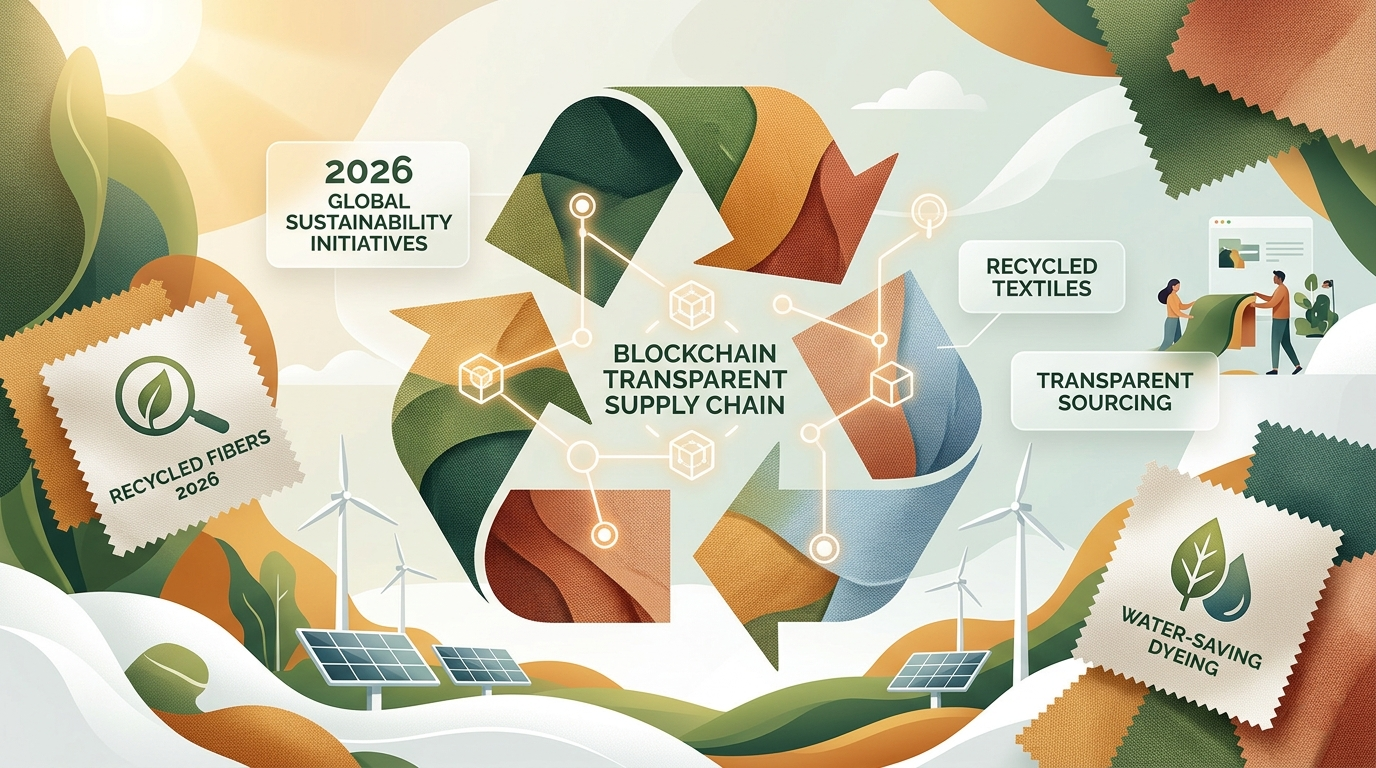
2026 isn’t just another year on the calendar for textile sourcing. It’s the moment compliance becomes non-negotiable.
The EU Green Deal’s textile strategy is reshaping global supply chains — even for brands that never ship a single garment to Europe. Sustainability has shifted from a marketing checkbox to a core operational requirement. Ignore it, and you risk regulatory penalties, disrupted timelines, or losing the eco-conscious customers driving today’s market. This guide breaks down the key 2026 sustainable textiles 2026 regulations and trends — and how forward-thinking suppliers are adapting to support compliant apparel brands.
The EU Green Deal isn’t just policy paperwork. It’s a comprehensive framework targeting climate neutrality by 2050, with textiles as a priority sector. The textile strategy mandates recycled content, digital product passports, and Extended Producer Responsibility (EPR) schemes. Key requirements phase in between 2026 and 2030, creating a ticking clock for global suppliers.
Digital Product Passports (DPP) will require QR codes on garments linking to material composition, origin, care instructions, and end-of-life recycling info. This demands tier 1-4 supply chain visibility — something many brands still struggle to map. For fabric mills, this means documenting every dye lot, fiber source, and finishing process. We’ve started prepping factory documentation and material traceability systems now, because waiting until 2027 is too late.
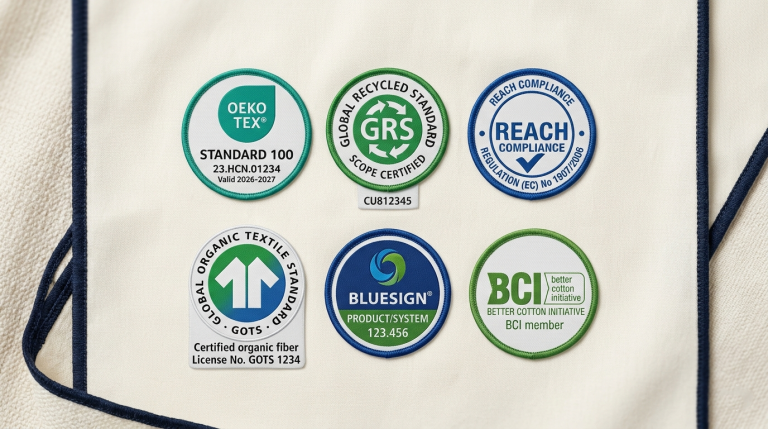
Eco-design requirements focus on durability, repairability, and recyclability. REACH updates continue restricting substances like certain azo dyes and PFAS. When selecting dyes, I always check Oeko-Tex certification first — it’s not just about compliance, it’s about avoiding costly rework later. A recent batch of performance knit failed colorfastness at 40°C wash; switching to a certified low-impact dye solved it, but added 3 days to lead time. Trade-offs matter.
Even if your brand doesn’t sell in the EU, these changes ripple outward. Material availability shifts. Costs adjust. Early adopters gain a competitive edge by securing compliant supply chains before demand spikes. My advice? Start preparing now. Don’t wait for regulations to hit your doorstep. For brands exploring recycled options, understanding materials like Recycled Polyester is a practical first step toward alignment.
While federal textile regulation remains fragmented, state-level action is accelerating. California’s SB 62, the Garment Worker Protection Act, impacts contractors and brands by requiring wage accountability and supply chain transparency. It echoes the UK Modern Slavery Act but with sharper teeth for California-based operations. Ethical manufacturing isn’t just moral — it’s becoming legally enforceable.
New York’s Fashion Act targets brands with over $100M annual revenue, requiring detailed supply chain mapping and environmental/social impact disclosures. This isn’t optional reporting; it’s mandatory due diligence. For smaller brands, the signal is clear: transparency expectations are rising regardless of revenue thresholds. We’ve made factory tours available and maintained stable operations for 20+ years because trust requires visibility, not just paperwork.
Massachusetts and Washington are considering similar legislation. Voluntary initiatives like the Sustainable Apparel Coalition’s Higg Index provide frameworks, but state laws will likely standardize expectations. The patchwork of regulations creates complexity, but the smart play is adopting the highest standard across all markets. It simplifies operations and future-proofs your supply chain. Understanding the broader context of Supply Chain Transparency helps brands navigate this evolving landscape.
When a mid-sized activewear brand approached us last year, they faced a dilemma: comply with California’s SB 62 now or wait for federal clarity. We ran the numbers. Upfront investment in documentation added ~8% to initial costs but reduced audit risks and sped up retailer onboarding. They chose early adoption. Six months later, a major retailer required SB 62 compliance for all vendors. Their head start secured a contract competitors lost. Sometimes the messy, expensive choice today prevents a crisis tomorrow.
China’s dual-carbon policy — carbon peaking by 2030, neutrality by 2060 — impacts every manufacturing sector, textiles included. For fabric production, this means energy-efficient machinery, LED lighting retrofits, and heat recovery systems become operational priorities, not just ESG reporting items. We’ve upgraded our dyeing equipment with heat recovery loops, cutting steam use by ~15% per batch. Small changes compound.
Export implications are significant. Carbon footprint documentation may soon be required for shipments to the EU, especially under the Carbon Border Adjustment Mechanism (CBAM). Chinese exporters to Europe will need verified emissions data. We’re exploring carbon footprint assessments now, not because it’s easy, but because waiting means playing catch-up later. The administrative burden is real, but so is the risk of being locked out of key markets.
Compliant suppliers gain opportunities. Brands seeking low-carbon supply chains will favor factories with verified reductions. Integrated production — handling spinning, knitting, dyeing under one roof — typically has a lower carbon footprint than fragmented, multi-vendor chains. Early movers secure partnerships; laggards face margin pressure. It’s not just about policy; it’s about positioning.
Gen Z and Millennials aren’t just talking sustainability — they’re voting with wallets. Over 70% report willingness to pay premiums for verified sustainable apparel. Social media amplifies both genuine efforts and greenwashing, making authenticity non-negotiable. We’ve noticed a sharp uptick in inquiries about rPET and organic cotton, not as niche requests but as baseline expectations.
Second-hand and circular fashion platforms like Depop and ThredUP are growing rapidly. This shifts value from trendiness to durability. A garment that pills after five wears won’t survive resale. We focus on anti-pilling finishes and color fastness testing (aim for grade 4+ on ISO 105-X12) because longevity is the new luxury. Durability isn’t just ethical; it’s economic.
Transparency has become a brand differentiator. Consumers ask “who made my clothes?” and expect answers. Brands sharing factory stories, worker profiles, or material journeys build trust. We offer factory tours and technical team introductions because visibility fosters partnership. But be careful: regulators are cracking down on unsubstantiated claims. “Sustainable” requires documentation — test reports, certifications, traceability records. Learn more about the circular economy shift in Circular Fashion.
| Segment | Key Demand | Verification Needed |
| Gen Z (18-24) | Authentic storytelling, social impact | Factory photos, worker testimonials |
| Millennials (25-40) | Durability, material transparency | Certifications, wash test data |
| Value-focused | Price-performance balance | Clear cost breakdowns, longevity metrics |
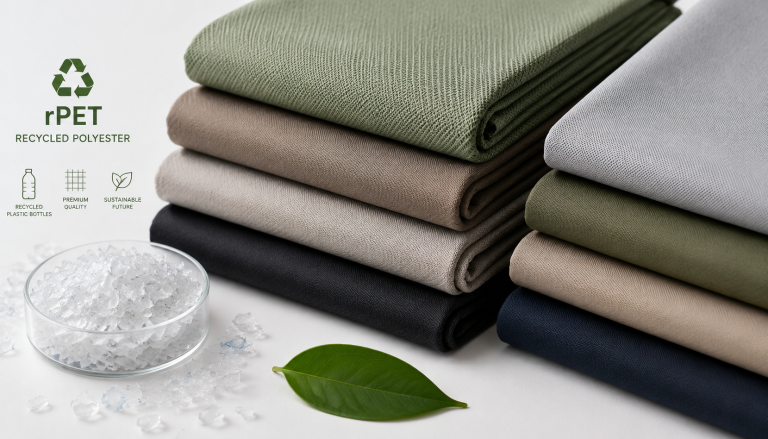
Recycled polyester (rPET) continues its ascent, made from post-consumer plastic bottles. It reduces virgin plastic demand and typically uses 30-50% less energy than virgin polyester production. Market demand grows 15-20% annually. We’re developing rPET performance knits, but note: fiber consistency can vary by recycler. Always request melt flow index data and run pilot wash tests. A recent rPET blend showed slight shrinkage (2.1% vs. spec 1.5%); adjusting heat-set temperature resolved it.
Organic and regenerative cotton offer distinct benefits. Organic eliminates synthetic pesticides and often uses rainwater irrigation, lowering environmental impact. Regenerative goes further, focusing on soil carbon sequestration and biodiversity. Our Organic Cotton Interlock balances sustainability appeal with proven performance — 180 GSM, 4-way stretch, pre-shrunk to <3%. If you’re evaluating options, our Organic Cotton Interlock delivers reliable quality for conscious collections.
Bio-based synthetics like PLA (from corn or sugarcane) are emerging. They’re biodegradable under industrial composting conditions, but infrastructure remains limited. We monitor developments closely but advise caution: scalability and end-of-life realities don’t always match marketing claims. Innovative materials like mushroom leather show promise but face cost and scalability hurdles. They may mainstream by 2030, but for 2026, focus on proven, certifiable options.
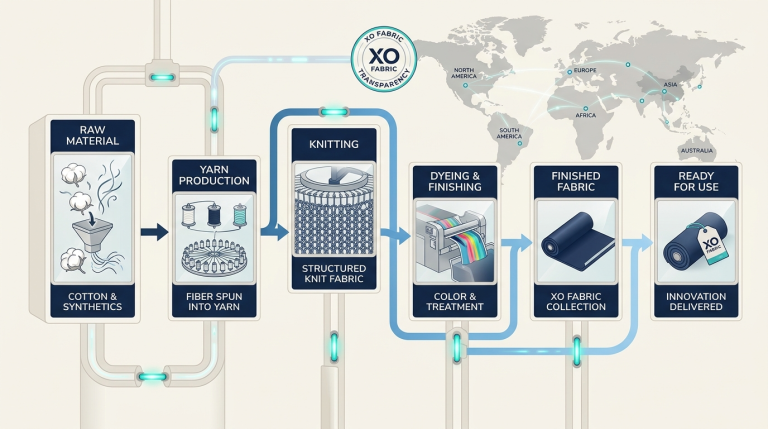
Start by auditing your supply chain. Map tier 1-4 suppliers — from farm to yarn to fabric to garment. Identify environmental and social risks. Integrated production simplifies this; when spinning, knitting, and dyeing happen under one roof, traceability is inherent. Document everything. Regulators and retailers will ask.
Invest in sustainable materials strategically. Avoid greenwashing by substantiating claims with certifications. Start with one product line to test market response before scaling. We offer lab dip services for rPET and organic cotton options to help brands prototype responsibly. Small batches reduce risk while gathering real-world feedback.
Build supplier partnerships, not just transactions. Long-term relationships with transparent suppliers create resilience. Visit factories when possible — or request virtual tours. We welcome qualified buyers to see operations firsthand because trust is built on visibility. Stay informed by following industry publications like Textile Exchange or attending sustainability webinars. Ready to explore options? Contact Us to discuss sustainable fabric solutions for your line.
Claim: “Made with recycled materials.” Reality check: What percentage? Certified? Traceable? Always request GRS (Global Recycled Standard) documentation. Claim: “Eco-friendly dyeing.” Verify: Low-impact dyes? Water recycling? Energy source? Ask for specific process details. When in doubt, assume auditors will ask for proof. Build your documentation trail now, not during a crisis.
Current initiatives focus on operational efficiency: energy-efficient machinery with heat recovery, LED lighting retrofits, and a fabric scrap recycling program that diverts ~90% of cutting waste from landfill. Our water treatment system for dyeing wastewater meets strict discharge standards — not because regulations require it everywhere, but because it’s the right baseline.
Material exploration continues with rPET performance knits in development and organic cotton expansion. We monitor bio-based fiber advancements but prioritize commercial viability. Transparency isn’t a marketing tactic; it’s operational practice. Factory tours for qualified buyers, material traceability documentation, and planning for digital product passport compatibility are all in progress.
With 20+ years of stable operation, the commitment is long-term. Investing in sustainable production today prepares for the next two decades. We partner with brands who share this horizon — not chasing trends, but building resilient, responsible supply chains together.
2026 brings significant regulatory shifts and evolving consumer expectations. Apparel brands must adapt to thrive. At XO Fabric, we’re committed to evolving with the industry — from sustainable material exploration to transparent documentation. If you’re ready to future-proof your line with eco-friendly fabric options, reach out to discuss how we can support your sustainability goals.