Address
Nanlang Industrial Zone, Xingtan Town, Shunde District, Foshan, Guangdong, China
Work Hours
Mon–Fri, 9:00 AM – 6:00 PM (CST/UTC+8). We aim to respond to all inquiries within 48 hours.

Address
Nanlang Industrial Zone, Xingtan Town, Shunde District, Foshan, Guangdong, China
Work Hours
Mon–Fri, 9:00 AM – 6:00 PM (CST/UTC+8). We aim to respond to all inquiries within 48 hours.
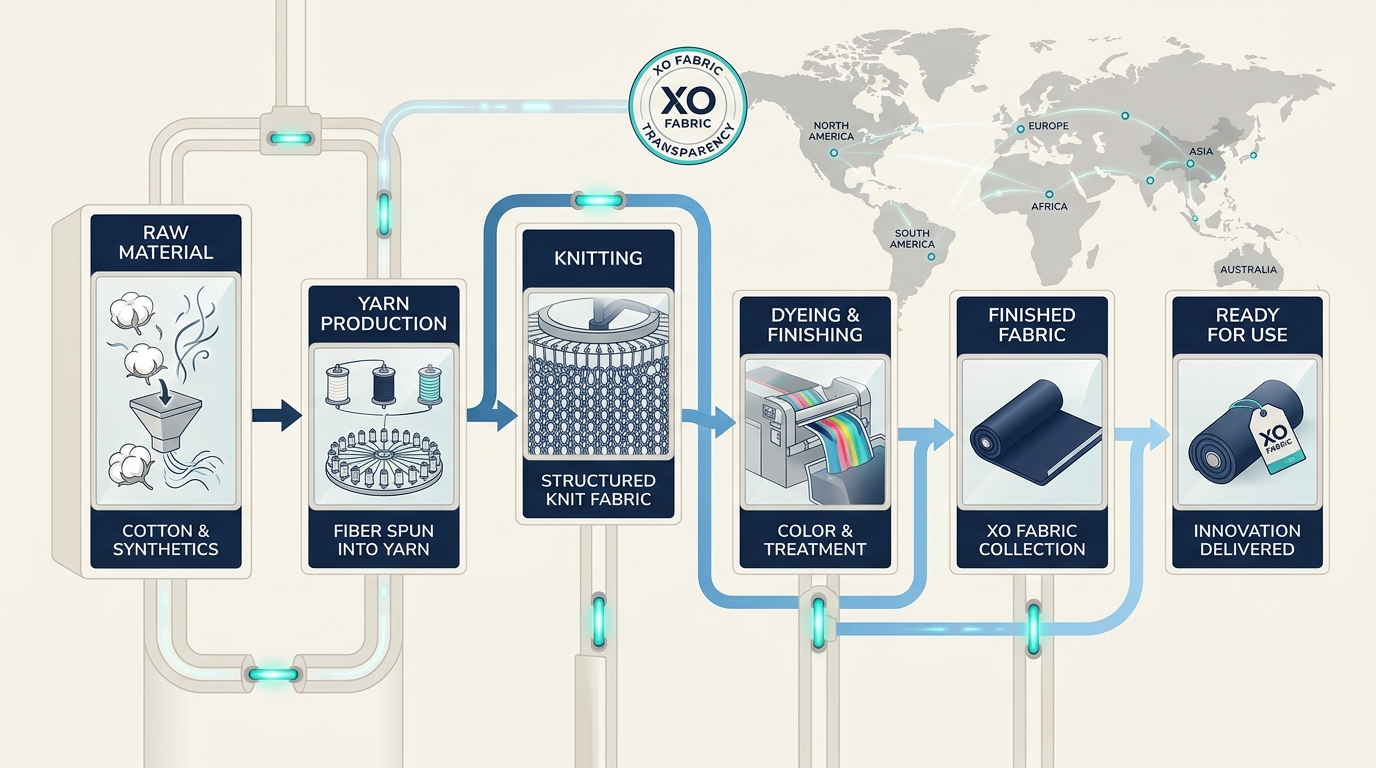
Consumers are finally asking the hard questions. They want to know exactly who stitched their garments and under what conditions. Ignoring that demand is a risky gamble.
We have seen how quickly a single labor scandal can unravel a decade of brand building. Hidden factories and opaque dye houses create blind spots. Those blind spots usually cost more than they save.
Transparent supply chains do more than check compliance boxes. They stabilize production quality and protect your margins. This guide breaks down why visibility matters. We will cover what your brand should actually disclose. You will also see how integrated mills simplify the entire process.
Consumer expectations have shifted permanently. Buyers now expect clear origin stories before they swipe. They want proof, not vague marketing slogans.
Recent industry surveys show that over seventy percent of shoppers check sourcing details. Gen Z and Millennials lead this charge. They treat ethical sourcing as a baseline requirement.
| Trust Driver | Impact on Purchase |
| Factory Disclosure | +34% Loyalty |
| Material Origin Proof | +28% Conversion |
| Wage Verification | +41% Retention |
Risk mitigation is equally critical. Hidden suppliers mean hidden defects. You cannot control shrinkage rates or chemical residues if you cannot trace the dye lot. Transparent chains allow immediate pivots when tension breaks or water quality shifts.
I once worked with a brand that lost an entire capsule collection. A Tier 2 mill switched to a cheaper carrier oil without notice. The resulting odor complaints destroyed their launch. Full visibility would have caught that swap during the pre-production meeting.
Regulatory compliance is accelerating fast. The EU Digital Product Passport is rolling out soon. California and New York are already enforcing strict reporting laws. You need documented material origins before penalties arrive.
Regulations are driving transparency. Read our 2026 sustainability guide. Check out Sustainable Textiles 2026 to prepare for those shifts. Understanding regional manufacturing contexts helps too.
Understand the context of Chinese textile manufacturing in our industry outlook. Visit China Textile Industry for deeper context.
Transparency also creates a genuine competitive edge. Integrated production makes tracing far easier. You bypass middlemen and verify every stitch yourself. Brands that own their data build lasting loyalty.
Disclosure starts with Tier 1 factories. Share the actual building name and city. List the workforce size and active certifications. Buyers appreciate concrete data over generic claims.
Move down to Tier 2 suppliers. This is where the fabric actually gets woven or knitted. Disclose the mill capacity and machinery type. Specify whether you are running single jersey or double knit frames.
Material origins matter just as much. State where the cotton was ginned or where the recycled PET flakes came from. Hand feel and drape depend entirely on fiber sourcing.
Tier 3 and 4 mapping covers yarn spinners and raw growers. Note the twist multiplier and staple length. These variables dictate pilling resistance and seam slippage. Third-party certifications validate those claims.
Labor and environmental metrics round out the picture. Publish average working hours and wage bands. Report water consumption per hundred kilograms of fabric. Detail your wastewater treatment filtration stages.
Disclosure methods are straightforward. Build a dedicated website page. Add scannable QR codes to hang tags. Align those codes with upcoming digital passport standards. Annual reports should mirror those tag details exactly.
Browse our products and see our transparency in action. Visit All Products to explore our current catalog.
Need supply chain documentation? Contact our team to request material traceability reports. Simply reach out via Request Documentation to get started.
Multi-tier chains are inherently messy. Fashion garments often cross five different borders before reaching retail. Each handoff adds documentation gaps and communication delays.
Supplier reluctance is the second major hurdle. Some mills fear exposing proprietary dye formulations. Others worry about audit findings revealing outdated equipment. That defensiveness blocks data flow entirely.
Cost and resource constraints hit smaller brands hardest. Mapping every raw material input requires dedicated staff. You need software subscriptions and third-party auditor fees. Many startups simply stretch too thin.
| Challenge | Operational Impact |
| Missing Tier 3 Data | Inconsistent GSM tolerance |
| Reluctant Mills | Delayed sample approvals |
| Audit Fatigue | Scheduled maintenance skipped |
Data accuracy remains the final bottleneck. Self-reported metrics often look polished on paper. Field conditions rarely match those spreadsheets. Independent audits force reality back into the equation.
Here is a real decision process I watched a mid-sized outerwear brand navigate. They wanted full Tier 3 transparency for a heavy 340 GSM fleece. Their initial yarn supplier refused to share spinning mill data.
The brand faced a brutal trade-off. They could keep the cheaper yarn and risk greenwashing accusations. Or switch suppliers, accept a twelve percent cost increase, and delay production by three weeks.
They chose the latter. They also negotiated a shared lab-testing agreement to split the verification costs. The compromise worked. They published a dedicated supply chain page.
Conversion rates jumped during the holiday season. The delay hurt their Q3 inventory, but the Q4 trust metrics stabilized. Real transparency always requires uncomfortable concessions.
Quality control and transparency go hand-in-hand. Read our QC checklist. Review Quality Control Checklist for inspection standards.
See how XO Fabric maintains transparency through rigorous quality control. Check out XO Fabric Quality Control for our full protocol.
Integrated production removes unnecessary layers. We handle knitting, dyeing, and finishing under one roof. Fewer handoffs mean cleaner data trails. You get direct access to the actual machinery operators.
Factory transparency starts with open doors. We welcome virtual tours and in-person audits. You can verify worker counts and safety protocols yourself. We share our operational history without filtering the rough patches.
Material traceability is built into our workflow. We document every balsa roll and recycled pellet batch. You receive full origin statements for compliance reporting. Our systems are already prepped for digital passport integration.
Third-party audits are available anytime. Two decades of continuous operation back those reports. We disclose our capabilities honestly. You will never find hidden subcontractors handling your core fabric runs.
Learn about our 20+ year journey and transparent operations. Read the XO Fabric Story to understand our foundation.
Ready to partner with a transparent supplier? Contact our team to start the conversation. You can also Request Samples to test the quality firsthand.
Mapping begins with a complete supplier roster. Identify every Tier 1 through Tier 4 partner. Schedule factory visits or request live video walkthroughs. Do not accept photo albums as proof of capacity.
Data collection requires standardized requests. Ask for certification copies and recent audit summaries. Use recognized frameworks like the Higg Index for consistency. You need comparable metrics across different vendors.
Verification separates claims from reality. Hire independent auditors for critical fabric suppliers. Schedule quarterly follow-ups instead of annual checks. Continuous improvement beats one-time compliance certificates.
| Priority Area | Verification Method |
| Fiber Origin | Mill certificates & lab dips |
| Labor Conditions | Unannounced third-party audits |
| Chemical Safety | Oeko-Tex test reports |
| Carbon Footprint | Energy meter readings & calculations |
Communication shapes consumer perception. Publish a dedicated supply chain page. Update it quarterly with fresh data. Admit where you are still improving. Authenticity beats polished perfection every time.
Transparency supports circular fashion. Read our guide. Explore Circular Fashion to see how closed-loop systems rely on open data.
Need help mapping your supply chain? Contact our team for support and documentation. Reach out via Request Documentation to get organized.
Supply chain visibility is no longer a nice-to-have feature. Consumers demand it. Regulators require it. Your own risk management depends on it. Hiding behind vague sourcing statements will only work for so long.
At XO Fabric, we keep our operations open and documented. Integrated production makes tracing straightforward. We provide full material records and welcome independent verification. Your brand deserves a partner that matches your standards.
Reach out today to align your sourcing strategy. Contact us to Contact XO Fabric and build a trusted partnership. We are ready to help you map, verify, and disclose with confidence.