Address
Nanlang Industrial Zone, Xingtan Town, Shunde District, Foshan, Guangdong, China
Work Hours
Mon–Fri, 9:00 AM – 6:00 PM (CST/UTC+8). We aim to respond to all inquiries within 48 hours.

Address
Nanlang Industrial Zone, Xingtan Town, Shunde District, Foshan, Guangdong, China
Work Hours
Mon–Fri, 9:00 AM – 6:00 PM (CST/UTC+8). We aim to respond to all inquiries within 48 hours.
For apparel brands and textile buyers, few things are as stressful as unexpected lead time delays. Missed launch dates, frustrated retail partners, and blown production budgets happen all too quickly when timelines slip.
Industry tracking consistently shows that around sixty percent of textile orders face at least minor setbacks. A solid fifteen percent hit major timeline overruns that completely derail seasonal drops.
Delays don’t just drain your cash flow. They quietly erode trust with buyers and leave your design team scrambling to retrofit last-minute substitutes.
Managing lead time delays isn’t about chasing perfect efficiency. It’s about building realistic buffers, understanding where bottlenecks actually form, and knowing exactly who to call when the calendar starts bleeding into the next quarter.
This guide breaks down the root causes behind those slips, actionable steps to shrink your risk window, and a straightforward playbook for handling setbacks when they inevitably show up.
Most timeline fractures start long before a shipment sits in a customs warehouse. Raw material shortages alone account for roughly forty percent of early-stage holdups.
Crop fluctuations, sudden trade policy shifts, or basic mill stockouts can leave you waiting for specific yarn blends. I’ve seen orders stall because a particular twenty-two count cotton ran dry during a heatwave, forcing a complete restart of the knitting queue.
Once the fibers arrive, production bottlenecks often take over. Peak seasons from September through November completely saturate factory floors. When multiple clients queue up for piece dyeing or specialized mercerization, the dye houses operate at maximum capacity.
A single batch of Piece Dyeing Service (Custom Colors) can easily add seven to ten days if the chemical bath needs recalibrating for shade matching. Equipment fatigue or sudden labor shortages during these windows compound the issue.
Logistics and communication gaps finish the picture. Port congestion rarely announces itself in advance, and holiday shutdowns quietly erase three to four weeks of productive capacity.
Add unclear tech packs or time zone mismatches during approval cycles, and you’re looking at a domino effect. Here is how the delays typically break down.
| Delay Source | Typical Impact | Prevention Focus |
| Raw Material Shortages | 3–5 weeks | Pre-order base fibers |
| Production Bottlenecks | 1–3 weeks | Stagger order releases |
| Logistics & Customs | 2–4 weeks | Alternative routing |
| Spec/Approval Gaps | 5–10 days | Locked tech packs |
Tracking where the friction actually sits helps you stop guessing and start planning. I usually map these variables against my own sample approval speed before committing to a bulk run.
Supplier vetting needs to go past price quotes and glossy brochures. Look for mills that openly share their on-time delivery percentages and current factory load.
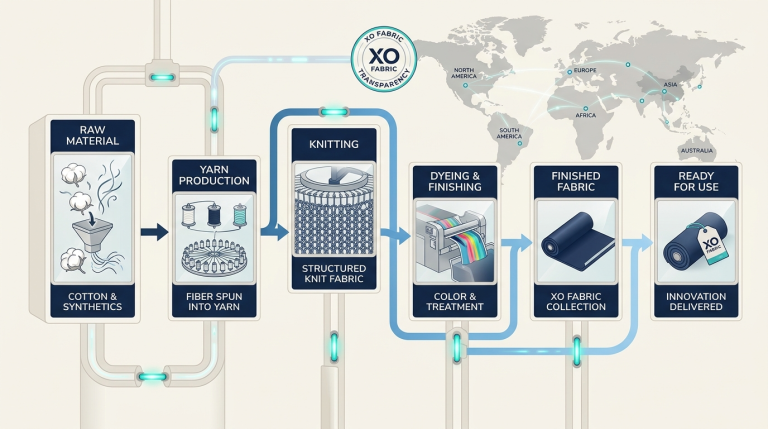
Vertical integration actually matters here. When knitting, dyeing, and finishing happen under one roof, you eliminate the handoff friction that usually eats up a week. I always run a quick capacity audit during Q2 to see if my preferred mill has room to absorb a Q3 surge without dropping the ball.
Finalizing your specifications early is non-negotiable. Lock in your fabric weight, construction type, and color palette at least four to six weeks before the planned production start.
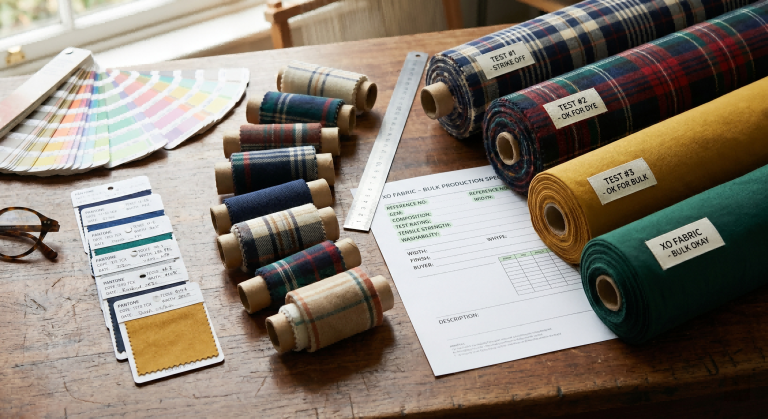
Approve lab dips and strike-offs while you have runway, not when the cut-and-sew team is waiting on the loading dock. Mid-production design changes are the fastest way to reset a timeline to zero.
I once managed a resort collection where we hesitated on a one hundred eighty GSM jersey weight. We kept debating between a tighter knit for structure or a looser gauge for drape. The back-and-forth cost us eleven days. By the time we finalized, the dye house was already booked solid. We compromised on a one hundred sixty five GSM with a two point two stitch length, which gave us the drape we wanted without requiring specialized needle changes. It taught me that indecision is just a delayed decision with a steeper price tag.
Diversifying your material base also shrinks risk. Keeping relationships with two or three backup mills for critical yarns prevents single-point failures.
If your timeline is compressed, splitting a large order across different facilities can work. You will just need tighter quality checks to maintain consistency across rolls.
For brands that need reliable, fast-turnaround base fabrics, exploring an in-stock collection like Performance & Functional Knits removes the manufacturing queue entirely.
Proactive monitoring catches a loose warp thread before it becomes a rejected batch. I’ve learned the hard way that silent suppliers are usually hiding a problem.
Setting explicit expectations upfront saves countless hours of back-and-forth later. Your purchase order or contract should state exact lead time commitments, including clear penalty clauses for unexcused delays.
Define how long you’ll take to approve samples, and expect the mill to match that cadence. If you promise forty-eight hours for lab dip feedback, hold yourself to it. Reciprocity builds momentum.
Time zone gaps frequently turn simple approvals into week-long limbo. Switch to asynchronous tools like shared cloud folders or project management platforms.
Assign a dedicated point of contact on both sides who shares at least two hours of overlapping work time. This small overlap prevents urgent questions from sitting unread overnight.
Documentation is your safety net. Keep written records of every spec revision, timeline agreement, and change request.
Photograph sample swatches alongside Pantone chips under consistent lighting. If you have a verbal agreement over messaging apps, follow up with an email summary within twenty-four hours. Ambiguity breeds delays.
Long-term partnerships outperform transactional relationships every time. Share your six to twelve month demand forecasts early so mills can reserve machine time.
When the seasonal rush hits, suppliers prioritize clients they’ve invested in. If you’re struggling to align with your current partners, it might be worth reaching out to Contact Our Team for a fresh perspective on streamlined communication protocols.
I’ve found that suppliers respect buyers who communicate deadlines firmly but respectfully. Push too hard without context, and you’ll get compliance without care. Step back too much, and your order slips to the bottom of the queue.
Buffer time isn’t padding. It’s realistic planning. Add a fifteen to twenty percent cushion to standard quoted lead times.
If you’re working with custom blends, piece dyeing, or first-time mills, bump that buffer to thirty percent or higher. Always factor in regional shutdowns, especially January and February windows where production essentially pauses.
Align your buffers directly with your collection launch calendar. Work backward from your sales deadline, subtract the buffer, and that becomes your hard production start date.
Prioritize high-margin or hero SKUs with the tightest timelines first. Avoid scheduling critical bulk runs during known global shipping congestion periods, typically late September through mid-December.
| Order Type | Recommended Buffer |
| Standard In-Stock Fabrics | 15–20% |
| Custom Yarn/Dye Orders | 30%+ |
| New Supplier Trials | 35–40% |
| Jan–Feb Seasonal Windows | +3–4 weeks flat |
Share these padded timelines with your retail buyers and marketing teams early. Overpromising a launch date creates panic later.
Use the buffer for actual contingency planning, not as an excuse to delay internal decisions. I always tell my design team that the buffer belongs to the unexpected, not the procrastinated.
Micro-note: I once lost three days because we scheduled a final press test during a mill’s routine steam boiler maintenance. Simple scheduling alignment would have caught it.
When the notification finally lands, panic rarely helps. Confirm the exact delay duration and root cause within twenty-four hours.
Determine whether it’s an excused force majeure event or an unexcused supplier error. Assess how the slip ripples through your shipping schedule, fulfillment slots, and retail handover dates.
Expedite options exist, but they come with trade-offs. Request overtime production or priority machine slotting if the mill has capacity.
Switch to air freight for partial shipments if ocean containers are stuck. Calculate whether the freight premium actually saves your margin.
Sometimes substituting a delayed custom print with a closely matched in-stock solid keeps the garment line moving. You’ll need to verify that the alternative matches your target GSM and shrinkage parameters within acceptable tolerances.
Contingency planning should never feel reactive. Adjust your marketing spend and campaign rollouts to match the new reality.
If your current supplier is dragging your order down, you might consider reaching out to Contact XO Fabric to discuss expedited replacement runs before the launch window closes.
I remember a spring collection where a cotton shortage pushed everything back by three weeks. We shifted two hero styles to an alternative modal blend, rerouted shipping through a less congested port, and launched with a staggered drop instead of a single day. It wasn’t perfect, but it saved the season.
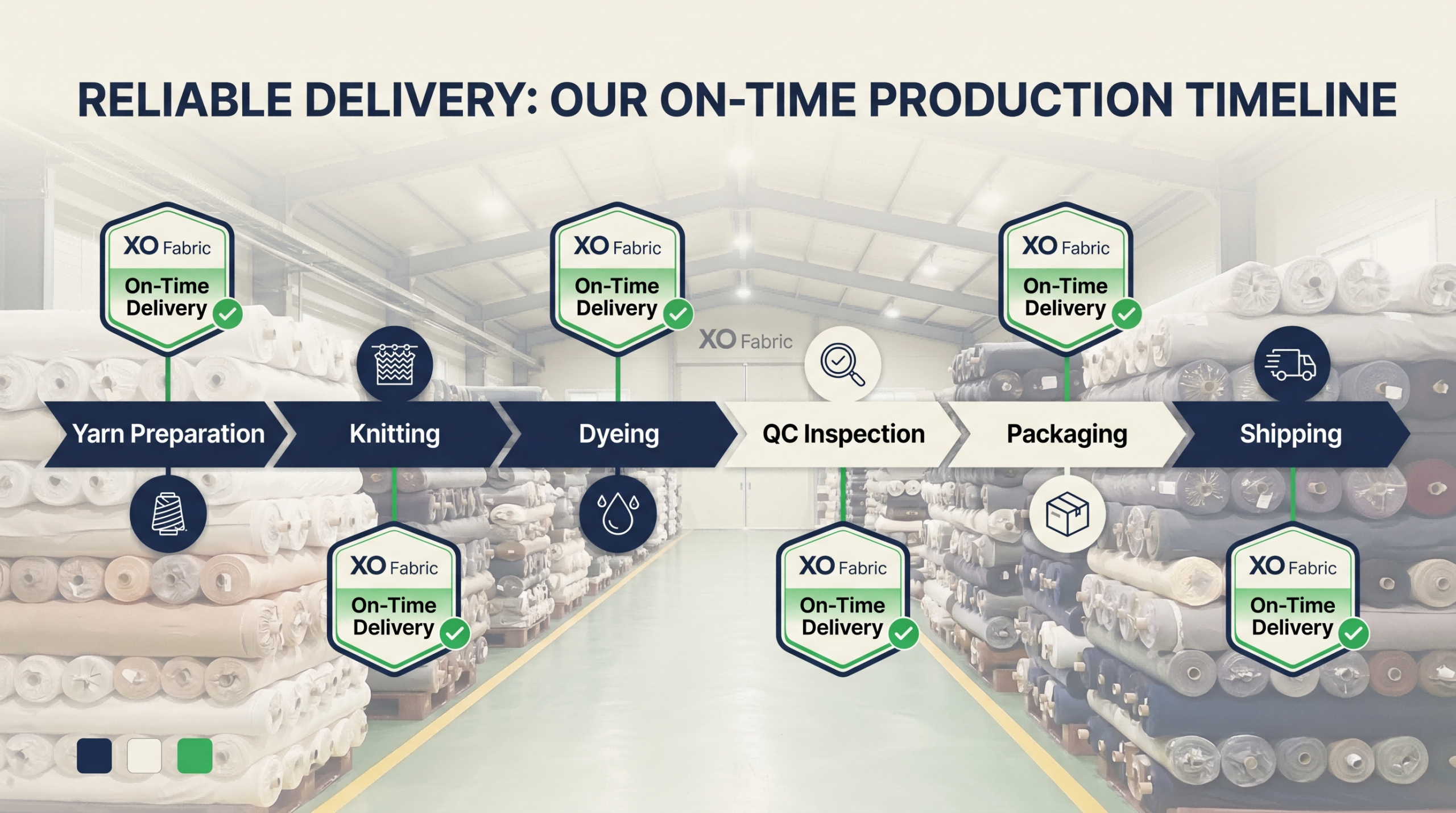
Vertical integration fundamentally changes how timelines behave. When knitting, dyeing, finishing, and quality control operate within a single facility, you eliminate the third-party handoffs that typically add unpredictable gaps.
Two decades of manufacturing experience has taught the mill that reliability compounds trust. Bulk orders consistently hit a ninety-five percent on-time delivery rate because internal workflows don’t rely on external vendors keeping pace.
Transparent lead time guarantees remove guesswork from your planning. Standard knit runs typically move through production in ten to fifteen days, while custom dye orders take fifteen to twenty.
A real-time tracking portal keeps bulk clients updated without constant email ping-pong. Every quoted timeline includes a built-in five-day buffer, so minor hiccups absorb without touching your final delivery date.
Support structures keep communication tight. Dedicated account managers handle bulk orders from spec approval through final packaging. Weekly production updates include photo evidence of fabric tension, color consistency, and roll measurements.
If an unexcused delay ever pushes past five days, expedited re-production happens at no extra cost. A low five hundred meter minimum order quantity for standard knits also reduces the risk of overordering.
Browsing All XO Fabric Products gives you a clear view of what’s ready to ship versus what requires custom lead time.
When you’re ready to lock in a realistic schedule, you can Request a Quote and receive a firm timeline before committing a single dollar.
Reliable delivery isn’t a marketing slogan here. It’s an operational baseline that keeps design teams from losing sleep over shipping containers.
Lead time delays will never completely disappear from textile sourcing. But they don’t have to dictate your launch calendar.
Understanding where bottlenecks form, building realistic buffers, and partnering with suppliers who value transparency keeps your collection moving forward. The difference between a stressed production cycle and a smooth rollout usually comes down to preparation and clear communication.
At the mill, we’ve built our reputation on consistent, on-time delivery for apparel brands worldwide. Vertical integration, dedicated account management, and honest timeline quoting ensure your bulk fabric orders arrive when you actually need them.
The goal is simple: remove the guesswork so you can focus on design, not logistics.
If you’re ready to eliminate timeline anxiety from your supply chain, Contact XO Fabric to discuss your upcoming collection and secure a guaranteed delivery schedule. Your next drop deserves a foundation that actually holds up under pressure.