Address
Nanlang Industrial Zone, Xingtan Town, Shunde District, Foshan, Guangdong, China
Work Hours
Mon–Fri, 9:00 AM – 6:00 PM (CST/UTC+8). We aim to respond to all inquiries within 48 hours.

Address
Nanlang Industrial Zone, Xingtan Town, Shunde District, Foshan, Guangdong, China
Work Hours
Mon–Fri, 9:00 AM – 6:00 PM (CST/UTC+8). We aim to respond to all inquiries within 48 hours.

You have finally found a promising Chinese textile supplier. Now the real work begins. The negotiation phase decides whether you get burned or build something lasting.
Too many Western buyers walk in with a lowest price wins mentality. That approach usually backfires. It strips away quality control and destroys long term potential.
Negotiation sets the tone for everything. It shapes your lead times, your defect tolerance, and your communication flow. This guide shares practical tactics for navigating these conversations.
I have spent two decades working alongside mills and trading houses. The strategies below come from real factory floors, not textbooks.
Cultural friction causes more sourcing failures than poor machinery. You need to read between the lines before you talk contracts.
Trust is not an abstract concept here. It is a currency. Suppliers will consistently prioritize long term partners over one off buyers.
Invest time early. Schedule factory visits. Share meals. Keep in touch between orders. These gestures signal stability. They tell the mill you are not just chasing a cheap sample.
When you approach sourcing with patience, the mill notices. They start sharing production capacity updates before you even ask.
Public criticism destroys relationships. If a shipment runs late or the GSM is off, handle it privately.
Praise good work openly. Address problems through direct messages or private calls. This preserves dignity on both sides.
I once saw a buyer email the entire sales team about a minor dye lot variance. The relationship froze. A simple private call would have fixed it.
Do not take yes at face value. It often means I hear you or I will try.
Use open ended questions. Ask what specific hurdles they are facing. Press gently on timelines without demanding immediate compliance.
Clear English speaking teams help bridge the gap. But you still need to listen for hesitation. Silence usually means there is an unresolved concern.
Your sales contact rarely signs off on major changes. Production managers and owners hold the real leverage.
Expect longer response times for complex requests. Do not chase aggressively. Give them internal time to align stakeholders.
You can learn more about how our team structures communication in the XO Fabric Story.
When you are ready to test the waters, you can Request Samples through our direct line.
| Communication Tactic | Expected Outcome | When to Use |
| Private correction | Preserves trust | Quality deviations |
| Open questions | Uncovers blockers | Timeline delays |
| Stakeholder patience | Faster approval | Price or spec changes |
This is where rubber meets the loom. You need to lock down pricing, quantities, timelines, and quality metrics.
Initial quotes are rarely final. Leave room to negotiate down, but never demand unrealistic cuts. Factories need margin to run quality checks.
Standard payment terms run T/T 30/70. You wire a thirty percent deposit. The remaining seventy percent clears before shipment.
For orders exceeding five thousand dollars, push for an L/C at Sight. It mitigates risk without strangling the mill’s cash flow.
Understanding how these terms affect production flow is critical. Our breakdown of Payment Terms covers the operational impact.
MOQs protect the mill from setup waste. Standard cuts hover around five hundred meters for knits and three hundred for flocked fabrics.
You can negotiate lower limits. Offer multi style orders. Promise repeat runs. Mills bend when they see volume potential.
Read more about volume planning in our guide to Understanding MOQ.
I remember working with a European activewear brand. They needed a lightweight interlock but wanted a two hundred meter MOQ. The mill quoted a steep surcharge.
We ran the numbers. The setup cost for dyeing alone was eating their margin. We proposed a compromise. The brand committed to a quarterly forecast. They also agreed to a slightly wider GSM tolerance.
It was messy. We traded tighter specs for lower quantities. The mill accepted because the forecast guaranteed machine utilization. The brand accepted because the surcharge vanished.
Neither side got their first choice. Both walked away with a viable production plan. That is how real sourcing works.
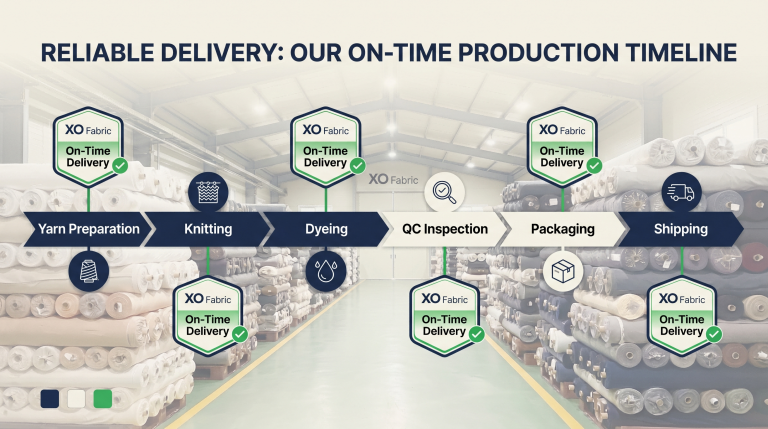
Standard production runs ten to twenty business days after sample approval. September through November is peak season. Expect delays.
Build buffer weeks into your calendar. Do not promise retail drops based on optimistic factory dates. Integrated production lines move faster. They control knitting, dyeing, and finishing in one facility.
Never ship without written criteria. Specify AATCC or ISO test methods in your purchase order. Define acceptable tolerance ranges.
Mills will respect buyers who understand lab reports. It shifts the conversation from opinions to data.
Clarify defect liability upfront. Who pays for return shipping? What is the replacement window?
A fair policy covers prompt investigation. Mills should offer replacements or partial refunds for verified manufacturing faults. Avoid vague promises. Put it in writing.
Experience shows that most failures come from predictable errors. You can sidestep them with disciplined planning.
Cheap fabric usually hides compromised yarn counts or rushed dye baths. The total cost of ownership spikes when defects hit the cutting floor.
Calculate real costs. Factor in quality control labor, rework hours, and delayed retail windows. Reliable mills control costs through efficiency, not corner cutting.
Trading companies mask capacity limits. Factories show you the reality. Look at machine maintenance logs. Check yarn storage humidity levels.
Virtual tours work when travel is impossible. But physical visits build faster trust. You see how operators handle tension adjustments and how supervisors log daily output.
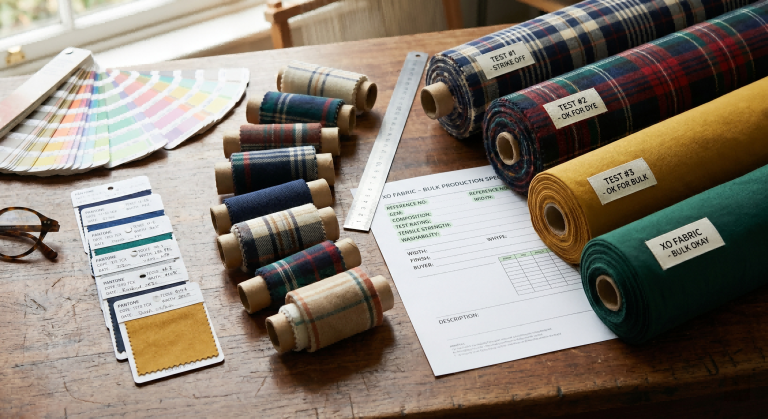
This is a dangerous shortcut. Physical samples reveal hand feel, drape, and weave consistency. Lab dips confirm color stability under light and wash cycles.
If you skip this step, you are gambling. I have seen entire seasonal lines scrapped because a lab dip was approved via phone. Never do that.
Learning to evaluate physical swatches correctly saves massive headaches. Check our guide on How to Request Fabric Samples for evaluation checklists.
| Fault Type | Root Cause | Quick Fix |
| Pilling | Loose fiber ends or low twist yarn | Anti-pill finish or higher twist count |
| Seam slippage | Weak weft tension or improper stitch length | Stabilizer tape and 2.8mm stitch adjustment |
| Color bleeding | Inadequate fixation or low wash fastness | Retest at ISO 105-C06 and adjust dye bath ratio |
Vague purchase orders breed disputes. List exact fiber compositions, construction types, and test methods.
Use detailed order confirmations. Include tolerance tables. English speaking teams reduce translation errors, but you still need to verify every line item.
Reliable sourcing does not happen by accident. It requires consistent engagement and clear expectations.
Regular production runs build mutual trust. Mills allocate better machine slots to predictable clients.
You will see improved pricing over time. The supplier knows you will return. They invest in your account stability.
Share your sales projections early. It helps the mill plan yarn procurement and reserve dye lot capacity.
Notify them immediately if plans shift. Last minute cancellations strain relationships. Early warnings allow them to adjust chemical orders and labor shifts.
Address quality flags professionally. Document defects with photos and measurements. Avoid emotional accusations.
Seek win win solutions. Rework orders on the mill floor. Negotiate partial refunds. Apply future order discounts. The goal is continuity, not punishment.
You can explore why over two hundred global brands maintain steady partnerships in our breakdown of the XO Fabric Advantage.
Stability matters in a volatile industry. We have operated since 2005. We navigated raw material shortages, shipping bottlenecks, and shifting compliance standards.
Our technical team includes over fifty veteran specialists. Many have stayed for more than a decade. That depth of knowledge prevents costly trial and error.
We maintain a two thousand square meter finished goods warehouse. It allows rapid dispatch for replenishment orders. You do not always need to wait for full production runs.
We handle knitting, dyeing, finishing, and flocking in-house. There is no outsourcing to third party workshops.
This structure eliminates handoff delays. Quality control happens at every stage. You get consistent GSM and color matching without chasing multiple vendors.
Our English speaking team responds within twenty four hours. We provide detailed order confirmations before machine setup.
You receive production updates without chasing emails. We also offer factory walkthroughs and virtual tour sessions. Transparency reduces anxiety.
We support low quantity sampling for new designs. Small initial runs help you test market response.
Loyal clients receive priority scheduling. Custom finishes and lab dip matching get dedicated attention. We adjust to your rhythm, not the other way around.
Negotiating with Chinese textile suppliers requires patience, clear metrics, and cultural awareness. Focus on total value instead of chasing marginal price cuts.
We have spent over two decades refining these processes for global apparel brands. We understand the operational headaches and the compliance demands.
Contact our team today. Share your fabric requirements and technical specs. Let us show you how transparent communication and integrated production can streamline your next collection.