Address
Nanlang Industrial Zone, Xingtan Town, Shunde District, Foshan, Guangdong, China
Work Hours
Mon–Fri, 9:00 AM – 6:00 PM (CST/UTC+8). We aim to respond to all inquiries within 48 hours.

Address
Nanlang Industrial Zone, Xingtan Town, Shunde District, Foshan, Guangdong, China
Work Hours
Mon–Fri, 9:00 AM – 6:00 PM (CST/UTC+8). We aim to respond to all inquiries within 48 hours.
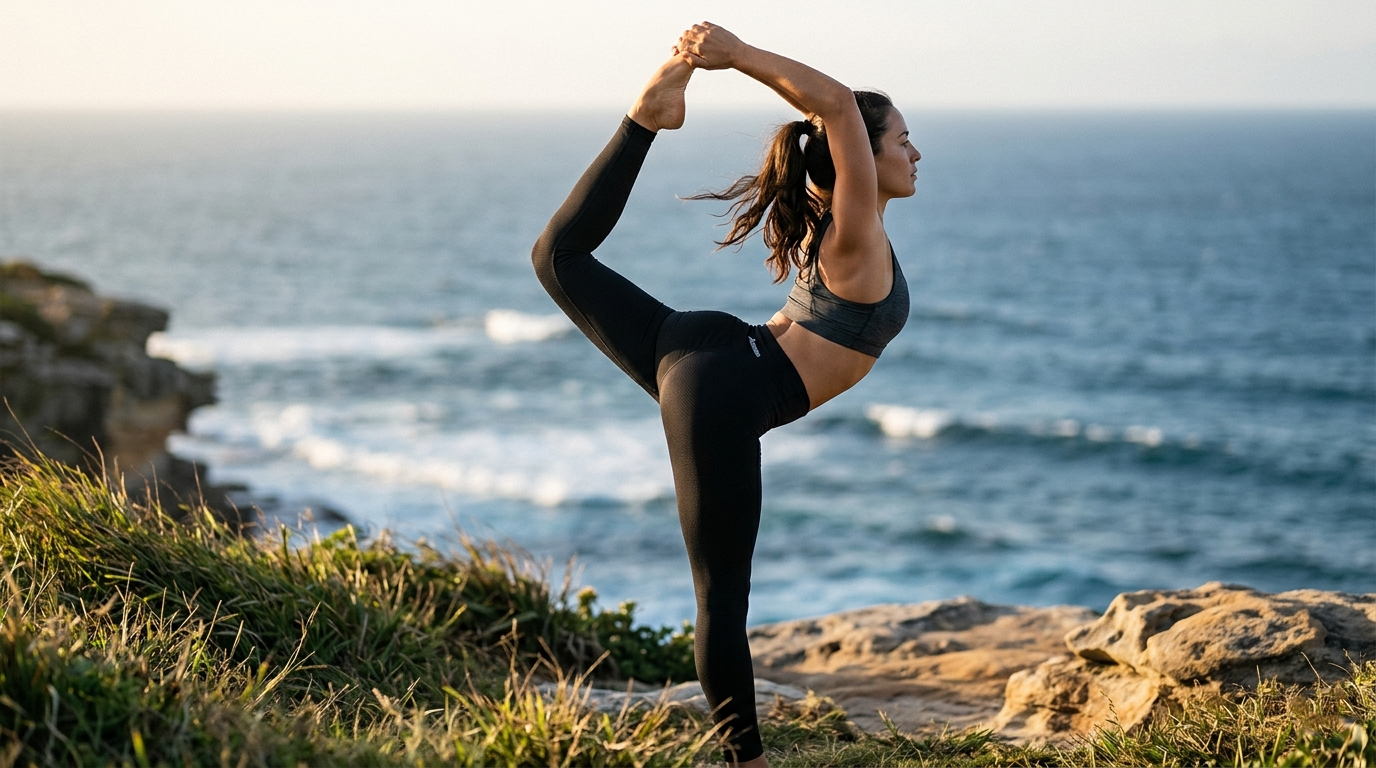
You’re designing leggings or activewear and need fabrics that stretch and recover. But do you understand the difference between 2-way and 4-way stretch?
The wrong choice can lead to baggy knees or torn seams. Many new apparel brands don’t understand stretch fabrics, leading to poor garment performance and customer complaints.
Choosing the right stretch fabric impacts garment fit, comfort, durability, and customer satisfaction. This guide explains stretch fabrics—from spandex content to 4-way stretch—and helps you choose the right stretch level for your garment.
Stretch isn’t magic. It comes from three places: fiber properties, yarn construction, or added elastane.
Natural fibers like wool have inherent elasticity from their crimped structure. But for consistent, high-performance stretch, we usually turn to synthetic solutions.
Elastane (also called spandex or Lycra®) is the workhorse. This synthetic fiber can stretch 400-700% and snap back. Brand names matter less than content: most stretch fabrics blend 3-20% elastane with cotton, polyester, or nylon.
Here’s something I’ve learned the hard way: more elastane isn’t always better. A 20% blend feels powerful but costs more and can feel restrictive if the garment design doesn’t need that much compression.
Knit vs. woven matters too. Knits stretch naturally from their looped structure—add elastane and you get serious mobility. Wovens need elastane to stretch at all, usually just 2-5% for comfort without losing structure.
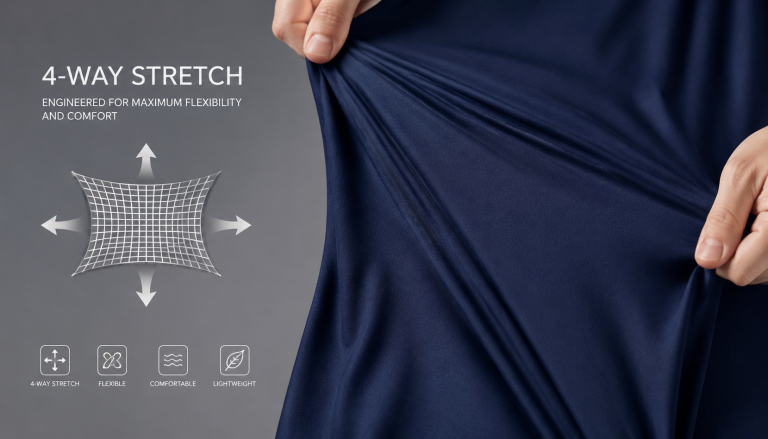
Then there’s direction. 2-way stretch moves in one direction (usually across the grain). 4-way stretch moves both ways—critical for leggings that need to hug curves without restricting movement.
For example, our Stretch Plain Cloth showcases excellent 4-way stretch for activewear. If you’re new to knit structures, understanding Warp vs. Weft Knit first helps clarify why stretch properties vary.
Not all stretch is created equal. I categorize by elastane content because it’s the most reliable predictor of performance.
Light stretch (2-5% elastane) gives comfort without drama. Think jeans that don’t restrict sitting, or dress pants with ease. These retain shape well because the base fabric does most of the work.
Medium stretch (5-10% elastane) is the sweet spot for many activewear pieces. Leggings, yoga pants, golf shorts—they need movement but also structure. Recovery here is critical: the fabric should return to original shape within seconds.
High stretch (15-20%+ elastane) is for compression wear and performance sportswear. These fabrics hold you in, support muscles, and resist sagging. But they cost more and require careful pattern engineering.
Recovery is the hidden hero. Stretch without recovery is just… loose fabric. We test by pulling samples to 150% length, releasing, and measuring residual stretch after 1 minute. Under 3% residual? That’s premium recovery.
One project taught me this the hard way. A client wanted ultra-lightweight yoga leggings. We started with 8% elastane. The first sample felt amazing—until the designer wore them for a 90-minute flow class. Knees bagged. Waistband rolled.
We went back, increased to 12% elastane, and adjusted the knit structure. Second sample: better recovery, but slightly heavier hand. The compromise? We kept the 12% but switched to a finer yarn count. Final product hit the mark: light enough for yoga, recovery strong enough for repeated wear.
That’s the dance: balancing stretch, recovery, weight, and cost. For high-performance needs, our Compression Knit Sports Fabric delivers 20%+ spandex content. For mobility-focused pieces, Stretch Bird Eye Mesh works perfectly for yoga and Pilates.
Remember: heavier fabrics may require more elastane for comfortable movement. If you’re weighing options, our guide on Fabric Weight breaks down how GSM interacts with stretch performance.
| Stretch Level | Elastane % | Best For | Recovery Expectation |
| Light | 2-5% | Jeans, chinos, dress pants | Moderate; shape retention over time |
| Medium | 5-10% | Leggings, yoga pants, golf shorts | Good; returns to shape within seconds |
| High | 15-20%+ | Compression wear, performance sportswear | Excellent; minimal residual stretch |
Start with the garment. A loose t-shirt needs 3-5% elastane for comfort stretch. Compression leggings? 15-20% for support and recovery. Jeans work best with 2-5%—enough for movement without losing that structured feel.
Activity level matters too. Low-impact yoga or loungewear can thrive with 5-10% elastane. Medium-impact gym sessions or running benefit from 10-15%. High-impact compression wear often needs 15-20%+ to maintain support through intense movement.
Target market influences decisions. Premium brands often specify higher elastane percentages for superior recovery. Fast fashion might optimize for cost with lower percentages. There’s no universal right answer—only what serves your specific garment and customer.
Here’s my rule: always test before bulk ordering. Request physical samples with different elastane ratios. Wear them. Wash them. See how they perform in real conditions.
Not sure which stretch level is right? Request Samples from our team to evaluate different spandex ratios firsthand. Our guide on How to Request Fabric Samples walks through effective evaluation techniques.
Stretch fabrics are resilient but not indestructible. Heat is the enemy. High-temperature washing or drying damages elastane’s molecular structure, reducing elasticity over time.
Wash in cool or warm water, never hot. Tumble dry low or air dry. If you’re producing garments, include clear care instructions—your customers will thank you.
Chlorine is another threat. Pool water degrades standard elastane. For swimwear, specify chlorine-resistant options like LYCRA® XFIT. Always clarify end-use during sourcing so the mill can recommend appropriate fiber treatments.
Aging happens. Elastane loses elasticity through fatigue—repeated stretching and washing. Higher quality elastane lasts longer, but all stretch fabrics will eventually relax. We run wash tests (50+ cycles) to project stretch retention over a garment’s expected lifespan.
Red flags to watch for: baggy knees after a few wears signals poor recovery. Fabric that feels “dead” or limp indicates elastane fatigue. These aren’t always manufacturing defects—sometimes it’s a mismatch between fabric choice and garment design.
Stretch fabrics have different shrinkage behavior than stable wovens. Our Fabric Shrinkage guide covers what to expect. Need stretch and recovery test data? Request Test Reports from our team for documentation.
Customization matters. We offer elastane content from 2% to 20%+, with custom blend development through our lab dip service. Consistency across production batches isn’t automatic—it requires tight process control.
Testing isn’t optional. We run in-house stretch and recovery tests following AATCC and ISO standards. Test reports are available upon request, so you know exactly what performance to expect.
Our range covers the spectrum: light-stretch options for comfort pieces, medium-stretch for versatile activewear, high-stretch for compression applications. And if your project needs something specific, custom development is part of the process.
Integrated production—knitting, dyeing, finishing all in-house—means faster lead times (10-20 business days) and consistent quality control. No outsourcing variability to worry about.
Browse our complete stretch fabric collection to find the perfect match for your garment in Performance and Functional Knits. Ready to source stretch fabrics? Contact Us to discuss your garment needs and request samples.
Stretch fabrics require careful selection of elastane content, recovery properties, and garment type. From light comfort stretch to high-performance compression, the right choice impacts garment fit and customer satisfaction.
At XO Fabric, we specialize in custom elastane ratios and stretch fabrics for apparel brands worldwide. With in-house testing and integrated production, we can help you choose the right stretch level for your specific application.
Contact us today to request stretch fabric samples and test the recovery for yourself. Contact XO Fabric to discuss your project requirements and request samples.