Address
Nanlang Industrial Zone, Xingtan Town, Shunde District, Foshan, Guangdong, China
Work Hours
Mon–Fri, 9:00 AM – 6:00 PM (CST/UTC+8). We aim to respond to all inquiries within 48 hours.

Address
Nanlang Industrial Zone, Xingtan Town, Shunde District, Foshan, Guangdong, China
Work Hours
Mon–Fri, 9:00 AM – 6:00 PM (CST/UTC+8). We aim to respond to all inquiries within 48 hours.

The textile industry is evolving faster than ever. From sustainability regulations to smart fabric innovations, 2026 brings both challenges and opportunities for apparel brands.
Brands that anticipate trends gain competitive advantage; those that don’t risk being left behind. Fabric choices impact not just aesthetics and cost, but also brand perception, compliance, and long-term viability. This guide covers the top textile market trends for 2026 — from sustainable materials to digitalization — and how forward-thinking suppliers are positioned to support brands navigating this shift.
Let’s be honest: sustainability isn’t a “nice-to-have” anymore. It’s table stakes. The regulatory landscape is shifting fast, and if your fabric sourcing strategy hasn’t caught up, you’re already behind.
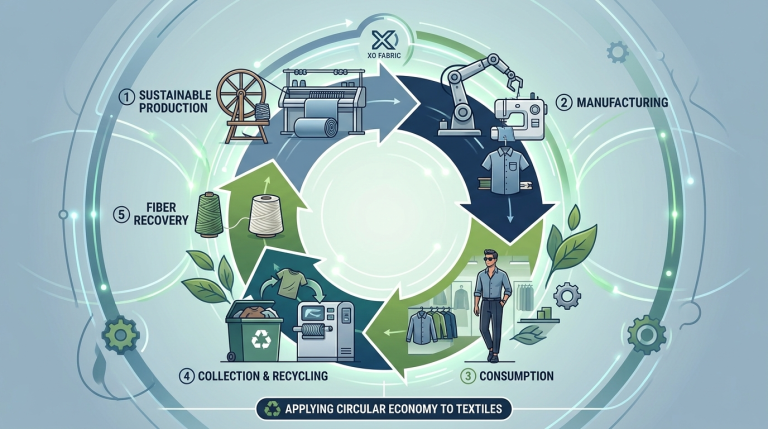
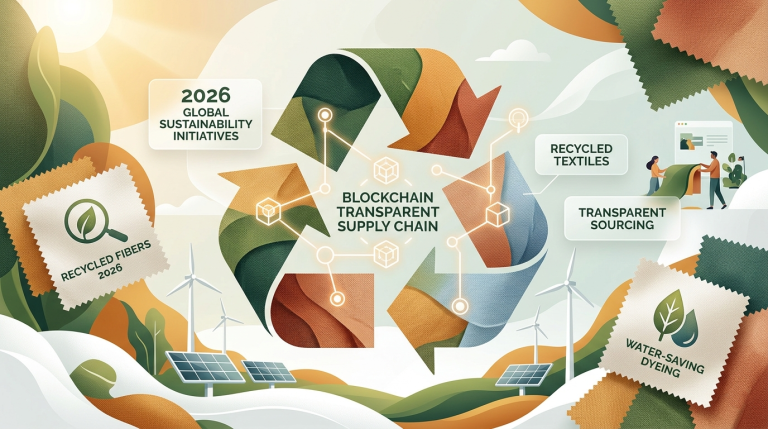
Take the EU Green Deal and its textile strategy. By 2026, mandatory recycling targets and digital product passports mean every garment needs traceable documentation. In the US, California and New York are pushing similar state-level rules. Meanwhile, China’s dual-carbon policy (peaking emissions by 2030, neutrality by 2060) is reshaping production economics. For apparel brands, this translates to higher compliance costs and an urgent need for supply chain transparency.
Consumer pressure isn’t slowing down either. Gen Z and Millennials will pay a 10-15% premium for verified sustainable apparel, but they’re also quick to call out greenwashing on social media. One viral post can undo years of brand building.
Material-wise, we’re seeing real momentum behind recycled polyester (rPET), which now holds ~18% of the global polyester market. Organic cotton and regenerative agriculture practices are gaining traction, though yield variability remains a challenge. Bio-based synthetics like PLA (polylactic acid) offer promising alternatives, but scaling production while maintaining performance specs (think: 180-220 GSM for activewear knits, <3% shrinkage after wash) requires careful partner selection.
I’ve seen brands rush into “eco” collections only to stumble on color consistency—rPET can dye slightly differently than virgin polyester, requiring adjusted dyeing temperatures (typically 5-8°C lower) and extended fixation times. A quick tip: always request lab dips with your target fiber blend before committing to bulk.
For brands exploring these options, our Performance and Functional Knits category includes options for eco-conscious brands. And if you want to dig deeper into the regulatory side, we broke down the key compliance deadlines in our post on Sustainable Textiles 2026.
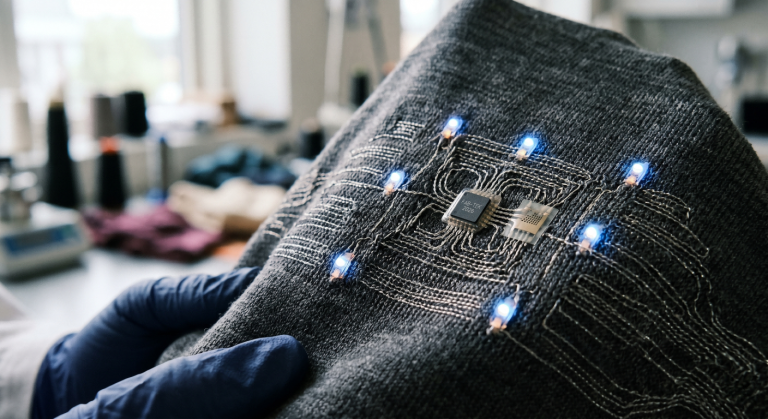
First, a quick clarification: “smart textiles” (fabrics with embedded sensors, conductive yarns, or phase-change materials) are still niche, with market CAGR around 15% but high MOQs and specialized sourcing. “Functional textiles,” however—moisture-wicking, antibacterial, thermal-regulating—are mainstream and growing fast.
Moisture-wicking has become standard for sportswear, but performance varies widely. A good benchmark: look for fabrics that move moisture at ≥8 mm/s in vertical wicking tests. Antibacterial finishes saw a post-pandemic surge, and demand persists, especially in healthcare and travel apparel. But here’s a nuance: silver-ion treatments can affect dye uptake. I once spent three extra weeks recalibrating a navy dye lot because the silver ions interfered with the reductive clearing step. Annoying? Yes. Avoidable? Only with early collaboration between dyeing and finishing teams.
Thermal regulation is another growth area, particularly for outdoor and workwear. Phase-change materials (PCMs) can absorb/release heat within a 28-32°C range, but they add cost and can reduce fabric breathability if over-applied. A balanced approach: target 3-5% PCM loading for base layers to maintain comfort without compromising moisture management.
Looking ahead, near-future innovations like thermochromic (color-changing with temperature) or photocatalytic self-cleaning coatings are moving from lab to pilot. But sourcing implications matter: smart textile components often require 2-3x longer lead times and specialized handling. If you’re exploring this space, our Silver-Ion Antibacterial Jersey delivers proven performance for sportswear and healthcare apparel. And for a deeper dive on the mechanics, check out our technical guide on the Science of Moisture-Wicking.
Digital product passports (DPP) are coming fast. The EU expects textiles to comply by 2026/2027, meaning QR codes on garments that link to material composition, origin, care instructions, and recycling info. Blockchain is one option for traceability, but simpler database solutions can work too—what matters is data accuracy and accessibility.
On the production side, 3D knitting and seamless technology are reducing waste and improving fit. Whole-garment knitting eliminates side seams, which can cut fabric waste by 15-20% and improve comfort for activewear. But adoption barriers remain: high equipment costs and design limitations for complex patterns. Still, for the right product—like a technical base layer or minimalist collar—the efficiency gains are compelling. Our Flat Knit Collar (Whole Garment) capability is one example of how this tech can reduce waste while improving garment quality.
AI is also creeping into textile design and production. AI-powered color matching can reduce lab dip iterations by 30-40%, and predictive maintenance for knitting machines helps avoid unplanned downtime. But I’m cautious about over-automation: sometimes a human eye still catches subtle hand-feel issues algorithms miss. We’re taking a gradual approach, focusing AI tools on quality control first before expanding to design.
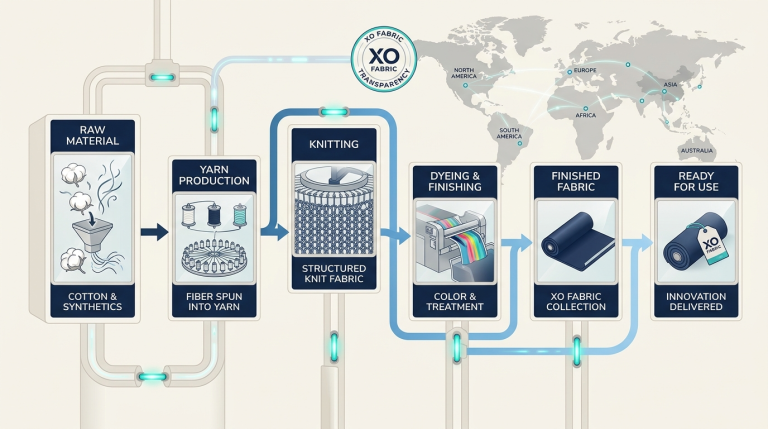
Transparency itself is becoming a brand differentiator. Consumers increasingly ask “who made my clothes?” and expect answers. For brands, this means choosing partners who can document their processes clearly. If you’re curious about how textile companies are adapting, our post on Supply Chain Transparency breaks down practical steps.
Nearshoring and friend-shoring are reshaping sourcing strategies. Brands are diversifying away from single-country dependence, with Turkey, Mexico, and Vietnam gaining share for US/EU markets. But let’s be realistic: China remains dominant, especially for complex knits and integrated production. The shift isn’t about leaving China—it’s about smart risk mitigation.
China’s textile industry is evolving too. There’s a clear move up the value chain, from commodity fabrics to high-tech textiles. Environmental regulations are pushing consolidation, which actually benefits established mills with integrated facilities. For apparel brands, this means partners with in-house knitting, dyeing, and finishing can offer better consistency and faster problem-solving.
Sourcing strategy implications? Dual-sourcing for critical items is wise. But don’t spread yourself too thin—building long-term relationships with a few trusted suppliers often yields better results than managing a dozen transactional vendors. Stability matters: consistent GSM tolerance (±5%), reliable shrinkage control (<3% after industrial wash), and on-time delivery are worth more than marginal cost savings.
If you’re evaluating China’s role in your 2026 strategy, our analysis of the China Textile Industry Outlook covers key dynamics. And if you’re looking for a stable, experienced partner to discuss long-term collaboration, you can Contact XO Fabric to start the conversation.
Fast fashion is evolving into “ultra-fast,” with players like Shein and Temu setting new speed benchmarks. Traditional brands struggle to keep up, but the real opportunity isn’t just speed—it’s smart agility.
Mass customization is gaining traction. On-demand production reduces inventory risk, and digital printing/sublimation enables small runs without massive setup costs. But fabric suppliers need to adapt: smaller batches, faster turnarounds, and flexible MOQs. For context, a typical knit fabric MOQ might be 1,000m, but agile brands are asking for 300-500m to test new designs. That’s where low-MOQ options become strategic.
Agile supply chains often rely on vertical integration. When knitting, dyeing, finishing, and value-added processes (like flocking) happen under one roof, communication gaps shrink and lead times compress. For example, a standard lab dip might take 7-10 days, bulk production 10-20 days—but only if workflows are tightly coordinated. I’ve seen projects derail because the dyeing team didn’t know the finishing team needed a specific pH range for a water-repellent treatment. Simple misalignment, big consequences.
If you’re mapping out development timelines, our post on From Sample to Bulk outlines realistic expectations. And if you need fabric samples fast to keep your timeline on track, you can Request Samples to expedite your development process.
Okay, so trends are one thing. Action is another. Here’s how to translate this into your sourcing strategy.
First, audit your supply chain. Do your fabric suppliers have integrated production? Can they provide transparency documentation without you chasing them for weeks? Integrated facilities reduce handoff errors and speed up problem resolution. For instance, if a bulk shipment shows slight shade variation, an in-house dyeing team can often reprocess within days, not weeks.
When investing in sustainable materials, be strategic. Don’t greenwash—substantiate claims with certifications (GRS, OCS, GOTS). Start with one product line to test market response before scaling. And remember: eco-friendly fibers can behave differently. Recycled polyester might require adjusted tension settings on circular knitting machines to maintain consistent loop formation. A quick lab test saves bulk headaches.
Build agility into your sourcing. Diversify suppliers for risk mitigation, but also negotiate flexible MOQs for new product lines. Low-MOQ options let you test designs without committing to large inventory. And factor in lead time buffers—especially for functional finishes that require extra curing or testing.
Finally, stay informed. Follow industry publications like Textile World or Business of Fashion. Attend trade shows like Premiere Vision. But also, subscribe to insights from partners who are in the trenches. You can explore our full range at All Products to find fabrics that align with 2026 trends. And if you’re ready to future-proof your apparel line, Contact Us to discuss trend-aligned fabric solutions.
Behind the scenes, preparation looks like incremental upgrades, not overnight revolutions. On the sustainability front, that means energy-efficient machinery (heat recovery systems can cut dyeing energy use by ~15%), waste reduction initiatives like fabric scrap recycling, and exploring eco-friendly fiber partnerships. But it’s not just about materials—process efficiency matters too.
We’re also expanding our functional fabric range. R&D focus areas include moisture-wicking optimizations (targeting ≥10 mm/s vertical wicking), antibacterial durability testing (maintaining efficacy after 50+ washes), and thermal regulation for specific end-uses. Custom finish development—water-repellent, flame-retardant, UV-protective—is another growth area. You can discover our expanding range of functional fabrics for forward-thinking apparel brands in our Performance and Functional Knits category.
Supply chain transparency isn’t just a compliance checkbox. It’s about building trust. That means detailed product documentation (material source, production process), factory tours for qualified buyers, and planning for digital product passport compatibility. And through it all, maintaining quality and reliability: 50+ technicians for quality control, a 2,000㎡ finished goods warehouse for quick delivery, and 20+ years of proven track record.
If you’re ready to partner with a future-ready textile supplier, you can Partner with XO Fabric to start the conversation.
The textile industry in 2026 is shaped by sustainability regulations, smart textile innovations, digitalization, supply chain realignment, and speed-to-market demands. Apparel brands that anticipate and adapt to these trends will thrive—not by chasing every shiny innovation, but by making thoughtful, data-informed choices about materials, partners, and processes.
At XO Fabric, we’re committed to evolving with the industry. From sustainable material exploration to integrated production efficiency, we’re preparing for 2026 and beyond. Ready to future-proof your apparel sourcing? Contact XO Fabric to discuss trend-aligned fabric solutions and request samples.