Address
Nanlang Industrial Zone, Xingtan Town, Shunde District, Foshan, Guangdong, China
Work Hours
Mon–Fri, 9:00 AM – 6:00 PM (CST/UTC+8). We aim to respond to all inquiries within 48 hours.

Address
Nanlang Industrial Zone, Xingtan Town, Shunde District, Foshan, Guangdong, China
Work Hours
Mon–Fri, 9:00 AM – 6:00 PM (CST/UTC+8). We aim to respond to all inquiries within 48 hours.
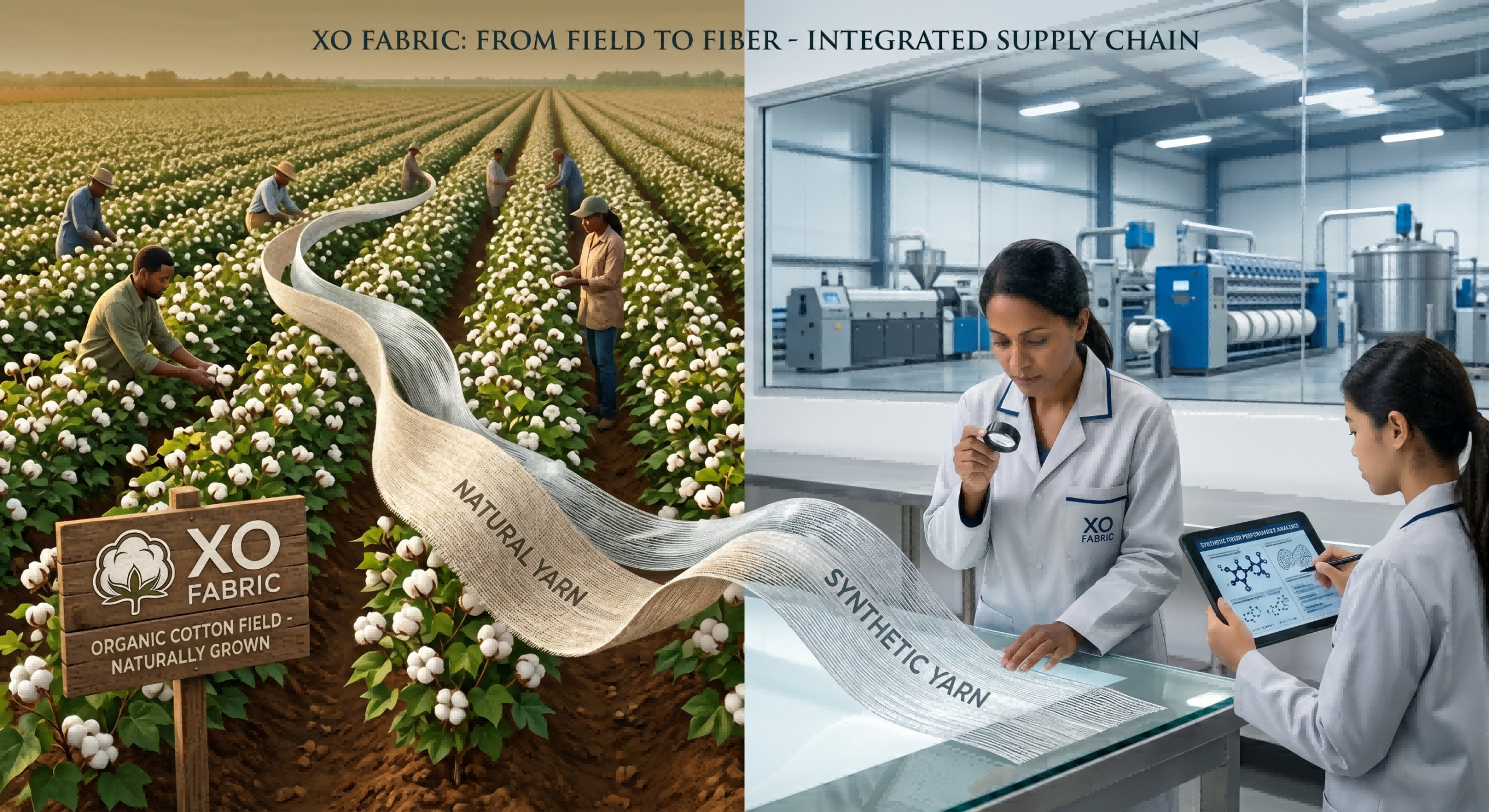
The textile industry kicks out 92 million tons of waste every year. Picking between natural and synthetic fabrics has never felt more complicated. We used to believe the old rule that natural always wins. 2026 throws that right out the window.
Bio-based synthetics and high-quality recycled materials are completely flipping the script. If you are sourcing for a brand or designing a collection, the pressure is real. Consumers and regulators want proof. They do not want pretty marketing copy.
This guide cuts through the noise with actual data on cotton, polyester, and the newer alternatives. It is meant to help you make choices that actually hold up under scrutiny. Let us get into the mechanics.
2026 is acting as a hard pivot point for how we think about materials. New EU sustainability rules, carbon labeling mandates, and rapid bio-based innovation are forcing mills to adapt. Sustainability is no longer a single metric. You have to weigh water consumption against carbon output.
You also need to check biodegradability and track microplastic shedding. It feels messy, but it is absolutely necessary. When you are reading supplier documentation, understanding the raw breakdown saves you from costly mistakes. I always tell my pattern makers to check the fiber composition first.
Understanding lab reports separates educated buyers from guesswork. How to Read Fabric Lab Reports can save you from trusting vague eco-friendly tags. We need a practical framework that matches your specific priorities. Some brands care most about water conservation. Others are chasing carbon neutrality.
Neither approach is wrong. You just have to pick a lane and measure consistently. I usually start by mapping the finish requirements before even looking at yarn types. Heat setting alone can ruin a low-impact fiber if you do not adjust the parameters.
Conventional cotton guzzles water. We are talking 10,000 to 20,000 liters per kilogram. Polyester barely sweats during production. It uses roughly 62 liters for cooling, but it burns serious energy. The carbon math is equally telling. Cotton usually sits around 5 to 10 kg CO2 per kilogram of fiber.
Virgin polyester runs 6 to 8 kg. Swap in recycled polyester, and that number drops to 1.5 or 2 kg. Land use swings hard in cotton’s favor against it. You need two to three hectares to grow a ton of fiber. Synthetics take up almost zero space.
Organic cotton changes the equation. It slashes water use by roughly 91% and drops synthetic pesticides entirely. The catch? Yields drop by 20 to 30%, which keeps prices elevated. I remember working on a spring capsule last year where we kept switching between organic jersey and a recycled poly-blend.
The cotton felt incredible against the skin. It shrank 4% after the first wash. The poly blend held its shape like steel. We eventually compromised on a 50/50 cut. We stabilized the hems with a 3.5mm stitch length and called it good.
| Metric | Conventional Cotton | Virgin Polyester | Recycled Polyester | Organic Cotton |
| Water (L/kg) | 10,000-20,000 | ~62 | ~62 | 7,000-10,000 |
| Carbon (kg CO2/kg) | 5-10 | 6-8 | 1.5-2 | 3-5 |
| Land Use | High (2-3 ha/ton) | Negligible | Negligible | High |
Regulatory shifts are tightening the screws on both sides. Sustainable Textiles Regulations 2026 will force clearer labeling soon. You will have to account for these trade-offs in your tech packs. The fabric needs to survive the needle before it ever hits the cutting table.
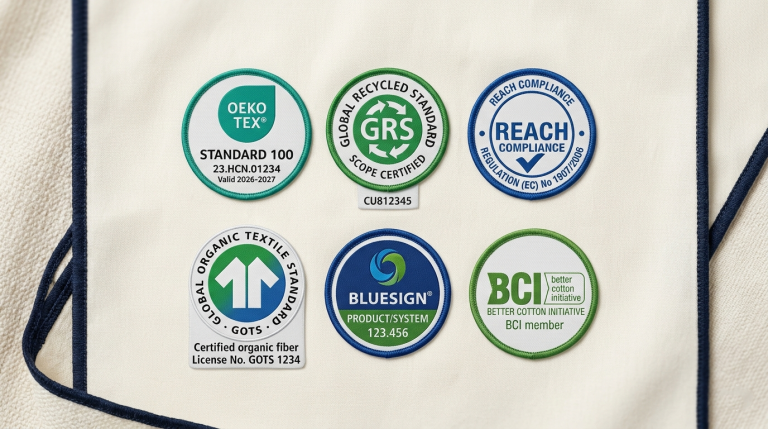
Certifications used to be sticker collections. Now they are actual audit trails. GRS verifies recycled content with a 20% minimum threshold while tracking social and chemical compliance through the supply chain. Oeko-Tex Standard 100 scans for harmful residues.
It makes sure nothing toxic touches the consumer’s skin from yarn to finish. GOTS covers organic processing with strict ecological and labor rules. Bluesign focuses on resource productivity and emission cuts. The Higg Index measures broader supply chain impact for climate action charters.
I have seen too many labels slapped on bulk rolls without proper verification. Always ask for the current audit cycle dates. A Fabric Certifications Guide will help you cross-reference these claims without getting bogged down in jargon. My rule of thumb? If a supplier will not hand over the certificate number, assume it is marketing fluff.
Documentation is the only thing that survives a compliance audit. I keep a physical binder of chain-of-custody reports for every active SKU. It sounds old school, but digital folders get corrupted. Paper survives.
Virgin polyester starts as petroleum-derived PET. We are producing roughly 40 million tons of it every year. That locks us firmly into fossil fuel cycles. The energy demand is steep. Manufacturing burns about 865 megajoules per 100 kilograms.
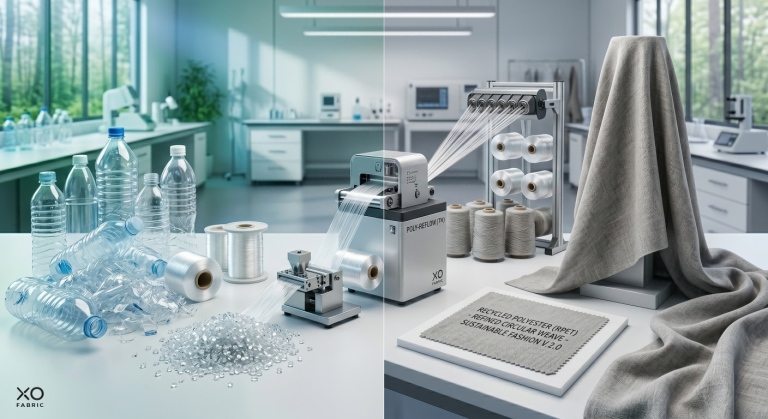
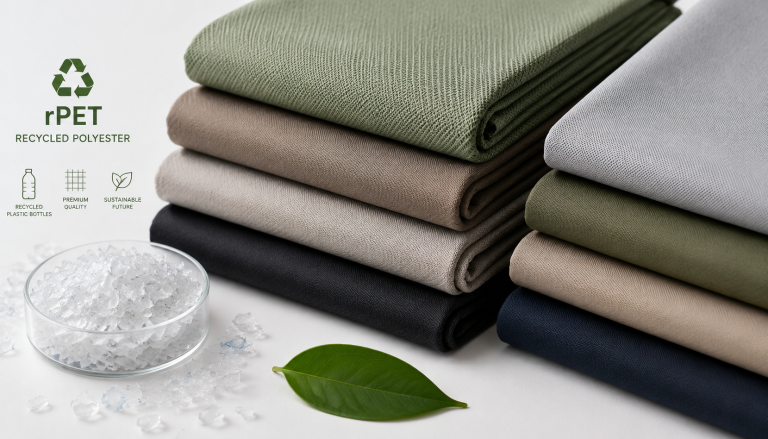
High-temperature melting and spinning drive those numbers. Then you wash it. A single synthetic garment can shed 700,000 microplastic fibers in one cycle. It adds up fast. Recycled polyester, or rPET, pulls from post-consumer bottles or mill scrap.
It cuts carbon emissions by 60 to 70% compared to virgin stock. But it is not a magic bullet. You hit a ceiling on how much you can blend in before the fiber degrades. Each mechanical recycling cycle shortens the polymer chains. Eventually, you get downcycled insulation or carpet underlay.
When you are ordering, check the melt flow index and tenacity reports. How to Read Fabric Specifications will show you if the recycled content is actually holding up to production stress. I always run a tear strength test on rPET knits before committing to a full production run. The variance can be brutal.
Plant-derived polymers are stepping off the lab bench. Bio-based PET pulls carbon from sugarcane or corn instead of crude oil. It usually trims emissions by 20 to 50%. Econyl regenerates nylon from ocean waste and discarded fishing nets. It loops infinitely without losing tensile strength.
Sorona brings in 37% plant-based corn sugar. It requires 30% less energy and drops greenhouse gases by half compared to standard nylon. PLA comes straight from corn starch and composts under industrial conditions. I once sampled a PLA t-shirt prototype for a summer festival line.
It felt crisp and held a sharp drape. Then we hit the finishing lab. The heat setting machine ran at 160°C. The PLA started stiffening almost immediately. We had to drop the temp to 135°C and adjust the steam pressure. It worked, but the timeline slipped by a week.
Bio-materials demand careful machine calibration. Always test your dyeing and finishing parameters before committing to a full roll. The term bio-based is heavily abused. Verify the actual renewable content percentage. Check the 2026 Textile Market Trends report to see which innovations are actually scaling past pilot batches.
Linen grows like a weed in temperate zones. It uses 70% less water than cotton and sequesters carbon while it matures. Hemp is even hungrier for soil health. It needs almost no irrigation and fights pests naturally. It yields two to three times more fiber per acre than cotton.
TENCEL Lyocell runs a closed-loop system that recovers 99% of its solvent. It breaks down cleanly in soil. Modal comes from beech trees and absorbs 50% more moisture than cotton. Bamboo deserves a harsh reality check. Most bamboo fabric on the market is just rayon processed with heavy chemicals.
True bamboo linen exists, but it is mechanically crushed and costs a premium. I usually steer clients toward TENCEL blends when they want that soft hand feel without the chemical bath. When comparing drape and weight, Understanding Fabric Weight and GSM helps you match the fiber to the garment structure.
| Fiber | Water Needs | Key Trait | Processing Note |
| Linen | Low | Carbon-sequestering | Wrinkles easily, needs pressing |
| Hemp | Very Low | Pest-resistant | Stiff initially, softens with wash |
| TENCEL | Very Low (20L) | Closed-loop solvent | Sensitive to high heat setting |
| Modal | Low | High absorbency | Prone to shrinkage if not pre-shrunk |
A heavy linen canvas needs different stabilization than a light modal knit. I always use a ballpoint needle size 90 for modal to prevent skipped stitches. The fabric is slippery. Tension adjustment is key.
Carbon accounting strips away the marketing. Here is how the numbers actually stack up per kilogram of finished fabric. Conventional cotton sits at 5 to 10 kg. Organic cotton drops to 3 to 5 kg. Virgin polyester runs 6 to 8 kg.
Recycled polyester hits 1.5 to 2 kg. Virgin nylon jumps to 9 to 10 kg. Recycled nylon like Econyl lands at 0.9 kg. TENCEL or Lyocell sits between 0.6 and 1.2 kg. Shipping moves the needle more than people admit.
Air freight can triple the footprint of a low-impact yarn. Always factor in origin versus your cutting facility. Demand third-party verified lifecycle assessments. Self-reported numbers rarely survive scrutiny. Supply Chain Transparency in Textiles gives you the tools to track those emissions from field to finished roll.
I keep a simple spreadsheet mapping freight routes. Ocean freight from Asia adds about 0.2 kg CO2 per kg of fabric. Air freight jumps that to 0.6 kg. It sounds minor until you multiply it by ten thousand yards. Planning lead times correctly saves carbon.
Water stress defines modern manufacturing. Conventional cotton pulls 10,000 to 20,000 liters per kilogram. Organic rain-fed cotton sits around 7,000 to 10,000. Polyester and nylon sip at 62 and 37 liters respectively. TENCEL drops to 20 liters thanks to its closed-loop chemistry.
Volume is not the only danger. Cotton fields leak pesticides into groundwater. Synthetic dyeing operations historically dump heavy metals and azo dyes into local rivers. Wet processing still accounts for roughly 20% of global industrial water pollution.
We are finally seeing CO2 dyeing, foam dyeing, and digital printing slash consumption by 95%. I tested a foam-dyed poly twill last quarter. The color penetration was surprisingly even. The fabric came out dry within minutes. No rinse cycle was needed.
It completely changes how you schedule production floors. XO Fabric Sustainable Practices outlines several of these water conservation methods in action. I recommend asking your dye house about their effluent treatment capacity. If they cannot handle heavy metal filtration, look elsewhere.
Roughly 35% of ocean microplastics trace back to synthetic laundry. Polyester fleece sheds about 730,000 fibers per wash. A poly-cotton blend drops that to 500,000. Pure cotton sheds almost nothing. It is a mechanical issue. Friction breaks weak polymer chains during agitation.
We tried implementing Guppyfriend bags and Cora Balls on a recent activewear order. They helped, but they are consumer-side fixes. Real change happens at the mill level. Anti-shedding plasma treatments and bicomponent fibers are gaining traction.
Recycled polyester actually sheds 75% fewer fibers than virgin stock. The polymer structure stabilizes better during extrusion. When you are designing high-friction gear, lean toward longer staple fibers or tighter knit constructions. Circular Fashion: Closing the Loop explores how end-of-life systems are adapting to this shedding reality.
I always specify a 7-needle coverstitch on synthetic hems. It reduces tension stress on the seam. Less stress means fewer broken fibers during wear. Small construction choices actually move the needle.
Decomposition timelines separate fiction from fact. Cotton breaks down in one to five months. Linen takes two to three months. Wool lingers for one to five years but returns to the soil naturally. Polyester needs two hundred years minimum. Nylon hangs around for three to four decades.
TENCEL composts under industrial conditions. Mechanical recycling shortens natural fibers until they turn to dust. Only 12% of textiles actually get recycled. The other 85% rots in landfills or burns. Chemical recycling shows promise but lacks scale.
Take-back programs are finally forcing brands to design for disassembly. I have started asking suppliers about mono-material constructions. Single-fiber garments separate cleanly in sorting facilities. Blends get jammed in the shredders. Circular Fashion: Closing the Loop breaks down how these infrastructure shifts are reshaping sourcing habits.
I always mark tech packs with clear fiber breakdowns now. Recycling plants need readable labels. If the garment has mixed trims, it goes to waste. Simplicity wins in the circular economy.
Blends let you engineer specific hand feels and performance traits. A 50/50 organic cotton and recycled polyester mix balances durability with breathability. TENCEL paired with modal creates a silky drape that resists wrinkling. Hemp and organic cotton make sturdy, low-impact casual wear.
Recycled nylon with a touch of elastane delivers stretch without the virgin carbon tax. Always look for GRS certification on the recycled percentage. Here is where things get messy. I worked with a streetwear label trying to launch a fully sustainable hoodie.
They wanted hemp for the body and a cotton-poly blend for the hood to keep it soft. The problem? Recycling facilities cannot separate them later. We ran three prototype rounds. The first shrank unevenly. The second pilled after two washes.
We finally settled on a 70/30 organic cotton and rPET blend for the entire garment. We added a resin finish to reduce pilling. We accepted a slightly stiffer hand. It was not perfect, but it met their carbon targets and survived commercial laundering. Cotton vs Polyester vs Blends walks through more of these structural compromises.
Blends are harder to recycle, so design for mono-materials when end-of-life matters. I always keep a swatch library of failed blends. They teach you more than the successes ever could.
You cannot optimize for everything at once. Pick your battlefield. Is water your main concern? Go TENCEL or recycled poly. Chasing carbon drops? Recycled nylon or organic cotton wins. Worried about microplastics? Lean natural or use treated synthetics.
Map the full lifecycle. Production is only half the story. Transportation, care labels, and disposal methods dictate the real impact. Verify every certification. Third-party audits prevent greenwashing. Match the fiber to your customer. Activewear needs moisture management. Formal wear demands drape and crease resistance.
Kids’ clothes require chemical safety and extreme durability. Ask your suppliers for raw LCA data and carbon reports. Start with recycled content if you need quick wins. It is the easiest entry point with immediate environmental gains.
Use a Quality Control Checklist for Shipment to ensure the sustainable fabric actually performs under your production conditions. I always run a wash test before bulk cutting. Shrinkage ruins good intentions.
XO Fabric has built its sourcing around verified chain of custody. We stock GRS-certified recycled polyester and nylon that meet strict environmental thresholds. Every dye lot passes Oeko-Tex Standard 100 testing to guarantee consumer safety.
We have invested heavily in closed-loop dyeing systems and renewable energy offsets to shrink our operational footprint. Our sustainable collection is curated specifically for brands that need transparency without sacrificing quality. We provide full documentation on material origins and finishing processes.
If you need a custom weight or a specific recycled percentage, we work directly with mills to develop bespoke runs. XO Fabric Sustainable Practices details our internal targets and verification methods. The supplier handles the compliance so you can focus on design.
The next three years will force structural changes. Mandatory EU digital product passports hit textiles by 2027. You will need to scan a QR code and see every dye lot, mill location, and carbon credit. Algae-based foams, lab-grown leather alternatives, and carbon-capturing polymers are moving past prototype stages.
Regenerative agriculture is shifting the goalpost from do less harm to actively heal soil. Circular business models like rental and resale are pushing designers toward modular construction. Carbon-negative materials will likely dominate premium tiers. Extended producer responsibility laws will expand globally.
They will make brands financially accountable for landfill waste. Track the 2026 Textile Market Trends to anticipate which regulatory shifts will hit your supply chain first. I keep a calendar marked with compliance deadlines. Missing one costs more than switching fibers early.
There is no single perfect fiber. The right choice depends entirely on your garment’s function, your brand’s values, and your customer’s lifestyle. Progress matters more than perfection. Every percentage point of recycled content or every liter of saved water shifts the industry forward.
Always verify green claims with hard documentation. Partner with transparent mills that welcome audits instead of hiding behind vague labels. Sustainability moves fast. New data drops monthly. Keep updating your sourcing playbook.
By 2026, sustainable fabric selection is not a niche preference. It is a business requirement. Start building that infrastructure today. XO Fabric Advantage: Your Sustainable Partner can help you navigate the transition without compromising on quality or margins. The needle is in your hands now.