Address
Nanlang Industrial Zone, Xingtan Town, Shunde District, Foshan, Guangdong, China
Work Hours
Mon–Fri, 9:00 AM – 6:00 PM (CST/UTC+8). We aim to respond to all inquiries within 48 hours.

Address
Nanlang Industrial Zone, Xingtan Town, Shunde District, Foshan, Guangdong, China
Work Hours
Mon–Fri, 9:00 AM – 6:00 PM (CST/UTC+8). We aim to respond to all inquiries within 48 hours.
Choosing between knit and woven fabrics feels like picking a foundation before laying a single brick. Get it wrong, and everything from fit to customer returns starts to crack.
New brands often grab woven for a relaxed tee or force a knit into a sharp blazer, only to watch the garments lose their shape or fight the wearer. I’ve seen production runs stall because the fabric couldn’t handle the intended use, and the cleanup costs more than the material itself. In this guide, we’ll break down how these two construction methods actually behave, where they excel, and how to match them to your specific garment without guessing.
Knit fabrics aren’t woven; they’re built from interlocking loops of yarn. Think of it like a chain-link fence where each stitch pulls the next one tight, but leaves room to flex. You can make them by hand with needles or run them through industrial circular machines at high speed. The loop structure is what gives the material its signature behavior. Without that flexibility, you’re just looking at a stiff mesh.
Manufacturing usually splits into two paths. Weft knitting runs the yarn horizontally, feeding back and forth or in continuous rounds. It’s the workhorse for everyday jerseys and casual wear. Warp knitting runs multiple yarns vertically at once, interlocking them side-by-side. It’s faster for larger runs and produces a tighter, more stable mesh. The mill runs both systems, which means we can switch between a fluid single jersey and a structured warp mesh without outsourcing. Speed here isn’t just about throughput; it’s about keeping dye lots consistent across the run.
When you’re evaluating a knit, look closely at the stitch length and GSM. A shorter stitch (around 3.8 to 4.2 mm) packs the loops tighter, giving you a heavier hand and better recovery. Push it past 5.0 mm, and you’ll get a loose, airy fabric that drapes beautifully but stretches out if you’re not careful. Recovery depends heavily on fiber blend and mechanical setting, but a well-balanced single jersey with 2% elastane should bounce back within 5% of its original width after a standard tension test. If the fabric doesn’t recover, check your steam finishing. Over-steaming relaxes the yarns too much and kills the memory.
Pilling happens when loose fiber ends work their way to the surface through abrasion. It’s not a defect; it’s physics. Short-staple cottons or loosely spun yarns will fuzz faster because there’s less fiber strength holding the ends down. If you’re making a high-movement piece like a track jacket, I’d lean toward a long-staple combed cotton or a poly-cotton blend with a mechanical brushing finish controlled to remove weak fibers. Machine washing on a gentle cycle and skipping high-heat drying will buy you months of extra wear. Tumble drying on high basically guarantees you’ll see fuzz within three cycles.
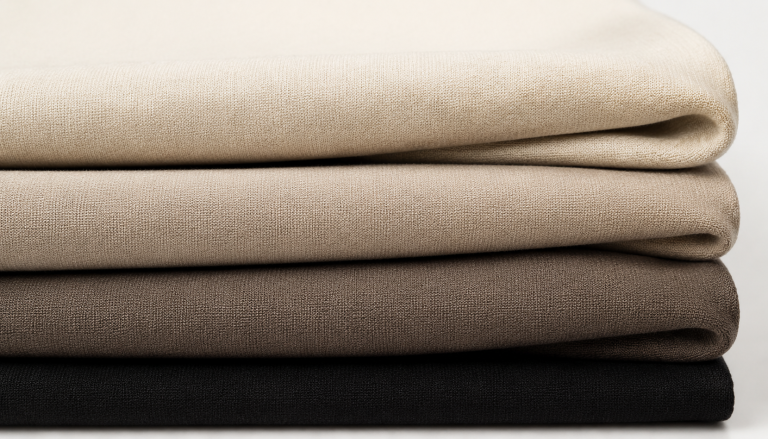
Knits naturally resist wrinkles because the loops redistribute tension instead of locking into sharp creases. They move with the body, drape softly, and generally wash and dry without fuss. That’s why they dominate casual and performance wear. You’ll see them in t-shirts, polos, activewear, loungewear, and even structured cardigans. If you’re looking for a reliable foundation that balances elasticity with a clean surface, check out our Stretch Plain Cloth (Elastic Single Jersey). It’s built for brands that need consistent recovery without sacrificing that smooth hand feel.
For a broader look at foundational constructions, browse our Knit Base Fabrics collection. Most of the pieces you’ll design will start here, and adjusting the stitch density alone can shift a garment from summer weight to mid-layer territory.
Woven fabrics rely on a completely different mechanical principle. Instead of loops, they use two perpendicular yarn sets: the warp (running lengthwise on the loom) and the weft (shuttling across). The interlacing creates a grid that locks into place. Unless you blend in elastane, there’s almost zero give. The structure holds, lines stay sharp, and the fabric behaves predictably under stress. That rigidity is a feature, not a bug, when you’re cutting tailored shapes.
The loom does the heavy lifting. Warp yarns are tensioned first, then the weft passes over and under in repeating patterns. Plain weave alternates every thread, giving a tight, flat surface. Twill offsets the crossing points, creating those diagonal ridges you see in denim or chinos. Satin weaves let the warp or weft float over multiple threads, producing a slick, lustrous face. Each pattern changes how the fabric drapes, wrinkles, and wears. Weaving tends to be slower than circular knitting, especially for complex dobby or jacquard setups, but the payoff is in the stability. Loom calibration takes time, and getting the tension even across a 60-inch reed is part art, part engineering.
Stability is the whole point. A well-constructed twill at 280 GSM will hold a crease through a full workday and resist abrasion far better than a knit of the same weight. The downside is care. Plain weaves wrinkle easily because the rigid grid locks into folds. You’ll need a steam press or dry heat to reset the fibers. If you’re working with a woven that includes 3% spandex, you’ll get a fractional stretch, but you must lock the seam with a narrow zigzag or coverstitch, or the fabric will ladder under tension. I’ve lost good garments to seam blowouts simply because the operator used a straight stitch on a stretch woven.
I’ve spent hours fighting woven shrinkage on production runs because the pre-shrinking cycle wasn’t calibrated for the specific fiber blend. Always check the washing protocol. A cotton-rich plain weave can shrink 4 to 6% if it hits hot water without sanforization. Plan your pattern grading accordingly, or you’ll end up with button-downs that gap at the waist. Running a test wash on a production lot before full cutting saves headaches later. It’s tedious, but cheaper than reworking fifty finished garments.
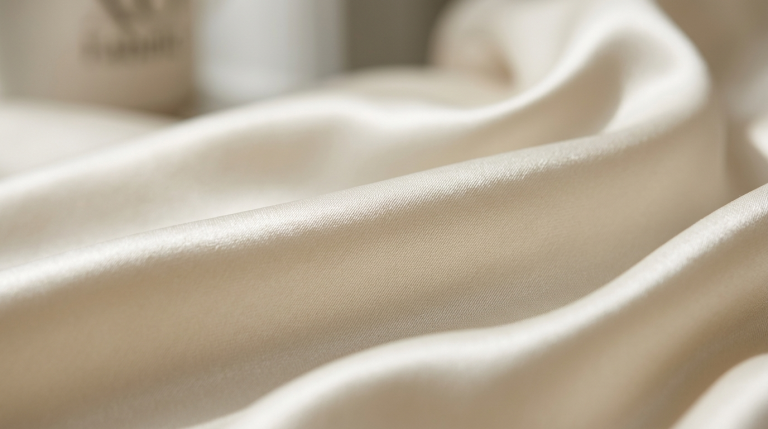
Wovens build structure. They’re the backbone of dress shirts, blazers, tailored trousers, A-line skirts, and heavier outerwear. They also dominate home textiles where durability and clean lines matter more than stretch. Sometimes you want that crisp silhouette but hate the stiffness. That’s where hybrid constructions come in. If you love the tailored look but need all-day comfort, our Ponte Double Knit bridges the gap. It’s technically a knit, but the double-layer construction gives it a woven-like drape and exceptional shape retention.
When you need activewear that maintains its architecture through intense movement, explore our Performance and Functional Knits. They’re engineered to hold their form without sacrificing flexibility, and the finish treatments are baked into the knitting stage rather than applied as a post-treatment spray that washes out.
Picking the right construction usually comes down to three questions: how much stretch does the garment need, how should it hold up after fifty washes, and what’s the production timeline? Let’s break it down without the marketing fluff.
Knits breathe and move. A standard single jersey can stretch 20 to 40% laterally, and with a well-placed elastane blend, it bounces back cleanly. Wovens sit at zero stretch unless you engineer it in. Even then, 2 to 5% is the ceiling before the fabric starts to bag out. Try pulling a cotton tee sideways, then do the same with a poplin shirt. The difference isn’t just comfort; it’s how the garment follows the body’s contours. If your pattern requires ease, knit forgives. If it requires precision, woven demands it.
Knits feel flexible against the skin. The loops compress and expand, creating that “second skin” drape. Wovens can be soft, especially after enzyme washing or stone washing, but they generally sit crisper. I’ve found that for anything requiring precise tailoring or sharp seams, woven wins. For loungewear or compression layers, knit is non-negotiable. Sometimes I’ll run a garment through a silicone softener just to take the edge off a woven, but you can’t fake the natural flex of a well-set jersey.
Here’s where the trade-offs get interesting. Woven surfaces resist abrasion better because the yarns are locked flat. Knits can pill, especially at high-friction zones like the underarms or inner thighs. They also tend to lose shape if hung improperly on thin hangers. On the care side, knits usually survive a machine wash and tumble dry low. Wovens often demand ironing to look their best. If you’re building a travel-friendly line, the knit care routine saves you hours. That said, a properly finished woven will outlast a cheap knit by years. It’s about matching the fabric to the lifestyle, not just the price point.
Knitting cycles are faster. A circular machine can produce a 24-hour roll that would take a loom several days to match, depending on the weave complexity. That speed usually translates to lower base costs for simple constructions. Weaving involves more setup time, tension calibration, and sometimes expensive shuttle or rapier looms. The supplier can manage lead times tightly on knits because the entire process from knitting to dyeing stays in-house. Fewer hands in the chain means fewer variables to track.
A few years back, a startup approached us wanting to launch a “work-from-home blazer” that looked sharp enough for client calls but felt like a hoodie. They started with a traditional wool-poly woven. The first sample looked great on a form. On a live fit test, the shoulders dug in, and the armholes restricted movement the second the wearer raised their hands. We scrapped it. The pattern was fine; the fabric just couldn’t accommodate the pose.
Round two went with a heavy ponte knit. It moved perfectly, but the lapels lacked roll, and the fabric bunched at the waist when seated. We were stuck between structure and comfort. The compromise came from mixing constructions. We used a structured cotton-poplin woven for the lapels and back yoke, then switched to a medium-weight interlock knit for the sleeves and body. We reinforced the armholes with a lightweight tricot tape to prevent seam slippage, and adjusted the stitch length to 4.2 mm to lock the stretch. The final piece hit the sweet spot: tailored silhouette, zero restriction, and consistent recovery after multiple washes. It taught me that hybrid fabric mapping often solves problems no single material can fix. You have to be willing to break the rulebook when the fit demands it.
Once you’ve locked in the construction method, fiber content becomes your next lever. Cotton breathes but shrinks; polyester resists wrinkles but traps heat. Blends let you dial in the exact behavior you need. If you’re unsure which fiber matrix pairs best with your chosen weave or knit, read through our breakdown on Cotton vs. Polyester vs. Blends. It covers how different fibers react to tension and moisture, which directly impacts how the garment ages.
Weight matters just as much as construction. A 180 GSM jersey drapes completely differently than a 280 GSM version of the exact same stitch pattern. Heavier weights hold structure but add bulk at seams. Lighter weights flow but may require lining. For a practical look at how GSM shifts drape, opacity, and seasonality, check out Understanding Fabric Weight. Knowing how to read the weight chart saves you from ordering a summer tee that feels like a winter coat.
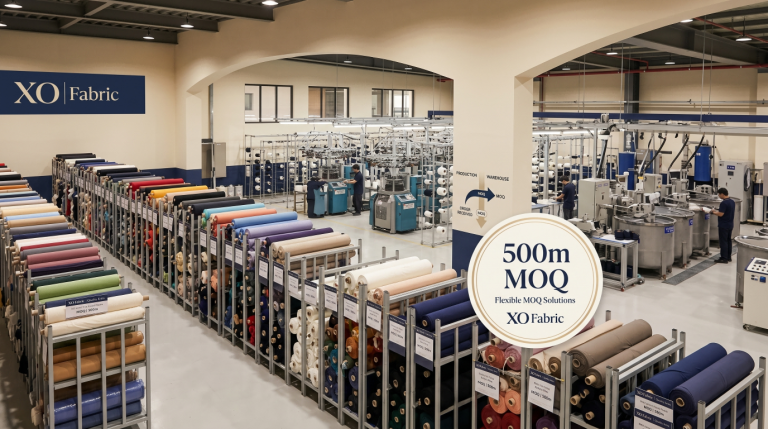
Running a fabric mill since 2005 has taught me one thing: consistency matters more than novelty. We handle the entire knit pipeline in-house, from initial yarn selection through knitting, dyeing, finishing, and flocking. Keeping those steps under one roof eliminates communication gaps and lets us adjust dye lots or finish parameters on the fly. We maintain a 2,000 square meter finished goods warehouse, which means most base fabrics are in stock and ready to ship without waiting for a full production cycle. Waiting six weeks for a standard interlock just to miss a seasonal window is a risk you don’t need to take.
Our quality control team runs tensile strength, colorfastness, and shrinkage tests on every batch before it leaves the floor. We typically hold stretch recovery within a 5% variance and limit color deviation to a Delta E of 1.5 or lower. That kind of tolerance keeps your production line from grinding to a halt because a roll arrived slightly off-spec. I’ve seen brands scrap entire runs because the lab dip didn’t match the bulk dye. We catch those mismatches at the mixing stage, not after the fabric hits your cutting table.
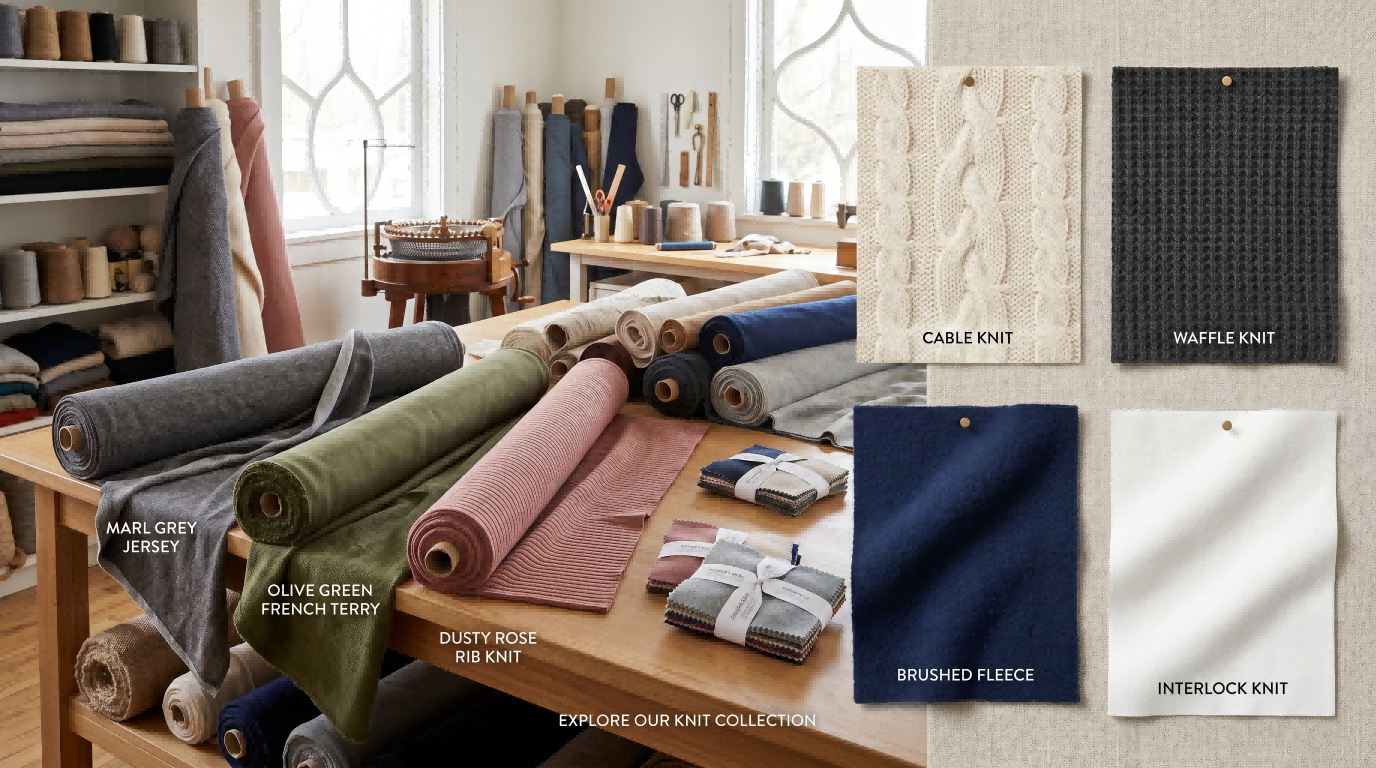
Our catalog spans jersey, interlock, rib, French terry, and warp knit structures like satin and velvet. We also specialize in functional finishes: moisture-wicking treatments, antibacterial coatings, and thermal insulation layers. If you’re developing a technical line or need a custom lab dip to match a specific brand palette, we handle sampling and color matching internally. Low minimums are standard across most categories, usually sitting around 500 meters for base knits and 300 meters for flocked variants. That flexibility lets smaller labels prototype without committing to warehouse-full orders.
Browsing our full range gives you a clear picture of what’s immediately available versus what requires a custom run. Head over to All Products to compare constructions, weights, and finish options side by side. The specs are laid out plainly so you can cross-reference them with your pattern requirements.
Fabric selection is rarely a solo decision. If you’re weighing a few options or need physical swatches to test against your patterns, reach out through our Request Samples form. We’ll package up the exact GSM, stretch percentage, and hand feel notes so you can make a confident choice before committing to bulk. Touching the actual roll always beats guessing from a screen.
Choosing between knit and woven fabrics shapes how your garments fit, perform, and age. Knits deliver flexibility, softness, and low-maintenance care, making them ideal for casual, athletic, and loungewear lines. Wovens offer stability, sharp tailoring, and long-lasting structure, which is why they dominate formal, outerwear, and structured categories. There’s no universal winner, just the right match for your specific design goals. Pick the construction that serves the garment’s purpose, not the other way around.
If you’re building an apparel line that relies on consistent stretch, reliable recovery, and scalable production, we’ve got the infrastructure to support you. From basic jersey to technical moisture-wicking blends, the mill keeps inventory and technical support aligned so you don’t have to guess. Ready to test how these fabrics actually behave under your patterns? Contact XO Fabric today, request your sample kit, and let’s map out the right construction for your next collection.
Fabric isn’t just a material; it’s the silent partner in every stitch you make. When you understand how loops lock versus how grids interlace, you stop fighting the material and start designing with it. Keep testing, keep measuring, and don’t be afraid to mix constructions when a single fabric won’t do the job. The right choice usually hides in the details you’re willing to measure twice.