Address
Nanlang Industrial Zone, Xingtan Town, Shunde District, Foshan, Guangdong, China
Work Hours
Mon–Fri, 9:00 AM – 6:00 PM (CST/UTC+8). We aim to respond to all inquiries within 48 hours.

Address
Nanlang Industrial Zone, Xingtan Town, Shunde District, Foshan, Guangdong, China
Work Hours
Mon–Fri, 9:00 AM – 6:00 PM (CST/UTC+8). We aim to respond to all inquiries within 48 hours.
The fashion industry is quietly wrestling with a messy transition. After a century of cheap, petroleum-based synthetics, brands are suddenly scrambling to understand botanical dyes before regulators tighten the noose on toxic runoff.
It is not just about looking good on a sustainability report. Real supply chains demand transparency, and natural colorants offer a biodegradable path forward. Yet, many design teams hit a wall when they actually try to integrate them into production runs.
This guide breaks down the history, modern textile applications, and the brands actually making it work. We will also look at how mills handle the operational hurdles when shifting to sustainable coloring practices.
Long before industrial vats churned out uniform synthetic shades, dyeing was a highly specialized craft. Archaeological records from the Indus Valley and Han Dynasty China show artisans working with indigo leaves and madder roots over five millennia ago.
The trade operated on tight local knowledge. Guilds in medieval Europe guarded mordant recipes fiercely, knowing that iron or alum salts completely altered how fibers absorbed plant extracts. Color was never just aesthetic. It signaled status and regional identity.
Everything shifted in eighteen fifty six. William Perkins accidental synthesis of mauveine proved that coal tar could produce cheap, vivid colors at scale. The textile industry pivoted overnight. Natural sources simply could not compete on cost or consistency.
By the mid twentieth century, synthetic dyes controlled the global market. That dominance came with a heavy environmental price tag. Modern wastewater studies consistently show that synthetic dye runoff accounts for roughly twenty percent of industrial water pollution.
A quiet reversal began in the late 2010s. Sustainability movements pushed designers back toward botanical alternatives. Recent regulatory frameworks now heavily restrict azo compounds and heavy metal residues, making plant-based colors commercially viable again.
I still remember helping a vintage restoration project a few years back. We had to match a faded wool coat using raw cochineal and iron mordants. The process was slow, but the resulting depth taught me why early dyers never rushed the vats.
Regulators are no longer suggesting clean production. They are mandating it. Brands that ignore these shifts risk compliance penalties and retailer delistings. The historical cycle is closing, but the modern approach requires precise chemistry rather than guesswork.
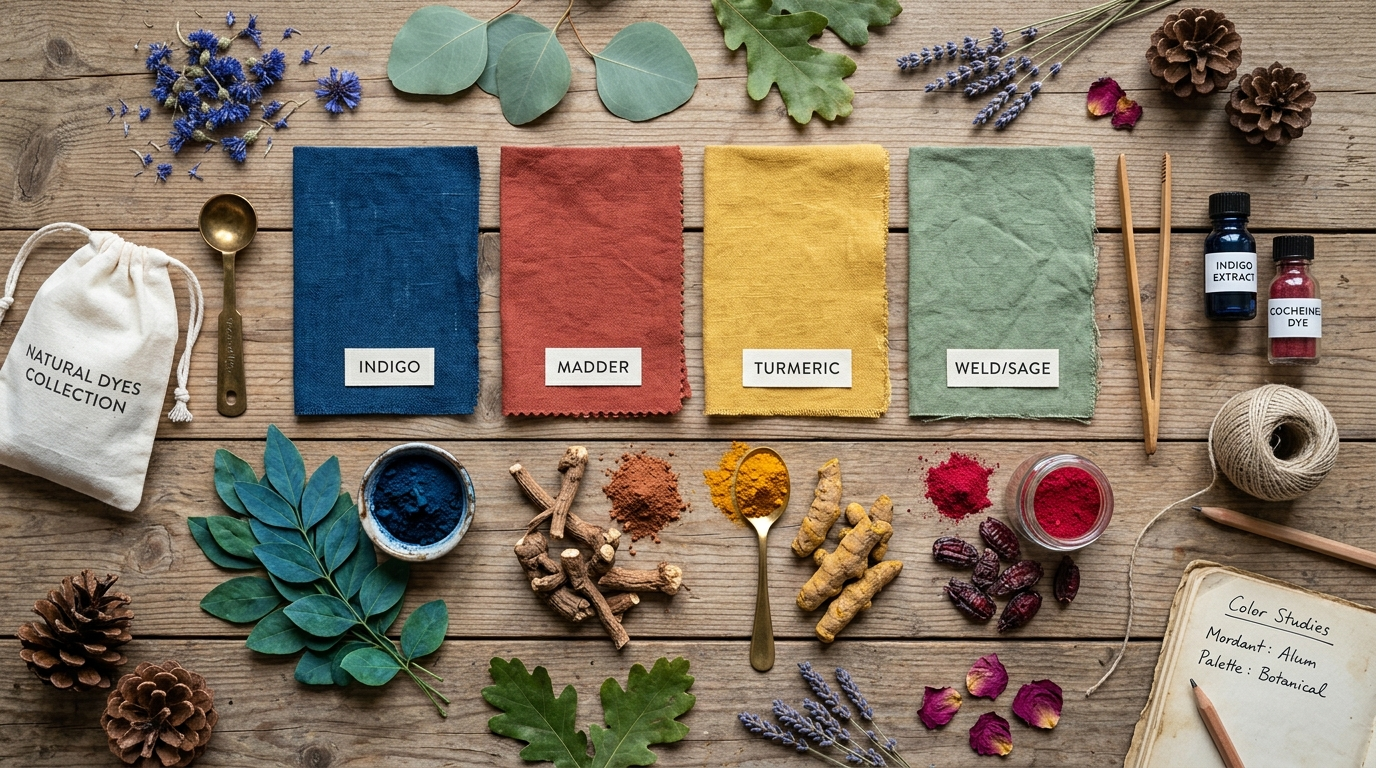
Botanical materials form the backbone of modern sustainable dyeing. Roots, bark, leaves, and rhizomes each yield distinct chromatic profiles. Indigo requires anaerobic fermentation to become water-soluble, while madder roots need prolonged simmering to release anthraquinone pigments.
Turmeric delivers an instant, brilliant yellow but lacks lightfastness without proper fixation. Logwood heartwood produces deep purples and near-blacks, making it a favorite for denim washes that avoid synthetic derivatives.
Understanding fiber mechanics dictates your source selection. Here is how mills typically map botanical extracts to textile bases.
Scale insects provide some of the most historically significant pigments. Cochineal yields carminic acid, creating vibrant reds and pinks. Lac produces warm oranges and burgundies. Both were essential for military uniforms and luxury silks before the twentieth century.
Modern vegan brands actively screen for these ingredients. If your certification requires strict plant-based sourcing, insect derivatives will fail compliance checks. Always verify supply chain documentation before locking in fabric orders.
Mineral sources operate differently. Ochre, iron oxide, and copper salts rarely act as primary colorants on their own. Instead, they function as mordants or direct pigments for specific fibers. Iron mordants darken most botanical shades, shifting reds toward black and blues toward slate gray.
Working with mineral fixatives demands careful pH management. An overly acidic bath can degrade protein fibers, while alkaline conditions might hydrolyze cellulose. Most mills maintain dye baths between sixty and eighty degrees Celsius to balance extraction efficiency and fiber integrity.
I once watched a batch of organic cotton turn muddy because the iron concentration drifted by just half a percent. Natural chemistry leaves zero margin for guesswork. You need precise scales and consistent water testing protocols.
Independent labels currently lead the charge. Small-batch producers leverage hand-dyeing techniques like shibori and dip-dye to highlight the inherent variegation of botanical extracts. These methods turn color inconsistency into a deliberate aesthetic feature.
Luxury houses are scaling the process carefully. Design teams at major fashion brands now integrate plant-based colorants into ready-to-wear lines, pairing them with digital printing to reduce water consumption. Traditional immersion dyeing still requires significant volume, but modern transfer methods cut waste dramatically.
Integrating these methods into commercial production involves complex trade-offs. A mid-sized activewear brand recently approached our team with a full capsule collection. They wanted plant-dyed fabrics but needed consistent shrinkage rates under four percent and high colorfastness for machine washing.
We ran extensive lab dips on three different yarn weights. The initial trials showed promising saturation, but the rub test failed at three cycles. The dye molecules were not bonding tightly enough to the polyester blends. Switching to a heavier one hundred forty GSM base improved absorption, but the fabric felt too stiff for performance wear.
We ultimately compromised. We sourced a lightweight organic cotton blend, adjusted the mordant bath to include alum and tannin, and extended the fixation time by eight hours. The final fabric retained a slight botanical variation, which the design team actually preferred for the collection ethos.
This is where technical consultation saves production schedules. You cannot simply swap synthetic recipes for botanical ones without adjusting mechanical parameters. Stitch length shifts to 2.5mm to prevent seam slippage. Needle sizes drop to 100/16 ballpoint to reduce fiber abrasion during construction.
Pair natural dye bases with our Flocked/Printed Fabrics for textured, eco-friendly apparel collections. The combination allows brands to maintain visual impact while reducing liquid chemical dependency.
Botanical coloring delivers undeniable environmental advantages. The pigments break down naturally in soil, eliminating heavy metal accumulation in waterways. Skin contact issues drop significantly since residual azo compounds and formaldehyde carriers disappear from the process.
Consumers also respond to the visual uniqueness. Synthetics produce flat, uniform shades. Plant extracts yield subtle gradients and depth that photography struggles to capture. This visual complexity strengthens brand storytelling and justifies premium pricing tiers.
The operational drawbacks require honest planning. Colorfastness remains the primary hurdle. Natural pigments detach from fibers more easily than synthetic analogs. Mordants like aluminum sulfate or ferrous sulfate create chemical bridges, but they add processing steps and require careful wastewater neutralization.
Cost structures shift upward as well. Raw material sourcing, extended batch times, and quality control protocols typically raise expenses by two to three times. Seasonal crop fluctuations also mean pigment availability changes quarterly.
Managing these constraints requires systematic tracking. Here is how most mills balance the trade-offs during production planning.
| Challenge | Technical Solution | Production Impact |
| Fading after washes | Alum-tannin double mordanting | Extends cycle by twelve hours |
| Batch variation | Standardized extraction temperature logs | Requires digital pH meter calibration |
| Higher material cost | Waste-stream pigment recovery | Reduces raw spend by fifteen percent |
Water consumption still demands attention. Even eco-friendly processes require rinse cycles to remove excess salts. Closed-loop filtration systems now handle most of the load, but smaller facilities must budget for additional treatment infrastructure.
Pressing techniques also need adjustment. Natural dyes are more sensitive to steam tension. We recommend keeping steam irons below 180°C and using Teflon press cloths to prevent heat transfer stains. A simple temperature tweak saves hours of rework.
High-end designers have normalized botanical integration. Stella McCartney committed to entirely plant-derived colorants for recent seasonal drops, proving that luxury aesthetics do not require toxic chemistry. The brand relies heavily on in-house technical teams to maintain shade consistency across knit and woven constructions.
Outdoor performance labels are testing the waters carefully. Patagonia pilots natural dye processes for regenerative cotton lines, focusing on durability and field performance. They prioritize colorants that survive repeated UV exposure without cracking the fabric finish.
Zero-waste manufacturers take a different approach. Tonlé operates entirely on natural pigments, building their entire brand identity around transparent, low-impact production. Their supply chain maps every batch back to specific agricultural regions.
Smaller farms are also bridging the gap between agriculture and apparel. Christy Dawn sources dye plants directly from cultivated fields, eliminating middlemen and supporting regional economies. The model works, but it demands long lead times that fast-fashion timelines simply cannot accommodate.
I handled fabric samples from a heritage label last spring. Their vegetable-tanned leather patches had slight water spots from the dyeing process. Instead of rejecting the lot, the head designer turned it into a signature weathered detail. Sometimes the flaw becomes the feature.
Brands adopting these methods usually start with accessories or limited runs. Scaling requires patience. You have to train your cutting and sewing floors to handle slightly different fabric behaviors. The learning curve is steep, but the end result justifies the effort.
The mill treats sustainable coloring as an operational standard, not a novelty line. We offer comprehensive piece dyeing services that accommodate custom botanical formulations. Lab dips are generated early in the sampling phase, allowing design teams to verify hue accuracy before committing to bulk orders.
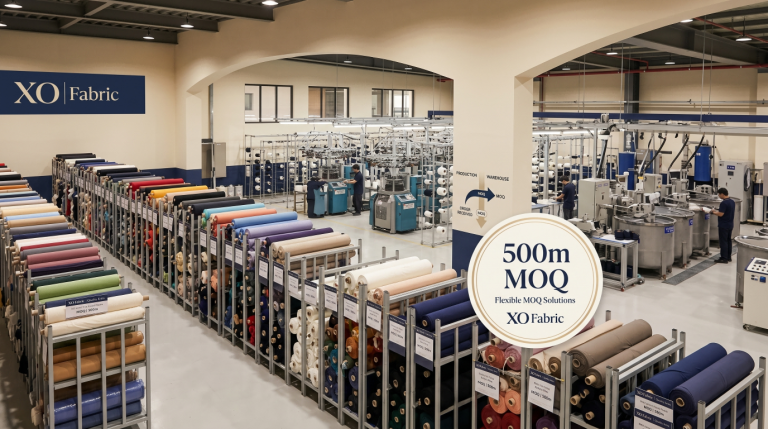
Minimum order quantities stay competitive across our catalog. Most standard fabrics require five hundred meters, while specialized botanical blends drop to three hundred meters. This flexibility helps emerging labels test market response without overstocking.
Chemical compatibility matters. Natural pigments often struggle to penetrate tightly spun yarns. We apply targeted finishing treatments to open fiber scales and improve dye uptake. The process balances hand feel with saturation depth.
Improve natural dye absorption and fabric hand feel with our Softening & Mercerizing Finish. The treatment stabilizes cellulosic fibers and reduces post-production shrinkage rates significantly.
Quality control runs parallel to every batch. Over fifty technicians monitor pH levels, bath temperatures, and fixation times. In-house dyeing and finishing equipment allow us to adjust parameters in real time rather than outsourcing steps to third-party vendors.
Our Piece Dyeing Service (Custom Colors) offers custom natural and synthetic color matching with low MOQs for apparel brands. You get full documentation for GOTS and OEKO-TEX compliance audits.
Transitioning to botanical sources requires structural support. XO Fabric provides technical consultations on fabric selection, stitch tension adjustments, and presser foot temperatures. Natural dyes change how fibers react to heat and friction during construction.
The botanical coloring movement is stabilizing into a reliable production method. Brands that navigate the initial learning curve gain a distinct market advantage. Regulatory pressure and consumer transparency demands will only accelerate the shift away from petroleum-based vats.
Scalability and cost remain real obstacles. Yet, closed-loop water systems, standardized mordant protocols, and seasonal crop planning are steadily closing the performance gap. The technology exists. It just requires disciplined execution.
Ready to integrate natural dyes into your apparel line? Contact our team to discuss custom color options and sampling. Our Piece Dyeing Service supports brands transitioning to sustainable coloring with precise lab dips and technical guidance.