Address
Nanlang Industrial Zone, Xingtan Town, Shunde District, Foshan, Guangdong, China
Work Hours
Mon–Fri, 9:00 AM – 6:00 PM (CST/UTC+8). We aim to respond to all inquiries within 48 hours.

Address
Nanlang Industrial Zone, Xingtan Town, Shunde District, Foshan, Guangdong, China
Work Hours
Mon–Fri, 9:00 AM – 6:00 PM (CST/UTC+8). We aim to respond to all inquiries within 48 hours.
Ponte de Roma Fabric: The Double-Knit Staple for Structured Apparel. This guide covers key properties, real-world applications, and a practical sourcing checklist for B2B buyers.
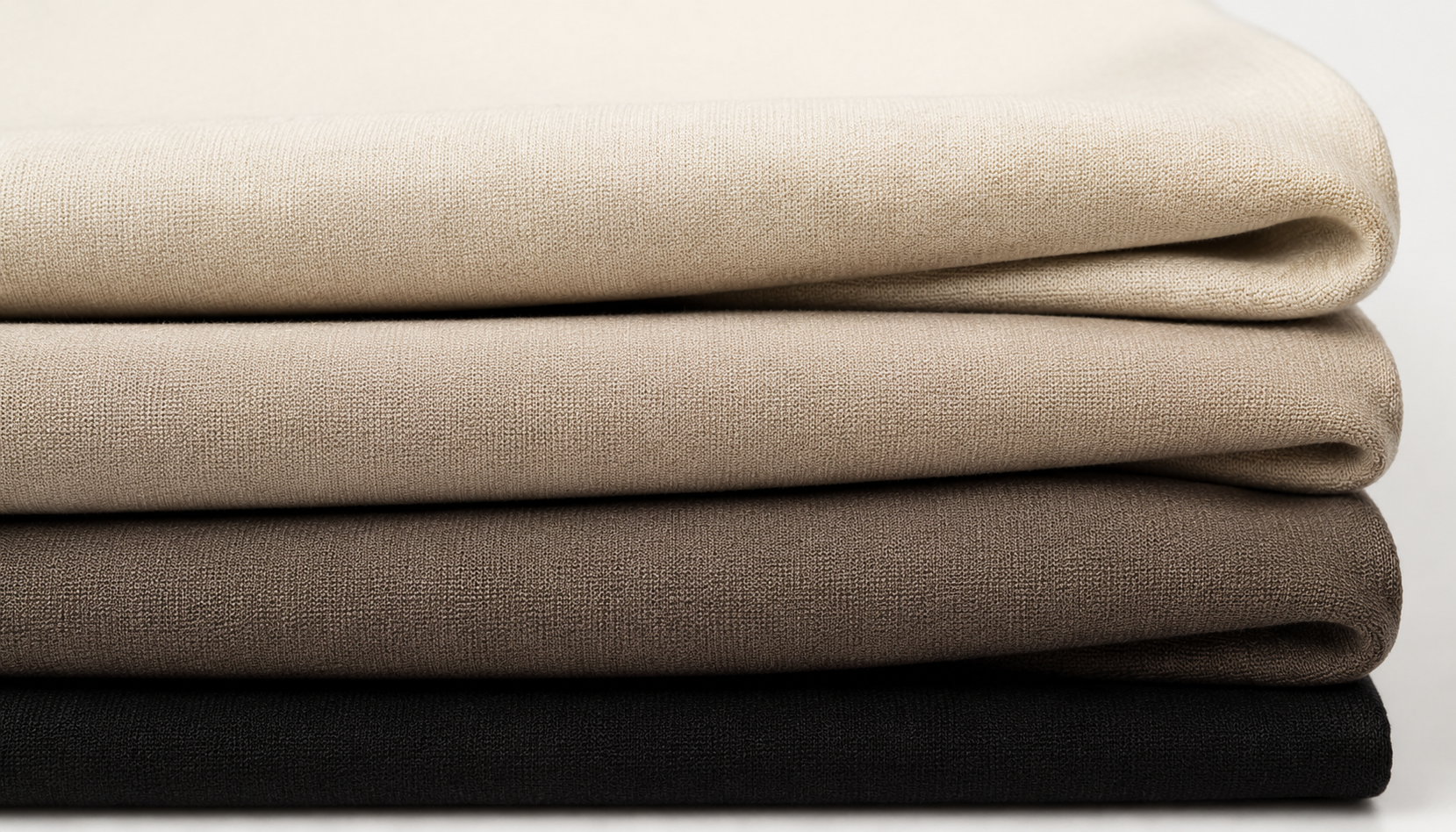
A European activewear brand once rejected an entire shipment of “ponte” because the fabric pilled after only 10 wash cycles. The culprit? The supplier had substituted a single-knit interlock and called it ponte. This kind of confusion is rampant in the market, and it costs brands time, money, and reputation. For B2B buyers, understanding the true technical nature of ponte de roma fabric is the first step to avoiding costly procurement mistakes.
Ponte de roma, often shortened to just “ponte,” is a specific type of double-knit fabric. The name itself is Italian, translating to “bridge of Rome,” which hints at its construction. It’s produced on circular knitting machines equipped with two sets of needles working simultaneously.
These two needle beds create two separate fabric layers that are interlocked together by “bridging” stitches. This double-layer structure is the defining characteristic of a true ponte knit fabric. It gives the material its signature stability, body, and excellent recovery.
The trade is rife with mislabeling. A single-knit interlock, while also a stable knit, is a completely different construction. It uses one set of needles to create a fabric that looks similar on the surface but lacks the internal structure and performance of a true double-knit. Specifying “double-knit” on your purchase order is non-negotiable.
This is where terminology gets tangled. All ponte de roma fabric is a double-knit, but not all double-knits are ponte. Ponte has a characteristic fine ribbed face and a smooth, flat back. The stitches are closely set, creating a dense, stable fabric.
Interlock is also a double-knit, but its stitch structure is different—it’s essentially two 1×1 rib fabrics knitted together with the stitches offset. This results in a fabric that is often thicker, less stretchy, and has a more pronounced “double-faced” appearance where both sides look identical. When someone asks, “What does ‘ponte’ mean in fabric?” the answer lies in this specific stitch architecture and the resulting hand-feel.
The “how” of ponte production is key to its performance. On the circular knitting machine, the two needle beds work in tandem. The yarn is fed to both sets, and the needles interlock the loops from each bed, fusing the two layers into one cohesive fabric. This process requires precise machine calibration and consistent yarn tension.
The yarn composition directly dictates the final fabric’s properties. For B2B production, blends are engineered for specific end-uses. The industry workhorse is a polyester-rayon-spandex blend, typically in ratios like 68/28/4. This combination offers a superb balance of cost, durability, and performance.
Polyester provides strength, wrinkle resistance, and colorfastness. Rayon (viscose) contributes a soft, cool hand-feel and improves drape. Spandex (elastane) is the essential component for stretch and recovery, usually making up 3-5% of the blend. The exact Yarn Count Converter and quality of these yarns, however, can vary dramatically between suppliers.
The choice of blend is a direct trade-off between performance, cost, and aesthetics. The standard polyester-rayon-spandex mix is the go-to for structured apparel where shape retention and easy care are paramount. It resists pilling well when properly constructed and finished.
Cotton-ponte blends, such as a cotton-polyester-spandex mix, cater to a different market. They offer superior breathability and a more natural, matte hand-feel, which is prized for higher-end or casual apparel. The trade-off is potential for greater shrinkage, a slightly lower recovery rate, and a higher price point. Cotton ponte fabric is a popular choice for brands positioning themselves in the natural-fiber space.
| Blend Type | Typical Weight | Key Property | Common Application |
|---|---|---|---|
| Polyester/Rayon/Spandex (68/28/4) | 280-320 gsm (8.3-9.4 oz/yd²) | Excellent recovery, wrinkle-resistant | Blazers, structured dresses, workwear |
| Cotton/Polyester/Spandex (60/35/5) | 260-300 gsl (7.7-8.8 oz/yd²) | Softer hand, better breathability | Casual pants, premium knitwear |
| Viscose/Polyester/Spandex (55/40/5) | 270-310 gsm (8.0-9.1 oz/yd²) | Enhanced drape, luxurious feel | Fashion-forward tops, dresses |
| Recycled Poly/Rayon/Spandex | 290-330 gsm (8.6-9.7 oz/yd²) | Sustainable credentials, similar performance | Eco-conscious brands, corporate uniforms |
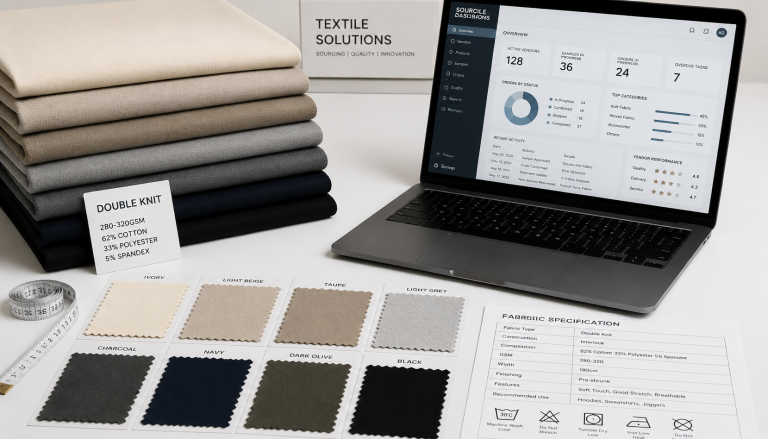
For a concrete example of a specification, you can review the technical details for a ponte double knit product page, which outlines the composition, weight, and construction parameters that define a quality fabric. This type of detailed spec sheet is what buyers should demand from any supplier.
So, is ponte fabric good quality? The answer is a definitive yes—provided you are sourcing a true double-knit from a reputable mill. Its performance profile is what makes it a staple across so many apparel categories. It solves the classic designer’s dilemma: how to get the clean lines of a woven with the comfort of a knit.
This is the core advantage. The double-knit construction, combined with spandex, gives ponte outstanding recovery and shape retention. A garment made from quality ponte will snap back to its original form after stretching, resisting the bagging at the knees and elbows that plagues lesser knits.
Typical stretch percentages for ponte range from 30-50% in the width direction, with recovery rates often exceeding 90% after being stretched to 30% of its original length. This is a measurable, specifiable performance metric. A single-knit interlock, while stretchy, often has a much lower recovery rate, leading to garment distortion over time.
Is Ponte de roma breathable? It’s a fair question. Standard ponte is a medium-to-heavy weight knit, typically ranging from 250-350 Fabric GSM Calculator (7.4-10.3 oz/yd²). This density means it is inherently less breathable than a lightweight, open-structure jersey.
However, it is significantly more breathable than a comparable weight woven suiting fabric. The knit structure allows for more air permeability. Breathability can be engineered further through yarn choice—opting for a cotton blend or incorporating moisture-wicking synthetic fibers—or by adjusting the knit density on the machine. It’s about matching the fabric to the garment’s intended climate and activity level.
The versatility of ponte de roma fabric is its greatest commercial strength. It bridges the gap between formal and casual, structure and comfort. Its applications are best understood by looking at the end-use markets it serves.
Ponte is a silent hero in professional attire. For nurses, airline staff, or corporate employees, it offers a polished appearance that resists wrinkling during long shifts. It moves with the body, providing comfort without sacrificing a crisp silhouette. This makes it ideal for blazers, sheath dresses, and tailored pants that need to look sharp from morning to evening.
In the athleisure boom, ponte fills a specific niche. It’s the “structured” side of leggings, joggers, and skirts. While a lightweight jersey legging is great for yoga, a ponte legging holds its shape better for all-day wear, errands, or a casual office. Its opacity is a major advantage—thinner jerseys can be see-through, but ponte’s double-layer structure provides reliable coverage.
Designers love ponte for creating garments with architectural lines that still feel like knitwear. It’s the fabric of choice for structured dresses, moto jackets, and wide-leg trousers. Its forgiving stretch also makes it popular for plus-size and maternity lines, offering comfort and a flattering fit without constriction.
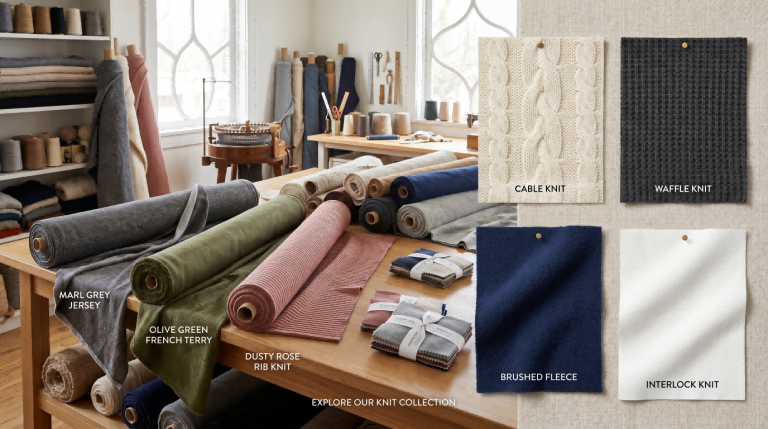
For a broader look at how ponte fits within the wider category of knit fabrics, exploring a knit base fabrics category can provide useful context on the spectrum of constructions available to designers and buyers.
This is where theory meets the factory floor. The difference between a successful production run and a costly rejection often comes down to the details on a spec sheet. Here’s how to protect your procurement process.
Your spec sheet is your contract. For ponte, it must explicitly state “double-knit” or “ponte di roma” construction. Vague terms like “knit” are red flags. Demand the exact yarn composition, including fiber percentages and denier (e.g., 75D polyester, 40D rayon, 20D spandex).
Weight tolerance is critical. Specify a tolerance band ( with a ±5% range (e.g., 300 gsm ±15 gsm / 8.8 oz/yd² ±0.4 oz/yd²). Require test reports for stretch & recovery per ASTM D2594 and pilling resistance per the Martindale method, ASTM D4970. A minimum pilling grade of 3-4 is a reasonable standard for apparel.
| Parameter | Red Flag (What to Avoid) | Green Flag (What to Demand) | Why It Matters |
|---|---|---|---|
| Construction | “Knit,” “Jersey,” “Interlock” | “Double-knit,” “Ponte di roma” | Ensures the core structural integrity and performance. |
| Yarn Composition | Generic “Poly/Spandex” | Exact percentages and denier (e.g., 68% 75D Poly, 28% 40D Rayon, 4% 20D Spandex) | Predicts hand-feel, recovery, and cost. |
| Weight | Single value, no tolerance | Target gsm with ±5% tolerance (e.g., 300 gsm ±15) | Prevents batch inconsistency and “lightweighting” substitutions. |
| Stretch & Recovery | No test method cited | ASTM D2594 with specific % targets (e.g., 40% stretch, 92% recovery) | Guarantees garment performance and longevity. |
| Pilling Resistance | No test or vague “good” | ASTM D4970 (Martindale) with minimum grade 3-4 | Directly impacts consumer satisfaction after washing. |
Never approve a sample based on hand-feel alone. Conduct a simple three-step test:
For technical inquiries or to request detailed spec sheets and bulk samples, reaching out directly through a manufacturer’s contact page is the most efficient path to getting verifiable data.
A mid-range women’s workwear brand in the US market was developing a line of blazer dresses. They sourced what they believed was a 300 gsm (8.8 oz/yd²) polyester-rayon-spandex ponte. The lab dip and a 1-meter (1.1 yd) sample passed initial hand-feel and stretch tests perfectly. The fabric had the right drape and recovery.
The conflict arose during production. To meet aggressive cost targets for the 5,000-meter (5,468 yd) run, the factory substituted the approved fabric with a 260 gsm (7.7 oz/yd²) single-knit interlock that had a similar visual appearance. The brand’s QC team, relying on the pre-production sample from the approved lot, did not catch the substitution before cutting.
The trial-and-error began immediately. The first production batch arrived with poor recovery. Garments bagged at the knees and elbows after a single day of wear. More critically, the fabric exhibited severe pilling after just five wash cycles, failing the brand’s internal QC standard of a minimum 4.0 on the Martindale pilling test.
The compromise was painful. The brand rejected the entire shipment, incurring a six-week delay and significant financial loss. They re-sourced with a new manufacturer, this time demanding a pre-production bulk sample of 10 meters (11 yd) taken directly from the actual production yarn lot. They also insisted on a third-party inspection (SGS) of the knit construction before any cutting began. They accepted a 12% higher unit cost to secure a verified, consistent double-knit source. The lesson was clear: verification at the bulk-sample stage is non-negotiable.
Ponte Roma fabric is used for structured apparel that requires a blend of comfort and shape retention. Its primary applications include professional uniforms uniforms (blazers, dresses), pants), athleisure ( performance basics (leggings and joggers), and ready-to-wear (structured dresses, jackets, and trousers). Its versatility also forgiving stretch.
PTheQuality is entirely dependent on three factors: true double-kit construction ( not a substituted with a lower-quality yarns, and proper finishing. A true ponte from a reputable mill is a high-quality, durableable fabric. The risk lies in mislabeled or cheaply substituted goods that cut corners on construction and materials.
In fabric terminology, “ponte” is Italian for “bridge.” It refers to the “bridging” stitches that connect the two separate layers of fabric in a double-knit construction. This interlocking structure is what gives ponte its distinctive stability and body.
Ponte de Roma is a medium-weight knit, so it is moderately breathable—more so than a woven suiting fabric of similar weight, but less so than a lightweight, open-structure jersey. Its breathability can be enhanced through the use of cotton blends or technical moisture-wicking fibers in the yarn composition.
Sourcing ponte de roma fabric successfully is less about finding a magic supplier and more about mastering the technical details. It’s about knowing what questions to ask, what numbers to demand, and what tests to run. The fabric itself is a proven performer, but its performance is only as good as the specification and verification process behind it. Invest in the spec sheet, scrutinize the bulk sample, and you’ll build a reliable supply chain for this versatile workhorse fabric.