Address
Nanlang Industrial Zone, Xingtan Town, Shunde District, Foshan, Guangdong, China
Work Hours
Mon–Fri, 9:00 AM – 6:00 PM (CST/UTC+8). We aim to respond to all inquiries within 48 hours.

Address
Nanlang Industrial Zone, Xingtan Town, Shunde District, Foshan, Guangdong, China
Work Hours
Mon–Fri, 9:00 AM – 6:00 PM (CST/UTC+8). We aim to respond to all inquiries within 48 hours.
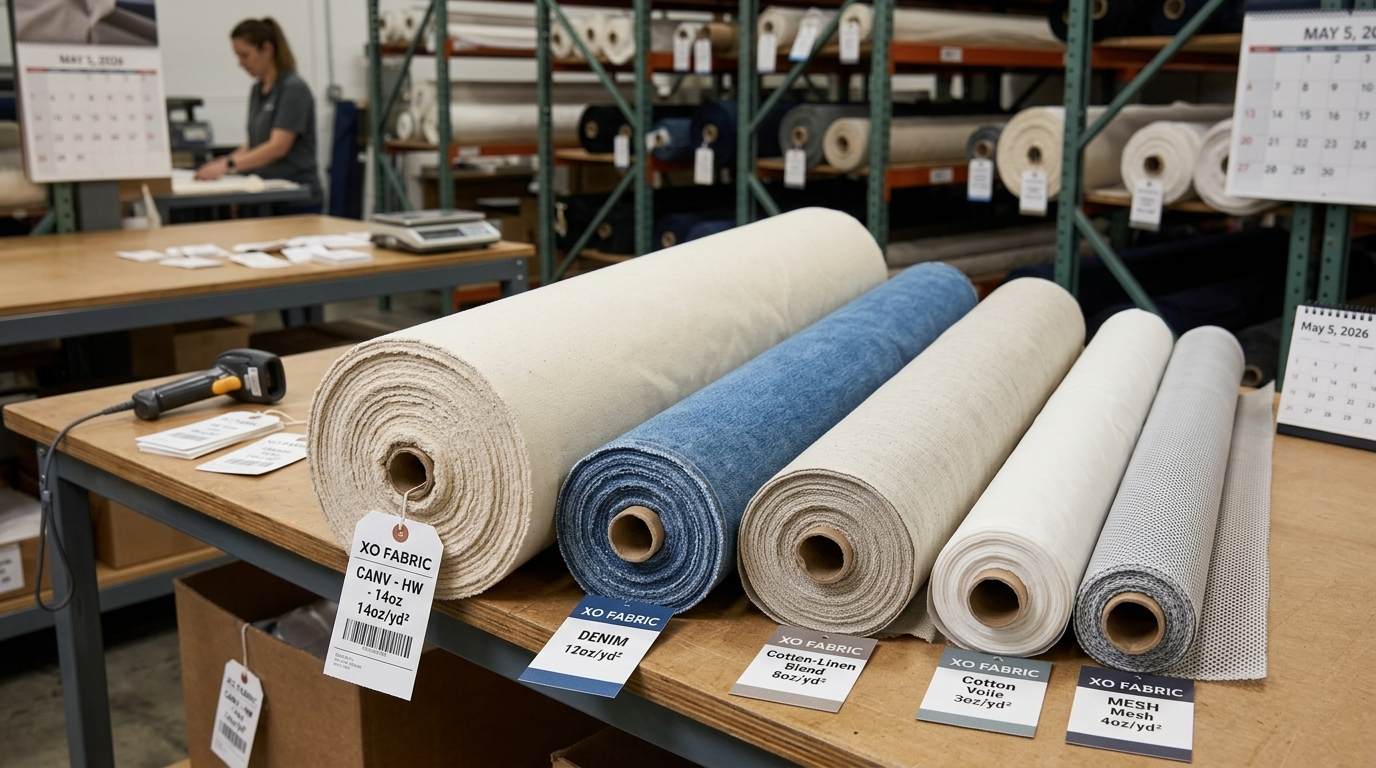
You are standing in front of two fabric swatches for a basic tee. One runs 140 GSM, the other sits at 180 GSM. That forty gram gap changes everything. It alters how the shirt hangs on the body, how it breathes, and how much it costs to produce.
I have seen too many new brands ignore this number. They focus on colorways or branding first. Then customers complain the summer tee feels like paper. Or the winter hoodie arrives feeling thin and disappointing. Weight dictates performance.
Fabric weight directly controls hand feel, thermal regulation, drape, and production economics. Understanding grams per square meter helps you engineer garments that actually match your vision. This guide breaks down the numbers. It covers how to pick the right weight for specific silhouettes. It also explains why consistent weight control matters during bulk manufacturing.
At its core, the measurement is straightforward. It stands for grams per square meter. Manufacturers take a precise one square meter cut of the textile. They place it on a calibrated scale. The resulting number becomes the standard weight metric. This system applies globally to both knit and woven constructions.
The United States still clings to ounces per square yard in many legacy factories. The conversion creates endless confusion. One ounce per square yard equals roughly thirty-three point nine GSM. A traditional six ounce denim roughly translates to two hundred GSM. Knowing both systems prevents costly sampling mistakes. You can explore our Knit Base Fabrics to see how modern mills standardize these metrics. Fabric weight matters for both knit and woven fabrics. Read our foundational Knit vs. Woven guide to understand structural differences.
Heavier textiles feel substantial between your fingers. They resist wind and hold structured silhouettes. Lighter materials flow freely and cling closer to the skin. Warmth generally tracks with density. More fiber trapped in a square meter blocks more heat transfer. Naturally, higher weight drives up material costs. You are literally buying more yarn per yard.
I usually tell designers to stop guessing. Pull a scale. Weigh the sample. Your eyes will lie to you about thickness. The numbers never do.
Selecting weight requires matching the number to the intended use. Summer tees thrive in the one hundred to one hundred fifty range. They breathe well and layer comfortably. Lingerie and delicate linings often dip into this lightweight zone. These fabrics drape softly but may show skin tones underneath. You will typically see single jersey cottons here.
The mid-range sits between one hundred fifty and two hundred twenty. This sweet spot handles everyday wear beautifully. Polos, casual dresses, and standard leggings usually live here. The fabric holds enough structure to hide seams without feeling board stiff. Moisture wicking athletic knits frequently target one hundred sixty to one hundred eighty GSM. Blends like modal and cotton pair well at one hundred seventy to one hundred ninety.
Clothing that needs durability pushes past two hundred twenty. Hoodies, winter sweatshirts, and structured outerwear demand two hundred fifty to three hundred plus. Polar fleece thermal knits and french terry constructions excel here. They provide insulation and resist abrasion. Ultra-light textiles under one hundred GSM serve high-end lingerie. Ultra-heavy fabrics above three hundred GSM build heavyweight outerwear.
| Weight Range | Typical Garment Use | Construction Notes |
| 100-140 GSM | Summer tees, linings | Use finer needles (14/16), light tension |
| 150-220 GSM | Polos, leggings, dresses | Standard ballpoint needles, medium press |
| 220-300 GSM | Hoodies, sweatpants | Heavier stretch needles, reinforced seams |
A small studio recently struggled with a midi dress pattern. They kept using one hundred thirty GSM chiffon knit. The garment stretched out at the waist after two washes. Switching to one hundred eighty GSM modal cotton saved the silhouette. The extra forty grams provided necessary recovery without sacrificing drape.
Garment type dictates the baseline. Basic tees usually run one hundred forty to two hundred GSM depending on the season. Leggings demand two hundred to two hundred sixty GSM for proper opacity and muscle support. Hoodies and sweatshirts need two hundred forty to three hundred twenty for warmth. Delicate linings stay under one hundred forty. Match the number to the function first.
Your target market changes the equation entirely. Premium labels often push one hundred eighty to two hundred forty GSM. Consumers associate heavier weight with luxury and longevity. Fast fashion brands optimize costs at one hundred forty to one hundred eighty GSM. Outdoor performance wear balances mobility and protection around one hundred sixty to two hundred twenty GSM. Never sacrifice hand feel just to shave margin. Shoppers notice cheap, papery textiles immediately.
Spring and summer collections benefit from one hundred to one hundred eighty GSM fabrics. Breathability remains the priority. Fall and winter lines shift to one hundred eighty to three hundred GSM. Heat retention matters more then. Trans-seasonal basics hover around one hundred sixty to two hundred GSM for easy layering. Fiber type also alters perception. Cotton feels lighter at identical weights. Polyester retains more density due to filament structure. Blends require careful testing.
I spent three weeks troubleshooting a premium hoodie launch. The buyer wanted a heavyweight feel but refused to exceed two hundred eighty GSM to protect margins. We tested a two hundred sixty GSM cotton poly blend. It felt stiff and synthetic. We switched to a two hundred seventy GSM organic cotton french terry. The hand improved dramatically. We lost a slight amount of shrinkage stability, but we compensated with a mechanical pre-shrink finish. The compromise worked. Not sure which GSM is right for your garment? Contact our team to Request Samples in different weights. Fiber content also impacts hand feel at the same GSM. Read our Cotton vs. Polyester comparison guide.
Weight directly impacts your bottom line. Heavier textiles consume more raw yarn. A two hundred GSM knit costs roughly twenty to twenty-five percent more than a one hundred sixty GSM version. Pricing models should reflect this linear increase. Transparent mills provide clear weight-based quotes upfront.
Dyeing heavier fabrics takes longer. Liquids must penetrate deeper yarn structures. I have watched technicians extend immersion times by twenty percent for fabrics over two hundred fifty GSM. Finishing processes also adjust. Higher density knits sometimes retain more internal tension. They require careful steam pressing to prevent wave edges. Needle selection matters too. Heavy fabrics tear easily with standard sharp points. Ballpoint or stretch needles prevent skipped stitches.
Cotton weights above one hundred eighty GSM often release more tension during washing. The fiber contracts naturally. Pre-shrinking treatments become mandatory for consistent sizing. Heavy fabrics may shrink more. Learn about fabric shrinkage in our technical Fabric Shrinkage guide. Minimum order quantities rarely change based on weight alone. Fiber content and dye complexity drive those numbers. Most knit mills maintain standard roll lengths regardless of density.
Keep your production team aligned. Weight changes require corresponding adjustments in sewing line speeds and presser foot pressure. Ignoring these details causes puckered hems and uneven seams.
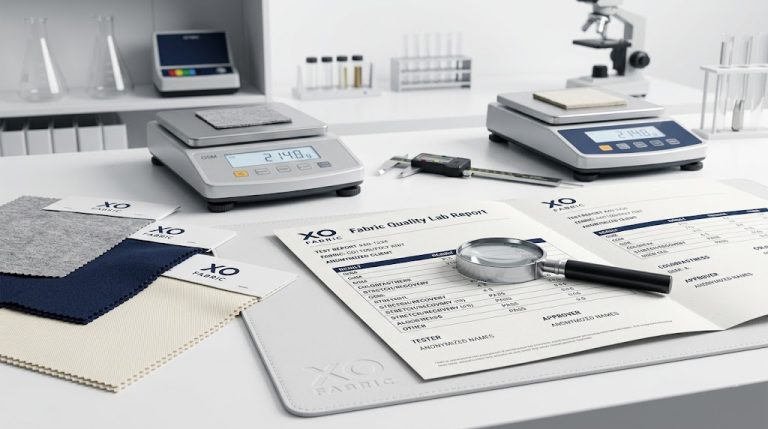
Quality control starts with accurate measurement. You need a few basic tools. A circular fabric cutter works best. A precision scale reading to at least zero point one grams is mandatory. A flat, clean cutting surface prevents edge distortion. Some labs use a one hundred square centimeter template. You simply multiply the result by one hundred to get the final number.
The process is straightforward but requires discipline. Cut your sample carefully along the grain lines. Place it on the scale immediately. Record the weight. Repeat this three to five times across different locations. Check the fabric center. Check the edges. Loom density varies slightly across the width. Average the results for your final reading.
Industry norms accept a plus or minus five percent variance. A two hundred GSM target can legitimately range between one hundred ninety and two hundred ten GSM. Tighter tolerances indicate superior manufacturing control. I always push for plus or minus three percent on critical projects. If your sample falls outside tolerance, notify the supplier immediately. Do not approve bulk production until the issue resolves. GSM measurement is part of quality control. Read our comprehensive Quality Control Checklist.
| Measurement Step | Required Precision |
| Cutting template | 100cm² or 1m² calibrated cutter |
| Weighing scale | 0.1g accuracy minimum |
| Sampling points | 3-5 locations per roll (center + edges) |
| Acceptable variance | ±3% for premium orders, ±5% standard |
I once caught a batch running consistently heavy. The factory had adjusted yarn tension during a shift change. We pulled the rolls, recalibrated the knitting machine, and restarted. Catching it early saved thousands in excess material costs. Never skip mid-production weight checks.
Consistent weight control separates reliable suppliers from unreliable ones. Manufacturers that monitor density continuously prevent batch inconsistencies. Look for partners who offer wide ranges. One hundred to three hundred twenty plus GSM covers most apparel needs. Custom development services allow you to engineer exact densities for unique silhouettes. Lab dip programs test how different weights react to your specific dye recipes.
Technical support should accompany every order. Experienced mills assign technicians to monitor stitch length and yarn tension. They adjust parameters before defects multiply. You should receive documented test reports covering density, shrinkage, and color fastness. These documents protect your brand reputation.
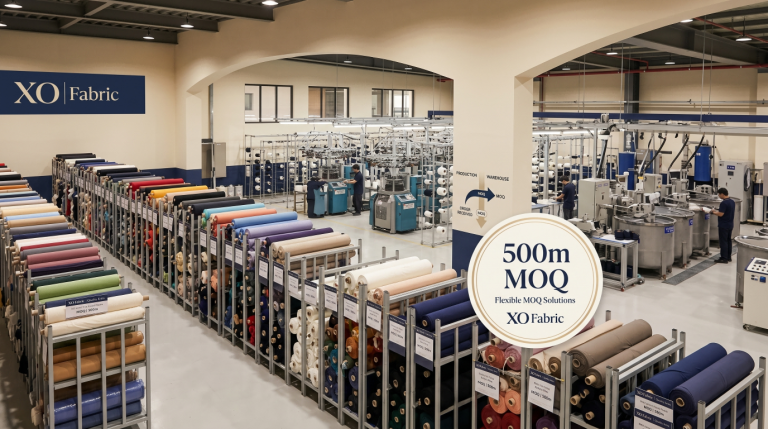
Vertical integration reduces communication gaps. When knitting, dyeing, and finishing happen under one roof, weight specifications stay accurate. Adjustments happen in hours, not weeks. Lead times shrink dramatically. Low minimum order quantities democratize access to premium textiles. Five hundred meters for standard knits allows small brands to test multiple densities. Sampling programs let you compare hand feels before committing capital.
I prefer working with mills that treat weight as a design element rather than an afterthought. When density aligns with pattern drafting, the final garment behaves exactly as intended. You avoid costly regrades and disappointed customers.
Choose suppliers who document their processes. Transparent factories share machine settings and tolerance guarantees. This partnership approach yields cleaner production runs and more predictable margins.
Fabric weight is never just a number on a spec sheet. It dictates how a garment moves, how long it lasts, and how customers perceive your brand quality. Mastering these ranges saves you from costly sampling errors. It also helps you engineer pieces that actually fit your market. At XO Fabric, we specialize in high-quality knit fabrics across a wide GSM range. With technical support and consistent quality control, we can help you choose the right weight for your garment. Contact us today to request fabric samples in different GSM weights and find the perfect balance for your next apparel collection.