Address
Nanlang Industrial Zone, Xingtan Town, Shunde District, Foshan, Guangdong, China
Work Hours
Mon–Fri, 9:00 AM – 6:00 PM (CST/UTC+8). We aim to respond to all inquiries within 48 hours.

Address
Nanlang Industrial Zone, Xingtan Town, Shunde District, Foshan, Guangdong, China
Work Hours
Mon–Fri, 9:00 AM – 6:00 PM (CST/UTC+8). We aim to respond to all inquiries within 48 hours.
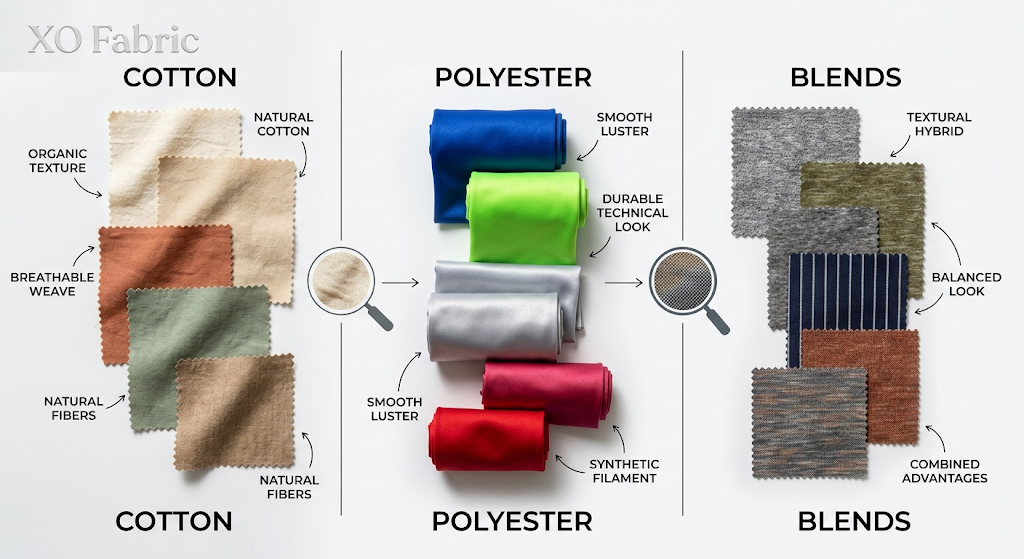
Choosing between cotton, polyester, or a blend is one of the most fundamental decisions in apparel design — and one that directly impacts cost, comfort, and customer satisfaction.
Many new brands default to 100% cotton for “natural” appeal, or 100% polyester for cost — but often miss the sweet spot of blends. The wrong fiber choice can lead to comfort complaints, high return rates, or unnecessarily high production costs. This guide compares cotton, polyester, and blends across key properties, helping you make an informed decision for your apparel line.
Cotton is a natural cellulose fiber harvested from the bolls of the cotton plant. It’s been a textile staple for centuries, and for good reason. The fiber’s inherent structure creates that soft, breathable hand feel customers love.
When sourcing, you’ll encounter several types. Combed cotton removes shorter fibers for a smoother finish. Organic cotton follows strict agricultural standards. Recycled cotton repurposes post-industrial waste. Major producers include China, India, and the US, each with slightly different fiber characteristics based on climate and processing.
From a performance standpoint, cotton excels in comfort. It absorbs moisture readily — up to 27% of its weight without feeling damp. That’s great for loungewear, less ideal for high-intensity activewear where you want moisture moved away from skin. Drape is excellent, making it versatile for both casual tees and structured dresses.
But cotton has trade-offs. It weakens when wet, so seam strength matters more than you might think. Shrinkage can run 3-5% if not pre-treated. I’ve seen brands skip pre-shrinking to save costs, only to face a wave of returns from customers whose garments no longer fit. Reactive dyes are worth the extra expense for color fastness — direct dyes on cotton can fade noticeably after 10-15 washes.
For apparel applications, cotton shines where comfort is non-negotiable. Think t-shirts, underwear, infant wear. Its hypoallergenic nature makes it a safe choice for sensitive skin. In high-end fashion, the premium natural fiber appeal justifies higher price points.
Practical sourcing tips: Always specify pre-shrunk or “sanforized” in your purchase order. For knits, a 160-180 GSM single jersey works well for tees; heavier 220+ GSM interlock adds structure for polo shirts. Needle size matters — use a 75/11 or 80/12 ballpoint needle to avoid damaging the fiber during sewing.
If you’re looking for premium options, our Organic Cotton Interlock delivers premium softness and sustainability appeal. For a classic t-shirt fabric, our Cotton Single Jersey (Combed) offers excellent hand feel. You can explore our full range of natural and organic cotton knits in the Natural Organic Cotton Knits category.
Polyester is a synthetic polymer fiber, typically made from polyethylene terephthalate (PET). Production involves chemical synthesis, melt spinning, and fiber drawing. While virgin polyester dominates cost-sensitive markets, recycled polyester (rPET) from post-consumer bottles is gaining traction.
Performance-wise, polyester is a workhorse. Abrasion resistance is excellent — it holds shape wash after wash. Unlike cotton, it doesn’t absorb moisture; instead, it wicks it away. This makes it ideal for sportswear where staying dry matters. Wrinkle resistance is inherent, reducing ironing needs for end users.
But the hand feel can be a hurdle. Early polyesters felt stiff or “plasticky.” Modern finishing techniques — enzyme washes, silicone softeners — have improved this dramatically. Still, I prefer to test swatches against skin before committing to bulk. A fabric that looks great on a hanger might feel scratchy after an hour of wear.
Cost is a major advantage. Virgin polyester is often 30-50% less expensive than comparable cotton. For fast fashion or high-volume basics, that margin matters. Environmental impact is more complex. While persistent in landfills, recycling infrastructure for rPET is improving. If sustainability is a brand priority, specify rPET and request certification documentation.
Best applications include activewear, outdoor gear, uniforms, and any garment where durability and easy care trump natural fiber appeal. For moisture-wicking performance, look for fabrics with capillary channel fibers or mechanical texturing. A 140-160 GSM polyester jersey works well for base layers; heavier 200+ GSM constructions add warmth for outerwear.
Sourcing considerations: Anti-pilling finishes extend garment life, especially for brushed polyesters. If hand feel is critical, request fabrics with mechanical softening or bio-polish treatments. For eco-conscious lines, our Moisture-Wicking Athletic Jersey showcases polyester’s performance benefits. For breathable sportswear, our Polyester Bird Eye Mesh delivers excellent performance. Learn more about recycled options in our post on Recycled Polyester.
Blends combine two or more fibers in a single yarn or fabric. The goal is simple: leverage the strengths of each component while mitigating weaknesses. Common pairings include cotton-polyester, cotton-modal, or polyester-spandex. Ratios matter — 65/35 behaves differently than 50/50.
Why choose blends? Often, it’s about balance. Cotton’s comfort plus polyester’s durability creates a fabric that feels good and lasts. Cost optimization is another driver: reducing cotton content lowers material expense while maintaining much of the natural hand feel. Performance enhancements are easy to engineer — add 5% spandex for stretch, or bamboo for antibacterial properties.
Shrinkage control is a practical benefit. Pure cotton can shrink 3-5%; adding polyester reduces that to 1-2%. For brands shipping globally, that consistency reduces sizing complaints. I once worked with a startup that switched from 100% cotton to a 65/35 blend for their core tee line. Return rates dropped 18% in the first quarter, mostly due to better fit retention after washing.
Popular ratios and their characteristics:
From a production standpoint, blend consistency requires tight quality control. Fiber distribution must be even to avoid patchy dyeing or uneven wear. The mill we partner with uses 50+ technicians for in-process inspection, which has saved us from costly bulk rejections. For custom needs, blend ratios can be adjusted — lab dips and sampling help validate the hand feel before commitment.
Our Cotton-Polyester Jersey (65/35) offers an optimal balance of comfort and durability. For enhanced softness, our Modal-Cotton Jersey Blend delivers a premium hand feel. For more context on fiber choices, read our deep dive into Natural vs. Synthetic fibers.
Let’s break down the key decision factors side-by-side. This isn’t about declaring a winner — it’s about matching properties to your garment’s purpose.
| Property | Cotton | Polyester | Blends (e.g., 65/35) |
| Hand Feel | Softest, most natural | Can feel synthetic; softening finishes help | Cotton-dominant blends retain good softness |
| Durability | Moderate; weakens when wet | Excellent abrasion resistance | Varies by ratio; more polyester = more durable |
| Moisture Management | Absorbs; can feel heavy when wet | Wicks; quick-dry | Depends on blend ratio and construction |
| Care | May wrinkle, may shrink | Wrinkle-resistant, low-maintenance | Low-maintenance; reduced shrinkage |
| Cost | Mid-to-high; organic = premium | Lower; virgin most cost-effective | Cost-effective vs. 100% cotton |
| Environmental Profile | Natural but water-intensive | Synthetic; rPET improves profile | Recycling blends is challenging |
Comfort and hand feel: A 100% cotton t-shirt feels softer against skin than 100% polyester — that’s undeniable. But modern polyester finishes have narrowed the gap. For blends, the cotton content largely dictates initial softness. I keep a swatch book labeled by fiber content; after handling hundreds, you develop an instinct for how a fabric will behave after five washes versus fifty.
Durability and care: Cotton’s tendency to wrinkle isn’t just aesthetic — it affects perceived quality. A wrinkled garment on a hanger may never get purchased. Polyester’s wrinkle resistance is a logistical advantage for e-commerce brands shipping direct. For blends, care instructions simplify: wash cold, tumble dry low, and you’re usually safe. Always test shrinkage on a pre-production sample; don’t rely on supplier claims alone.
Moisture management is where fiber choice becomes critical. Cotton absorbs sweat, which feels comfortable initially but can lead to clamminess during activity. Polyester moves moisture to the surface for evaporation. For sportswear, polyester or a polyester-dominant blend is usually the right call. For loungewear, cotton’s absorbency is a feature, not a bug.
Cost considerations extend beyond raw material price. Factor in dyeing costs (cotton often requires more dye), finishing treatments, and potential waste from shrinkage. Integrated production — where knitting, dyeing, and finishing happen under one roof — can reduce these variables. That’s a key advantage when comparing quotes from different suppliers.
Environmental impact requires nuance. Organic cotton reduces pesticide use but still demands significant water. rPET diverts plastic from landfills but microfiber shedding remains a concern. Blends complicate end-of-life recycling because separating fibers is energy-intensive. The “best” choice depends on your brand’s priorities and customer expectations.
Fabric selection starts with knit vs. woven. Read our foundational guide on Knit vs. Woven. Fabric weight (GSM) also impacts comfort and drape. Learn more in our Understanding Fabric Weight guide.
Start with the garment’s purpose. What will the wearer be doing? Where will they wear it? How often will they wash it? These questions matter more than fiber purity.
By garment type:
Target market influences fiber selection too. Premium or sustainable brands often lean toward organic cotton or rPET for storytelling value. Fast fashion or cost-sensitive lines benefit from polyester or cotton-polyester blends. Sportswear brands prioritize performance finishes. Infant apparel almost always defaults to organic cotton for hypoallergenic properties.
Budget constraints shape decisions. Tight margins? Virgin polyester or a 65/35 cotton-poly blend offers cost control. Mid-range? Combed cotton or cotton-dominant blends balance quality and price. Premium positioning? Organic cotton, Modal blends, or high-end microfiber polyester justify higher price points.
Here’s a real scenario: A client wanted to launch a premium loungewear line. Initial samples used 100% organic cotton for the “natural” story. But after wear testing, they noticed pilling on high-friction areas (underarms, sides). Switching to a 95/5 cotton-spandex blend solved the pilling issue while maintaining softness. The spandex added just enough recovery to reduce stress on the cotton fibers. It wasn’t the purest choice, but it was the right one for the product.
Always request physical samples before bulk ordering. Test for hand feel, shrinkage, color fastness, and pilling. Our sample program makes this easy — Request Samples to start. Learn how to effectively evaluate them in our guide on How to Request Fabric Samples.
Integrated production matters. When knitting, dyeing, and finishing happen in-house, lead times shorten and quality control tightens. We’ve seen brands lose weeks coordinating between separate mills and dyehouses. Consolidating those steps under one roof reduces variability and accelerates time-to-market.
Fiber flexibility is another advantage. Whether you need 100% combed cotton, moisture-wicking polyester, or a custom Modal-cotton blend, having multiple fiber capabilities in one facility simplifies sourcing. Custom ratios are possible with lab dip support — no need to compromise on the exact hand feel you’re targeting.
Quality assurance isn’t just a buzzword. With 50+ technicians conducting in-process inspections and a 2,000㎡ finished goods warehouse, consistency is built into the workflow. Test reports for color fastness, shrinkage, and pilling resistance are available upon request. After 20+ years in knit fabric production, the team knows where issues typically arise — and how to prevent them.
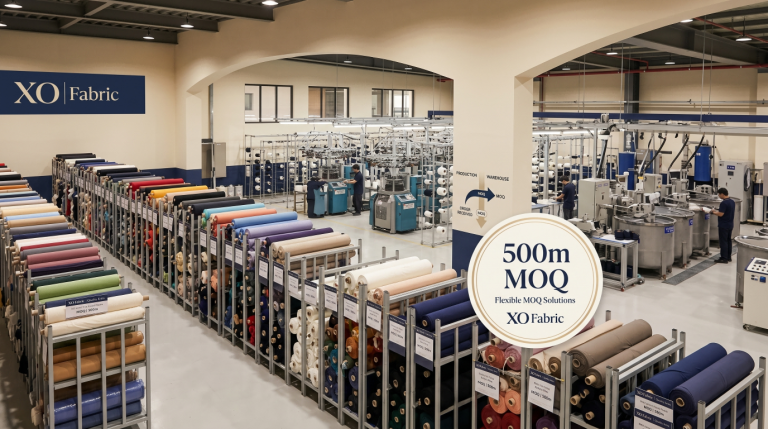
Low MOQs lower the barrier to entry. At 500m for most knits across cotton, polyester, and blends, emerging brands can test designs without massive inventory risk. Sample programs let you validate choices before committing to bulk. Custom colors, finishes, and blend ratios are all on the table.
Choosing between cotton, polyester, or a blend is a critical decision that impacts comfort, durability, cost, and sustainability. Cotton offers natural softness and breathability, polyester delivers durability and moisture management, and blends provide a balance of properties at optimized cost.
There’s no universal “best” fiber. The right choice depends on your garment’s purpose, your target customer’s expectations, and your brand’s values. Test, iterate, and don’t be afraid to blend. Sometimes the perfect fabric isn’t pure — it’s a thoughtful combination.
At XO Fabric, we specialize in high-quality cotton, polyester, and blended knit fabrics for apparel brands worldwide. With integrated production and customization capabilities, we can help you choose the right fiber content for your garment. Contact XO Fabric to request fabric samples and find the perfect fiber content for your next apparel collection.