Address
Nanlang Industrial Zone, Xingtan Town, Shunde District, Foshan, Guangdong, China
Work Hours
Mon–Fri, 9:00 AM – 6:00 PM (CST/UTC+8). We aim to respond to all inquiries within 48 hours.

Address
Nanlang Industrial Zone, Xingtan Town, Shunde District, Foshan, Guangdong, China
Work Hours
Mon–Fri, 9:00 AM – 6:00 PM (CST/UTC+8). We aim to respond to all inquiries within 48 hours.
You are sourcing knit fabrics, and suppliers keep mentioning “warp knit” or “weft knit.” What is the actual difference, and why does it keep showing up in your tech packs?
Many new apparel brands skip the structural basics. They guess on the knit type, then watch garments bag out at the knees or ladder after a single wash cycle.
The mechanics matter. Loop formation dictates everything from seam slippage to heat-setting behavior. When you understand how yarns travel through the needle bed, you stop fighting the fabric on the sewing floor.
This guide breaks down the structural differences between warp and weft knitting. We will cover recovery rates, production realities, and where each structure actually shines in commercial apparel. I will also share how XO Fabric handles both construction methods under one roof, so you can spec the right base without waiting on multiple vendors.
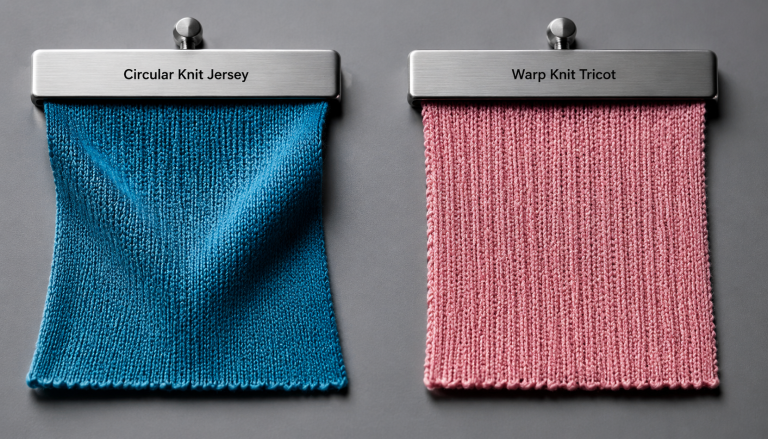
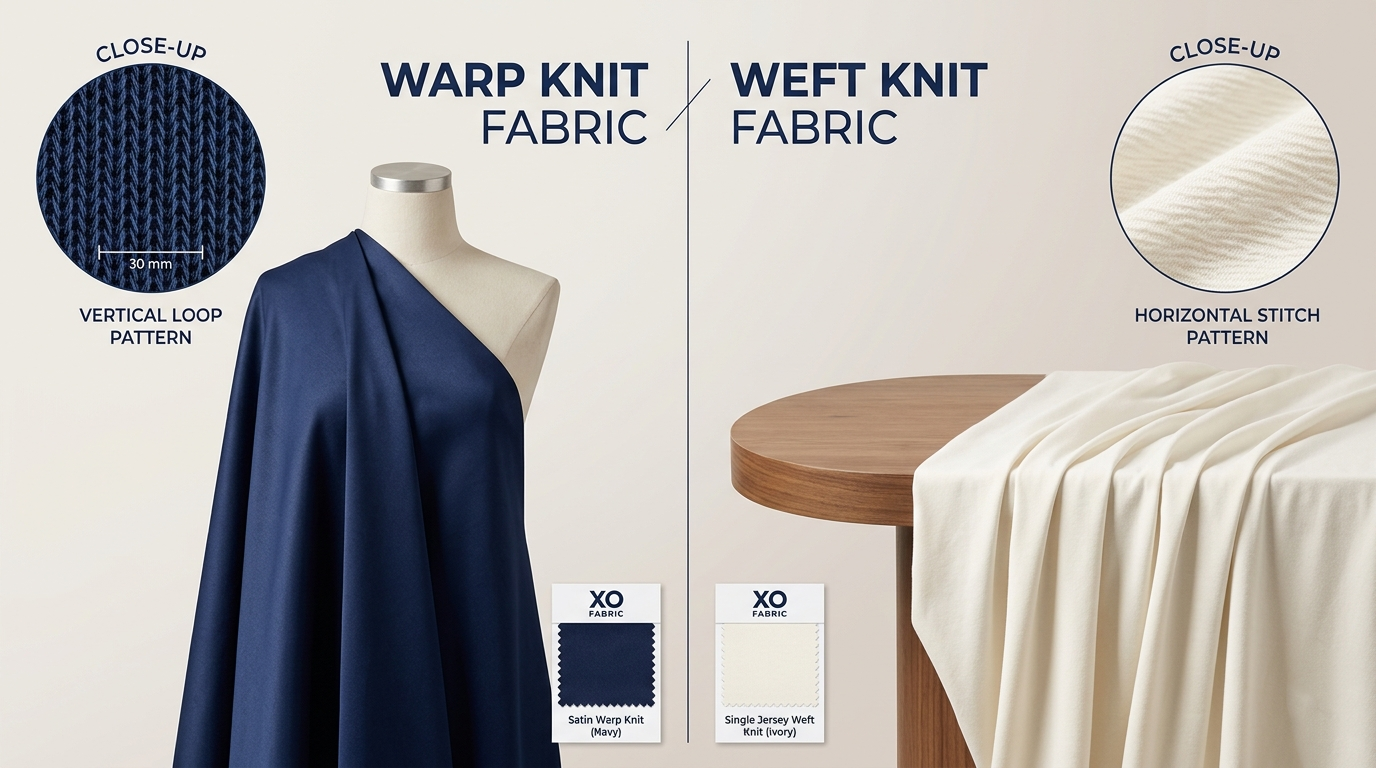
Warp knitting runs yarns vertically. Think of a loom rather than a sweater needle. Multiple yarns feed simultaneously from a warp beam, and each yarn forms a loop in its own column.
The needles move up and down while guide bars oscillate side to side. This creates a diagonal or straight stitch path depending on the machine type. Tricot machines favor smooth, stable faces. Raschel machines handle heavier threads and open meshes.
You typically see GSM ranges between 80 and 150 for standard apparel bases. The structure naturally resists distortion. Shrinkage after washing usually lands around 2 to 4 percent, provided you avoid excessive steam during finishing.
Run-resistance is the standout feature. If a single loop breaks, the interlocking vertical chains hold the surrounding fabric together. You will not see that frustrating run race down a sleeve.
I once watched a velvet order fail because the tech pack called for a weft base instead of warp. The pile simply shifted during tufting. The warp structure kept the backing rigid enough to anchor the fibers. That kind of structural stability is hard to fake with finishing agents alone.
When pressing warp knits, keep the iron temperature moderate. Around 140 to 150 Celsius works for polyester blends. High heat can melt the loop intersections and create a stiff hand feel. Use a press cloth. Always move the iron rather than holding it in place.
Weft knitting moves yarn horizontally. A single yarn, or a limited number of yarns, travels back and forth across the needle bed. Each pass creates a new course of loops.
Circular machines dominate production. Flat knitting handles intricate colorwork but runs slower. Jersey, rib, interlock, and French terry all fall under this umbrella. The horizontal path gives the fabric natural give.
Stitch length directly controls recovery. Shorter stitches mean tighter loops and less distortion, but they can feel stiff. Longer stitches drape beautifully until stress pulls them out of alignment. Most apparel sits around 4.5 to 5.5 millimeters per stitch.
Spandex integration changes everything. When elastane replaces 3 to 7 percent of the yarn count, you get true four-way stretch. The downside is run risk. Single jersey knits will ladder if a loop breaks. Interlock and double knits hold up better because the loops lock into each other on both faces.
Here is a quick look at why a blouse project went sideways before finding the right base.
The design called for a structured but fluid silhouette. We initially sampled a weft interlock at 240 GSM. It draped well but pulled at the side seams after blocking. The recovery was fighting the seam allowances. We switched to a warp tricot base at 190 GSM, then added a light fusible interlining to the stress points. The compromise worked. The garment kept its shape without restricting movement.
Needle type matters too. Interchangeable needles handle fine yarns, but compound needles are better for heavier cotton loops. If you see dropped stitches during sewing, check your presser foot pressure. Too much tension flattens the loops and causes skipping.
Before diving into knit structures, it helps to review our foundational Knit vs. Woven guide. Knowing the baseline mechanics makes these distinctions much clearer.
Stretch and recovery sit at the top of the debate. Warp knits give minimally in the lengthwise direction. The vertical loop chains lock tight. Weft knits, especially with spandex, stretch freely across and along the grain. Recovery depends on stitch length and elastane orientation.
Production speed favors warp frames. Multi-needle setups run faster and handle large runs efficiently. Weft knitting runs slower but offers incredible versatility. You can change stitch patterns, yarn blends, and gauge without swapping entire machines.
Run-resistance remains the deciding factor for many technical designs. Warp structures self-arrest when a loop breaks. Weft single knits propagate runs quickly. Double weft knits improve stability but still lag behind warp in pure structural locking.
| Dimension | Warp Knit | Weft Knit |
| Stretch Profile | Minimal lengthwise stretch, high stability | High 4-way stretch, fluid drape |
| Run Resistance | Excellent, broken loops do not propagate | Variable, single knits ladder easily |
| Production Speed | Fast, optimized for large continuous runs | Slower, highly adaptable to pattern changes |
| Typical Applications | Satin, velvet base, stable sportswear, linings | T-shirts, loungewear, draped dresses, French terry |
Once you narrow down the structure, you can explore our full range of Knit Base Fabrics to see how these mechanics translate to finished goods.
Cost behaves differently at scale. Warp knitting wins on volume. The machines run continuously with fewer changeovers. Weft knitting carries higher per-meter costs for small batches, but the flexibility reduces waste when styles change frequently.
Seam slippage is another hidden variable. Warp knits hold stitch integrity better during serging. Weft knits sometimes require a coverstitch or a nylon monofilament thread to lock the edges. I always recommend testing seam strength at 30 Newtons minimum before cutting production patterns.
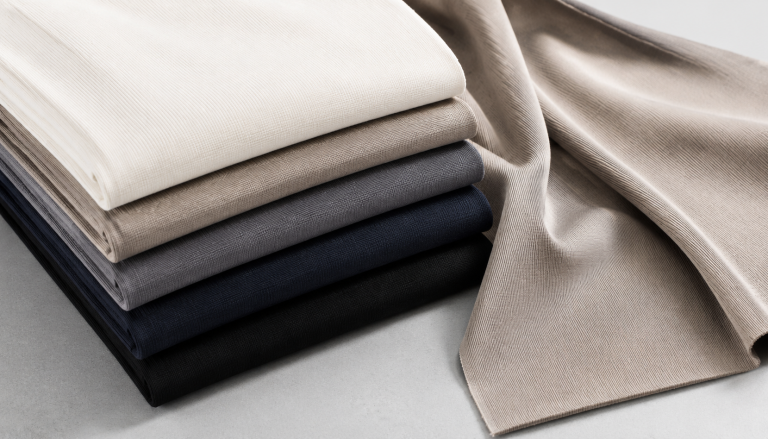
Garment type should dictate your starting point. T-shirts and loungewear live comfortably in weft territory. Jersey and French terry offer the soft hand feel customers expect. Structured dresses and skirts lean toward warp satin or stable weft ponte.
Desired properties narrow the field further. Need run-resistance for activewear? Warp tricot or raschel bases handle abrasion better. Need fluid movement for a wrap dress? Weft interlock or double knit gives you that glide. Want the fastest turnaround for a capsule drop? Warp production schedules typically move quicker.
Budget constraints often force compromises. Large runs of stable fabrics favor warp knitting. The economies of scale drop the per-meter price. Small runs or highly varied styles benefit from weft flexibility. You can switch yarns mid-run without rethreading an entire warp beam.
Not sure whether warp or weft knit is right for your garment? Request Samples so you can feel the drape yourself. Stretch properties differ significantly between the two. Read our Stretch Fabrics for more details on recovery rates and elastane placement. Before bulk ordering, review our Quality Control Checklist to ensure fabric quality meets your standards.
Testing protocol matters more than specs on paper. Cut a 30-centimeter square. Stretch it to 15 percent elongation. Hold for ten seconds. Release. Measure permanent set. If it exceeds 3 percent, the garment will distort on the body. Steam the sample flat. Check for blocking recovery. Warp knits usually bounce back faster.
Seam allowance width also shifts based on structure. Warp knits tolerate 0.6 centimeter hems without rolling. Weft knits often need 1 centimeter or a double-fold to prevent edge curling. Adjust your pattern grading accordingly.
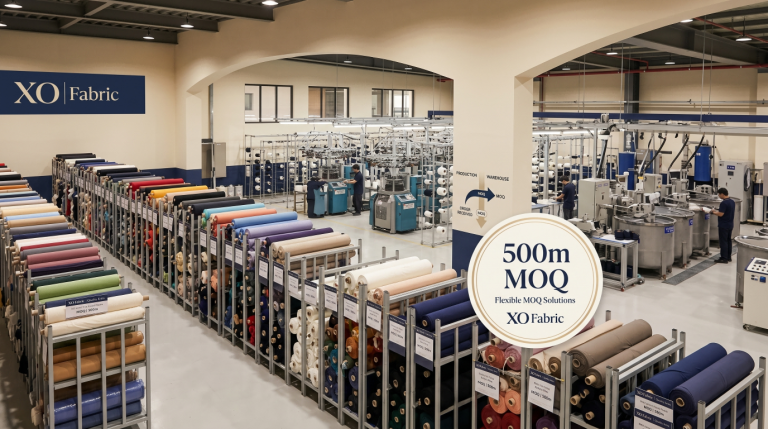
Handling both warp and weft construction under one roof removes the guessing game. You get consistent quality control, unified testing standards, and streamlined communication. XO Fabric operates dedicated warp frames for satin, velvet bases, and stable tricot. The weft lines run jersey, rib, interlock, and French terry across multiple gauge settings.
In-house production means faster lead times. You are not waiting on cross-docking between mills. Quality assurance runs parallel to production. Over 50 technicians perform in-process inspections. The 2,000 square meter finished goods warehouse keeps stock ready for quick dispatch.
Test reports are standard. You will receive data on ASTM D6197 pilling resistance, ASTM D4964 stretch and recovery, and dimensional stability after home laundering. The mill tracks shrinkage within half a percentage point. That precision prevents fit complaints down the line.
Minimum order quantities stay practical. Most knits ship at 500 meters. You can order lab dips for custom yarn blends or weight adjustments. The production team scales samples to bulk seamlessly, so the hand feel does not shift between approval and final delivery.
Warp and weft knitting are not interchangeable shortcuts. They are distinct mechanical approaches that dictate how a garment behaves on the body, how it survives the wash cycle, and how it holds up at the seams. Picking the right structure saves you from expensive re-cuts and returns.
Always test the loop formation, not just the GSM. Feel the recovery after stress. Check the run resistance early. When you align the knit structure with your design intent, the production floor stops fighting you.
If you need guidance on matching loop mechanics to your next collection, reach out. We can pull physical samples, run recovery tests, and walk you through the structural trade-offs before you finalize your tech pack. Getting the foundation right makes everything else fall into place.