Address
Nanlang Industrial Zone, Xingtan Town, Shunde District, Foshan, Guangdong, China
Work Hours
Mon–Fri, 9:00 AM – 6:00 PM (CST/UTC+8). We aim to respond to all inquiries within 48 hours.

Address
Nanlang Industrial Zone, Xingtan Town, Shunde District, Foshan, Guangdong, China
Work Hours
Mon–Fri, 9:00 AM – 6:00 PM (CST/UTC+8). We aim to respond to all inquiries within 48 hours.
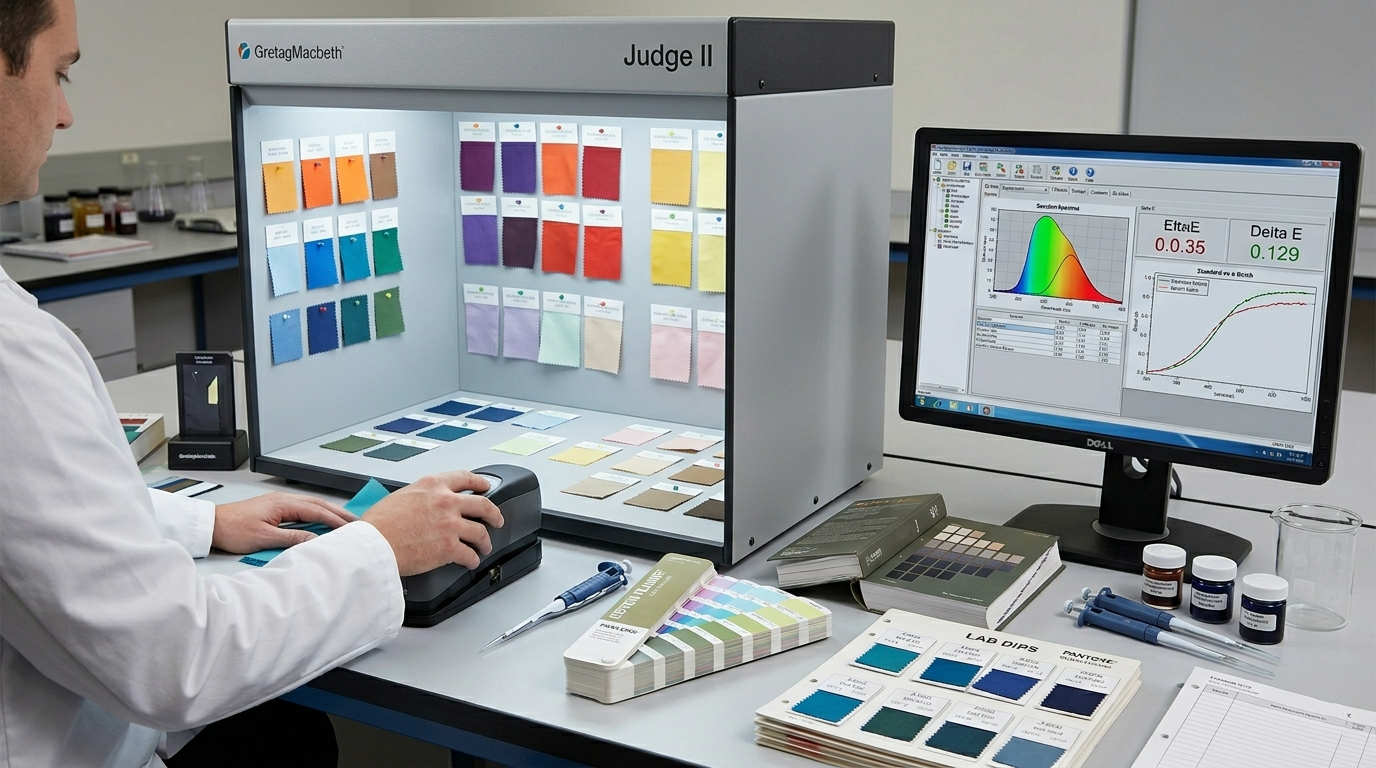
You’ve approved a beautiful blue sample, but the bulk fabric arrives with a noticeable color shift. This costly mistake is why color matching textile production demands attention.
Many apparel brands underestimate the complexity of achieving consistent fabric color across different dye lots and fiber types.
Inconsistent colors lead to garment mismatches, customer complaints, and damaged brand reputation. This guide covers the color matching process — from Pantone codes to lab dips — and how a reliable partner ensures color consistency.
Brand consistency isn’t just about logos. It’s about that exact shade of navy your customers recognize instantly.
When collar, cuffs, and body panels don’t align, the garment feels “off” even if the wearer can’t pinpoint why.
Iconic colors become brand identifiers. Think of that specific red or forest green. Customers expect the same hue when reordering a favorite style months later.
Production introduces variables. Cotton absorbs reactive dyes differently than polyester takes disperse dyes. Even with identical formulas, dye lot variations occur.
Water quality, temperature fluctuations, and dyeing time all nudge the final shade. A 2°C shift in dye bath temperature can alter depth by 5-8%.
The cost of mismatch adds up fast. Garment components that don’t match can’t be assembled. Customer returns spike. Re-dyeing or replacing fabric is expensive and delays launch.
Learn more about different dyeing methods and their impact on color consistency in our guide to Dyeing Methods.
Need help navigating these challenges? You can Request Color Matching guidance from technical specialists.
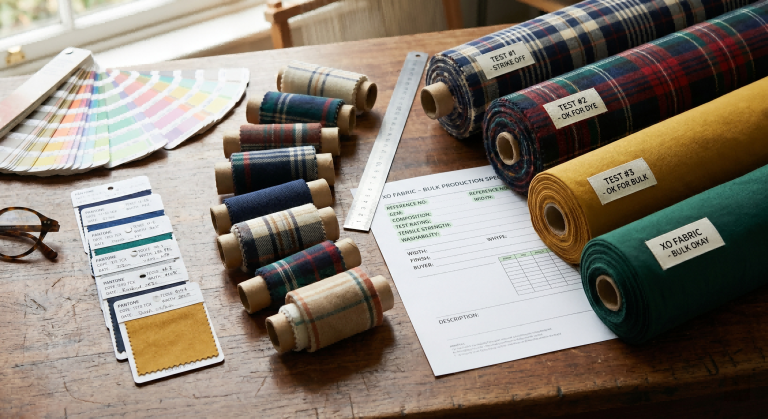
The Pantone Matching System (PMS) is the textile industry’s common language. Each code corresponds to a specific formula.
It works across apparel, graphics, and packaging. The mill can match your Pantone 19-4053 TCX (Classic Blue) or provide equivalents if needed.
But Pantone isn’t the only system. CMYK is for process printing, not fabric dyeing. RGB describes screen light, not reflected textile color.
NCS (Natural Color System) sees use in European interiors. For global apparel, Pantone remains the safest bet for consistency.
Physical samples sometimes beat Pantone chips. They account for fabric hand, luster, and texture. A matte cotton swatch communicates differently than a glossy polyester one.
Always keep a physical reference for reorders. Digital files drift; fabric doesn’t.
Color communication has pitfalls. Screen calibration varies wildly. What looks vibrant on your monitor may appear muted on mine.
Lighting matters immensely. Daylight (D65), incandescent, and LED render colors differently. A lavender that pops under store lighting may look grayish outdoors.
For critical colors, always request lab dips. Never approve bulk production based on screen colors alone.
| Color System | Best For | Textile Limitation |
| Pantone TCX/TPX | Textile dyeing, global sourcing | Requires physical chip for accuracy |
| RGB | Digital design, web | Does not translate to fabric dye |
| CMYK | Printed graphics | Not suitable for fiber dyeing |
A lab dip is a small fabric sample, typically 10x10cm, dyed to match your target color. It uses the same formulation intended for bulk production.
This lets you approve the shade before committing to thousands of meters. Turnaround usually runs 7-10 days for custom colors.
Here’s how development typically flows:
Objective measurement matters. A spectrophotometer provides LAB values and calculates Delta E — the numerical color difference.
For textiles, Delta E <1.0 is usually acceptable. Under 0.5 is nearly imperceptible. Light boxes standardize visual assessment across teams.
Your role in approval is critical. Always review lab dips under D65 daylight simulation. Consider how the fabric type affects perception: the same dye formula looks different on 180 GSM cotton versus 120 GSM polyester.
Keep your approved lab dip in a dark, dry place. It becomes your reference for future reorders. The supplier’s policy should guarantee bulk production matches this approved sample within Delta E <1.0.
Understanding realistic timelines helps planning. See our breakdown of Sample to Bulk Timeline for production scheduling.
I once worked on a tricky ocean teal for a 65/35 cotton-poly blend. The initial lab dip matched Pantone perfectly under D65. But under warm retail lighting, it looked dull.
We adjusted the formula, adding a brighter blue component. This increased dye cost by 8% and added three days. The client hesitated.
We compromised: accept Delta E 0.9 under D65 (slightly higher than ideal) but ensure the visual match held across three light sources. The bulk order succeeded because we prioritized real-world perception over pure spectrophotometer numbers.
Sometimes the “perfect” number isn’t the right business decision.
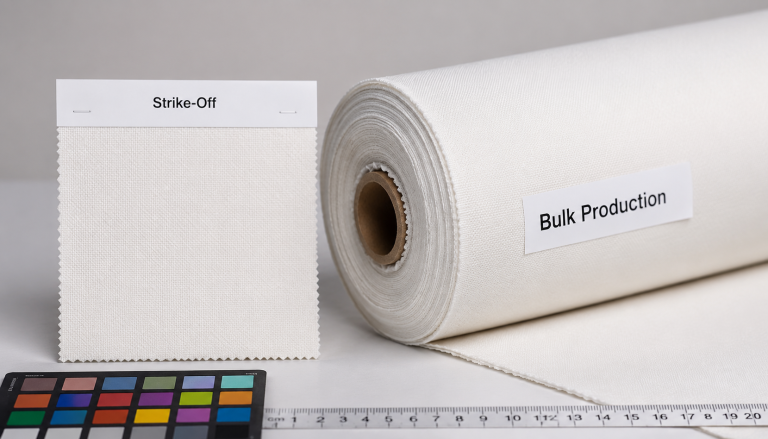
Lab dip approval is just the start. Bulk dyeing introduces scale challenges. The goal: replicate that small-sample success across hundreds of kilograms.
Dye lot control is foundational. Bulk production should use the same dye batch and process parameters as the approved lab dip.
For large orders exceeding vat capacity, multiple dye lots may be necessary. Discuss this upfront. Plan garment cutting to minimize visible variation between lots.
In-process monitoring catches drift early. Take color readings at regular intervals during dyeing. Compare each to the approved lab dip using Delta E tracking.
A dedicated quality team makes a difference. Having 50+ technicians monitoring color consistency isn’t overkill for complex orders.
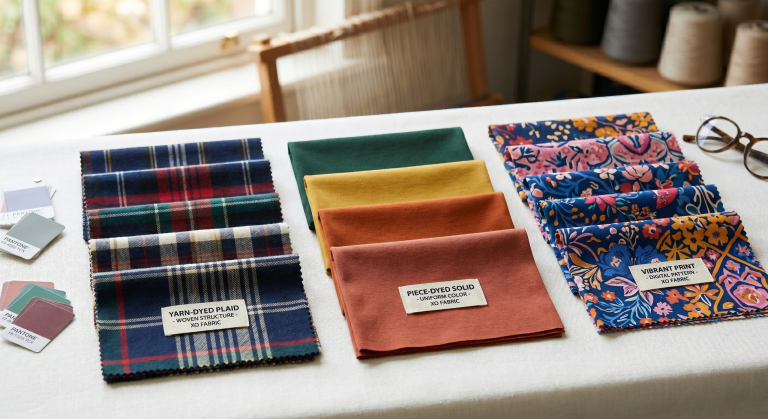
Fabric type adds complexity. Cotton absorbs reactive dyes; polyester requires disperse dyes. Blends like 60/40 cotton-poly need two dye types applied sequentially.
Temperature control is critical. A 3°C fluctuation in the polyester dyeing stage can shift shade depth by 10-12%. Water pH affects reactive dye fixation on cotton.
What if color shifts despite controls? Options include re-dyeing (costly, adds 5-7 days) or accepting the variation if within tolerance (e.g., Delta E <1.5 for non-critical items).
For high-visibility garments with large solid panels, stricter tolerance is worth the extra time. A recent order had three dye lots; the third showed Delta E 1.3 due to a water temperature spike.
We re-dyed that lot. Yes, it delayed shipment by two days. But the alternative — visible panel mismatches — would have triggered returns. The client agreed the trade-off was right.
Comprehensive quality systems prevent surprises. Learn about our Quality Control Process in our factory tour post.
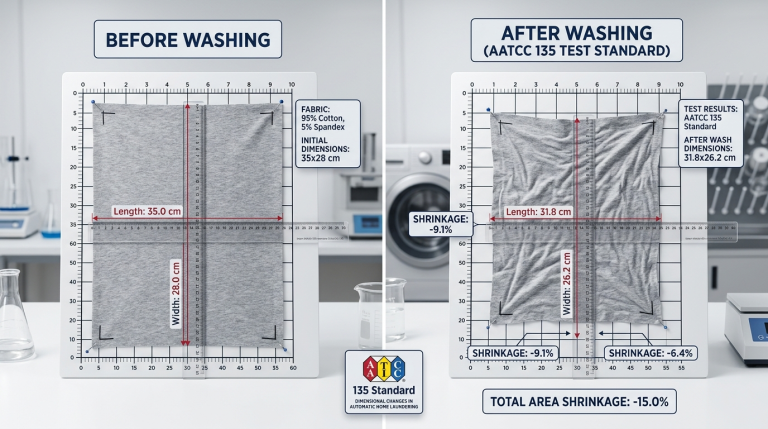
Color fastness is part of the bigger picture. Read our guide to Fabric Testing Standards for durability insights.
Mistake #1: Relying only on screen colors. Screens emit light; fabrics reflect it. Colors look fundamentally different.
Solution: Always provide a Pantone code or physical sample. Never approve bulk based on a JPEG.
Mistake #2: Not keeping lab dip records. Without a physical reference, reordering the “same” color becomes guesswork.
Solution: Store approved lab dips in a dark, dry place. Label them with date, fabric type, and dye formula reference.
Mistake #3: Ignoring fabric type differences. That perfect dye formula on 200 GSM cotton will look different on 150 GSM polyester.
Solution: Always request the lab dip on the exact fabric type and weight you’ll use for production.
Mistake #4: Approving under poor lighting. Incandescent bulbs add yellow; cool LEDs add blue. Both distort perception.
Solution: Approve under standardized D65 daylight simulation. If that’s not possible, check under at least three light sources.
Quick note: Once, a client approved a lavender lab dip under warm LED lighting. The bulk production looked noticeably cooler under daylight. Now I always insist on D65 light box approval for pastels.
Experience matters. A team with 20+ years in color matching has seen the edge cases: metallic threads affecting dye uptake, moisture-wicking finishes altering shade perception.
Advanced equipment reduces guesswork. Automated dye dispensing minimizes human error in formula preparation. A calibrated spectrophotometer provides objective LAB values.
A light box ensures visual assessments happen under consistent, standardized conditions. These tools aren’t luxuries; they’re necessities for precision.
Quality guarantees provide peace of mind. A reliable partner will commit to bulk production matching the approved lab dip within Delta E <1.0.
In-process monitoring during bulk dyeing catches issues early. Having dedicated technicians focused solely on color consistency prevents small drifts from becoming rejections.
Turnaround time impacts your launch schedule. Lab dips in 7-10 days. Bulk production starting 10-20 days after lab dip approval. Integrated production streams reduce handoff delays.
I prefer working with mills that communicate proactively about potential shade variations. A quick heads-up about a dye batch change lets me adjust expectations before issues arise.
Color matching is critical for brand consistency and garment quality. From Pantone codes to lab dips, every step matters in achieving accurate, consistent color across production batches.
With 20+ years of experience in color matching, advanced equipment, and rigorous quality control, a trusted partner ensures your fabrics match your brand vision.
Contact us today to request lab dip service and ensure color consistency for your next apparel line.