Address
Nanlang Industrial Zone, Xingtan Town, Shunde District, Foshan, Guangdong, China
Work Hours
Mon–Fri, 9:00 AM – 6:00 PM (CST/UTC+8). We aim to respond to all inquiries within 48 hours.

Address
Nanlang Industrial Zone, Xingtan Town, Shunde District, Foshan, Guangdong, China
Work Hours
Mon–Fri, 9:00 AM – 6:00 PM (CST/UTC+8). We aim to respond to all inquiries within 48 hours.
Fabric failures rarely happen overnight. They usually start as invisible stress points that quietly multiply until a seam splits or a canopy rips during a routine setup.
Too many sourcing teams chase hand feel and colorfastness while leaving strength metrics to chance. That habit costs money. Premature breakdowns trigger warranty claims, return freight, and quiet reputation damage that never shows up on a balance sheet.
Matching material durability to actual end-use demands is the only way to keep production predictable. This guide breaks down how tensile and tear strength actually behave, which ASTM and ISO standards matter, and how to read those spec sheets without guessing. You will learn where to look for weak points and how to adjust your construction methods before cutting begins.
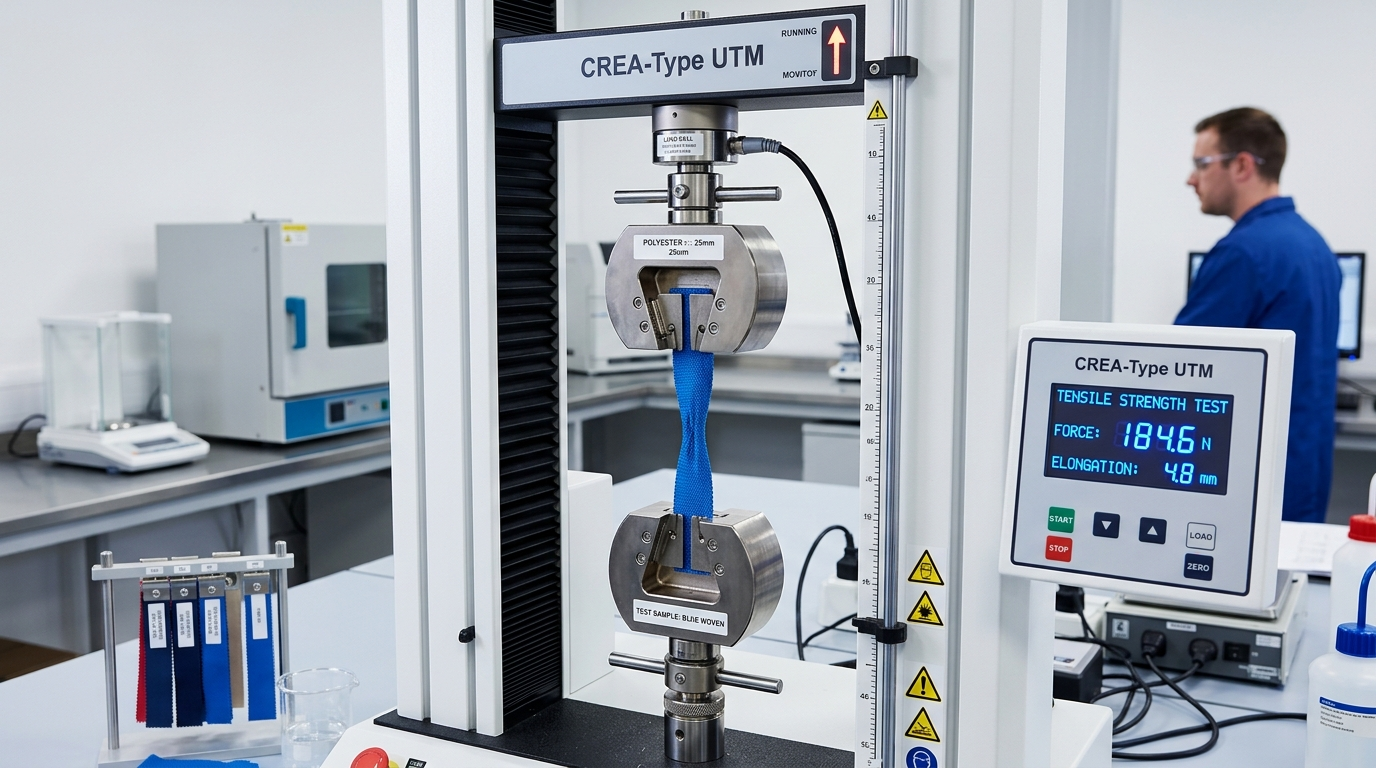
Tensile strength tells you exactly how much pulling force a textile can handle before the yarns snap or the structure gives way. When we talk about fabric tensile strength in the shop, we are measuring peak load at the moment of rupture. It is not an estimate. It is a hard number recorded in Newtons or pounds per inch.
The direction matters more than most people realize. Woven textiles carry tension differently across the warp and weft. Knitted structures behave the same way across courses and wales. You will often see a twenty to thirty percent gap between those directional readings. That gap changes how you plan your pattern grading.
Lab technicians usually run a grab test on finished goods. The grips only clamp a center section, which prevents premature edge fraying from skewing the result. Strip tests pull the full width. They are useful for raw fabric evaluation but rarely match real garment stress. I always ask which method was used before comparing two suppliers.
Low fabric tensile strength shows up fastest in load-bearing zones. Think workwear pockets, cargo loops, or commercial seating cushions. When the base textile cannot hold tension, the thread takes the load. That is how seam slippage begins. The stitches pull through the fabric instead of breaking. You end up with a clean hole and perfectly intact thread tails.
Fixing that issue usually requires changing the construction before retesting. Start by switching to a 90/14 or 100/12 polyester core-spun thread. Increase your stitch density to six or seven stitches per inch. Use a fine point needle like size 70/10 to avoid widening the weave. Press the seam open with medium steam and a press cloth to set the fibers. Run a quick pull test on a scrap before committing to bulk.
Lightweight apparel fabrics usually land between two hundred and four hundred Newtons. Heavy workwear sits closer to eight hundred to twelve hundred. Industrial canvas and marine textiles push past fifteen hundred. You can browse our Performance Knits collection to see how we grade those thresholds for activewear and utility gear.
Tear strength measures something completely different from tensile load. It tracks how well a textile resists damage spreading after a small nick or snag occurs. Tensile testing waits for total failure. Tear testing watches a flaw travel. That distinction changes everything when you design for abrasive environments.
I have seen perfectly tensile-strong denim shred into ribbons because a single zipper catch started a run. The material held up under straight pulling but offered zero resistance to lateral propagation. Knit structures actually outperform wovens here. The interlocking loops force tears to change direction, which burns energy and slows the rip. You will often see three to five times higher tear strength in knits compared to tight weaves.
Products prone to accidental abrasion need that loop interruption or a tighter knit construction. Childrenswear, outdoor canopies, pet bedding, and high-friction workwear all benefit from high tear ratings. The lab runs two main methods to verify it. The tongue tear test uses a blade to simulate a sharp snag. The trapezoid test applies steady pressure to a cut edge. Heavy industrial fabrics usually require the trapezoid approach.
If your current textile keeps failing at stress points, switch to a base material with built-in tear arrest. Our Knit Base Fabrics lineup focuses on exactly that behavior for casualwear and youth applications. The structure stops small damage from becoming a returned product.
Reliable textile testing requires strict environmental controls. Every lab I work with conditions samples at sixty-five percent relative humidity and twenty degrees Celsius for at least twenty-four hours. Skipping that step introduces up to fifteen percent variance in the final numbers. Moisture content alone changes how fibers absorb shock.
The machine clamps the specimen and pulls at a steady three hundred millimeters per minute. The software logs the peak force instantly. For performance textiles, we also run wet testing. Samples soak for four hours, then return to the grips. That step reveals how much strength vanishes when the material meets rain or sweat. Some rayon blends lose nearly half their initial rating. You need to know that before specification.
| Standard | Focus | Region |
| ASTM D5034 | Grab tensile | North America |
| ISO 13934-1 | Strip tensile | International |
| GB/T 3923.1 | National tensile | China |
| ASTM D2261 | Tongue tear | North America |
| ISO 13937-2 | Trapezoid tear | International |
| GB/T 3917.2 | National tear | China |
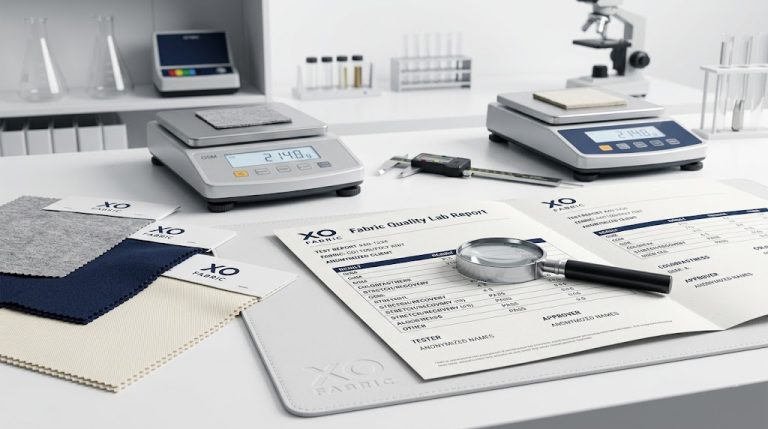
Quality testing becomes pointless without traceable reports. Reputable mills attach third-party lab certificates to every bulk shipment. We run in-house tensile and tear checks on every production batch as a secondary filter. Having fifty technicians review line samples catches drift before it reaches the container. You should expect that baseline from any serious supplier.
If you are sourcing for commercial seating or contract upholstery, verify the method first. Our Warp Knit Fabrics are routinely validated against ASTM D5034 protocols because the construction demands consistent dimensional stability. Mixing ISO strip results with ASTM grab numbers will always produce mismatched expectations.
Woven textiles concentrate load along straight yarn paths. That alignment gives them two to three times higher tensile strength than most knits. The tradeoff is brittle tear behavior. Pull a loose thread and the whole row can unravel. Knits sacrifice peak tension for flexible damage arrest. The loops stretch, redirect force, and usually survive incidental snags.
Warp knits sit somewhere in the middle. They use vertical yarn interlacing to lock the structure tighter than weft knits. You get better tensile retention without completely losing tear resistance. That balance makes them popular for stretch garments and technical outerwear.
| Fabric Type | Tensile (N) | Tear (N) |
| Light cotton voile | 100–200 | 5–10 |
| Heavy denim | 800–1200 | 20–30 |
| Polyester warp knit | 400–600 | 30–50 |
| Spandex activewear | 300–500 | 40–60 |
I remember sourcing a textile for a resort lounge chair line. The buyer wanted a matte finish that felt like brushed cotton. The first sample looked perfect on the swatch board. We pulled it at six hundred Newtons and it held. Then we ran a quick trapezoid tear test. It failed at twelve Newtons. That would not survive a single season of pool chairs and sand.
We switched to a polyester warp knit with a mechanical nap. It added eight grams per square meter but pushed tear strength past forty Newtons. The buyer worried about weight. We showed a mock-up with the new textile and a slightly reduced foam core. The chair passed drop testing and comfort reviews. Sometimes adding a few grams saves a warranty nightmare. You can view our full Warp Knit Fabrics catalog for similar high-tensile options. We also keep a Performance Knits section dedicated to tear-resistant activewear blends.
Fiber chemistry sets the absolute ceiling for durability. Nylon carries the highest inherent tensile rating. It stretches slightly before failing, which absorbs impact well. Polyester matches most strength requirements while resisting UV degradation and mild chemicals. Cotton provides moderate tension but weakens noticeably when exposed to moisture or chlorine.
Rayon and viscose sit at the bottom of the hierarchy. Their amorphous structure swells when wet, breaking hydrogen bonds that normally hold the filament together. You lose strength fast. I always recommend checking wet tensile reports before specifying viscose for outdoor or high-moisture use.
Yarn twist directly influences cohesion. Higher twist locks fibers together until you hit the sweet spot. Push past optimal tension and the yarn becomes brittle. Fabric density follows the same curve. Tighter weaves and knits distribute load across more contact points. Thicker yarns carry more force per inch of width.
Finishing processes change the baseline dramatically. Abrasive washing removes surface oils and can strip ten to thirty percent of initial strength. Heavy dyeing penetrates the cortex and creates micro-fractures. Chlorine bleaching attacks cellulose chains outright. On the positive side, PU coatings and film lamination add twenty to fifty percent mechanical resistance. They turn a flexible textile into a composite.
Environmental exposure compounds those losses. UV radiation breaks polymer chains over time. Repeated laundering fatigues the structure. Chemical spills accelerate degradation. You will typically see a five to ten percent drop per year of active use. Plan your replacement cycles around that curve.
When strength dips unexpectedly on the production floor, run this quick checklist.
Units of measurement trip up more buyers than anything else. You will see pounds per inch, Newtons, and kilogram-force on different sheets. International trade runs on Newtons. One Newton equals roughly 0.2248 pounds. Convert carefully before comparing vendors.
Spec sheets always list warp and weft values separately. Never average them yourself. The lower directional number dictates your safe working limit. I keep a simple conversion bookmark open during sourcing calls. It saves time and prevents mismatched expectations.
Minimum strength matters more than average strength. The minimum is the lowest acceptable value before rejection. The average should sit ten to fifteen percent higher. If a vendor only prints the average, you are buying into hidden variance. Always confirm which testing standard generated the number. ASTM grab results will not match ISO strip results even on identical material.
Those three red flags appear constantly in low-cost sourcing channels. I have learned to ask for the raw lab PDF before approving a trial order. You can read our step-by-step breakdown in How to Read Fabric Specifications to learn how to cross-check those documents quickly.
Fabric tensile and tear strength are not optional extras. They are the baseline that keeps your products functional, compliant, and profitable over time. Tensile measures clean breaking under straight pull. Tear measures damage control after a flaw starts. Both rely on standardized protocols to remain useful.
When you align material ratings with actual wear conditions, you stop chasing returns and start building trust. We provide complete test reports for every knit shipment. Our lab adjusts fiber blends and construction density to hit your exact targets. Contact our team today to request samples and access our full strength testing database for your next production run. You can reach us directly at Contact XO Fabric to start the conversation.