Address
Nanlang Industrial Zone, Xingtan Town, Shunde District, Foshan, Guangdong, China
Work Hours
Mon–Fri, 9:00 AM – 6:00 PM (CST/UTC+8). We aim to respond to all inquiries within 48 hours.

Address
Nanlang Industrial Zone, Xingtan Town, Shunde District, Foshan, Guangdong, China
Work Hours
Mon–Fri, 9:00 AM – 6:00 PM (CST/UTC+8). We aim to respond to all inquiries within 48 hours.
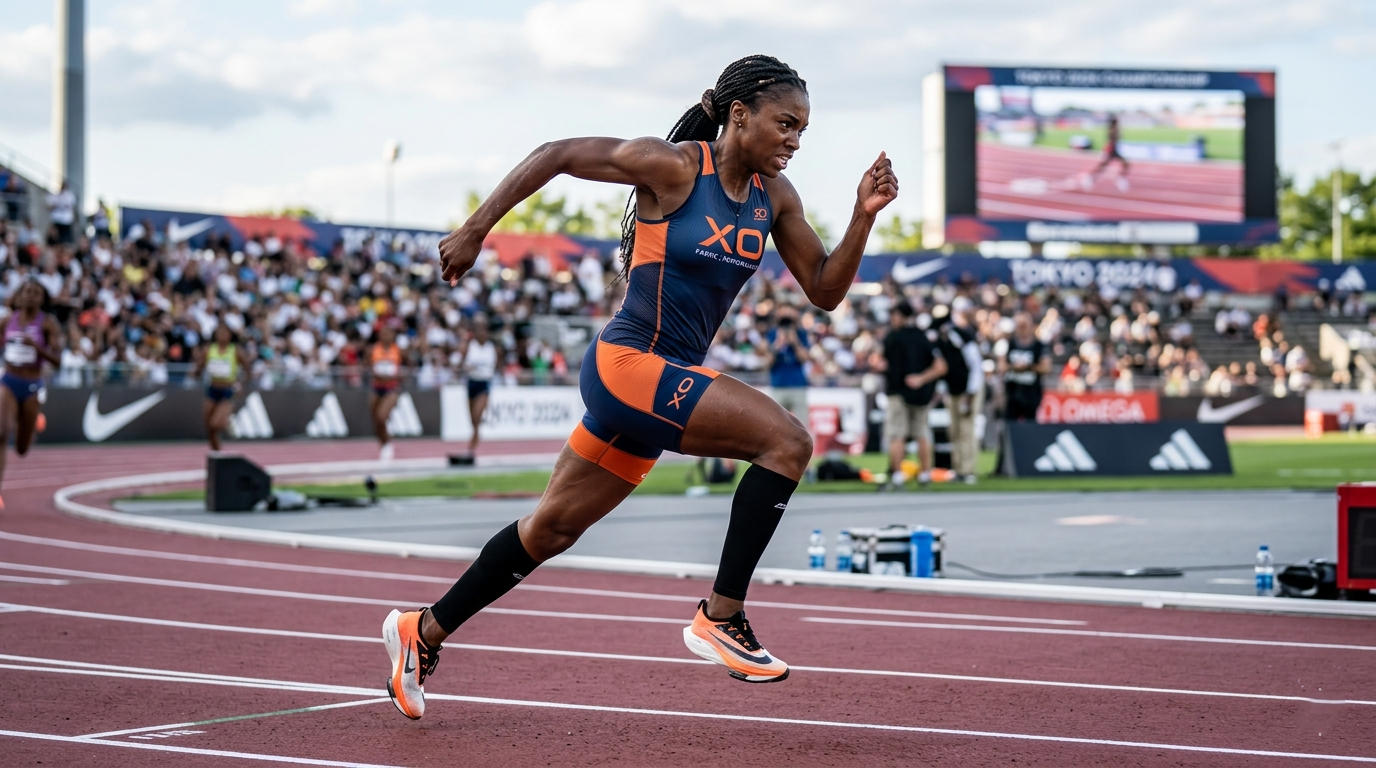
The right fabric can literally be the difference between a personal best and a disappointing performance. I have watched runners drop splits and weightlifters push heavier plates just by swapping out their gear, and it is rarely about motivation. It is about the textile engineering next to their skin.
Gone are the days when cotton t-shirts ruled the gym. Today’s athletic apparel uses advanced textile engineering to enhance comfort, reduce fatigue, and improve results. Choosing the wrong fabric for athletic wear can lead to overheating, chafing, restricted movement, and even injury. Brands that understand performance textiles gain a serious competitive edge.
In this guide, we will explore the science behind sports performance fabrics, from moisture-wicking technology to compression engineering. We will look at how technical knits help sportswear brands create superior athletic apparel without falling into common manufacturing traps.
Designing athletic wear requires balancing competing physical properties. You cannot simply throw elastane into a polyester base and call it high performance. The structure dictates the function. Here is how the core properties break down in real production.
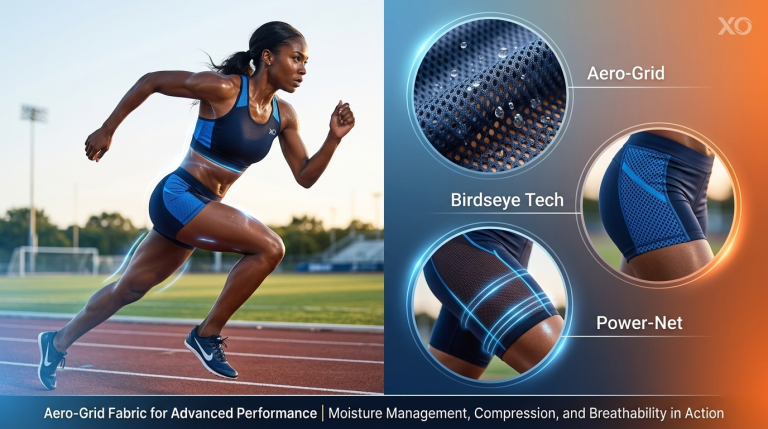
Fabric structure must allow heat dissipation during intense activity. Open-knit constructions like single jersey or fine mesh allow rapid airflow, while dense interlock weaves trap warmth. For sports requiring sustained cardio, you want a knit with intentional ventilation zones.
Strategic placement under the arms, across the upper back, and behind the neck changes everything. When engineering these zones, I usually aim for a 160 to 180 GSM weight to balance support with ventilation. Too light, and the garment rides up. Too heavy, and you lose the evaporative cooling effect.
Precision knitting allows targeted breathability zones without adding extra seam lines. Fewer seams mean less friction. That is a massive win for endurance athletes.
If you are sourcing materials for breathable panels, you should explore our Performance Knits. They are engineered specifically for athletic applications requiring balanced stretch and rapid heat release.
Keeping athletes cool in hot conditions requires efficient heat dissipation. Maintaining warmth in cold weather demands insulation without adding bulk. Moisture management plays a direct role in temperature control. Wet fabric against skin drops core temperature rapidly.
Multi-season versatility comes from smart fabric engineering. You need a textile that adapts to microclimate shifts. A well-balanced poly-spandex blend can handle moderate temperature swings. The key is avoiding heavy coatings that block natural skin respiration.
Four-way stretch versus two-way stretch changes how a garment behaves under load. Recovery is just as important as initial stretch. If the fabric does not return to its original shape, it will bag out after three wears.
Stretch percentage needs vary heavily by sport. Yoga requires extreme elasticity. Weightlifting needs controlled tension. Running falls somewhere in the middle. Spandex or elastane integration must not compromise breathability or durability. I typically recommend 8 to 12 percent elastane for general athletic wear. Higher percentages are reserved for compression zones.
Lightweight fabrics reduce distractions and lower energy expenditure. Next-to-skin comfort prevents chafing and irritation. Seamless construction benefits become obvious when athletes move through full ranges of motion.
You want a soft hand feel without sacrificing performance. That often means brushing the inner face of the knit or using fine-denier fibers. Heavy mechanical finishes can wreck moisture transport. Always test the hand feel against a standard cotton jersey to gauge the difference.
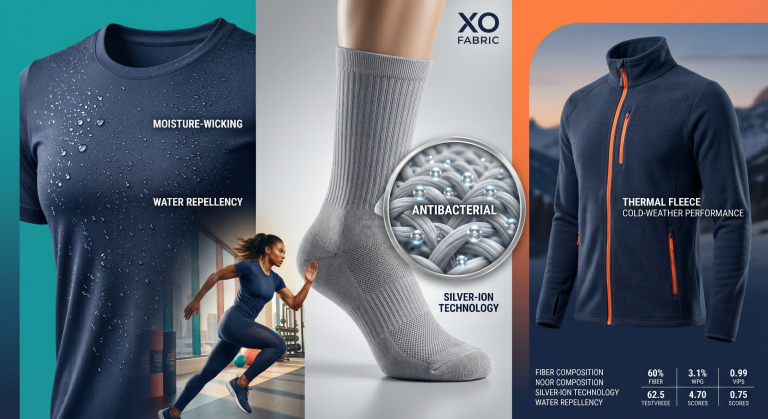
Marketing departments love the term moisture-wicking. It gets thrown around loosely. The actual science relies on precise fiber chemistry and structural engineering. Understanding the mechanism saves brands from ordering cheap polyester that traps sweat.
Capillary action drives how fabrics pull sweat away from the skin. Hydrophobic fibers repel water. Hydrophilic fibers attract it. The push-pull system works by combining both. The inner layer repels moisture, pushing it outward. The outer layer attracts moisture, spreading it thinly for evaporation.
Evaporation rate dictates the cooling effect. If moisture sits on the surface, you lose the thermal benefit. The fabric must move water faster than the body produces it during peak exertion.
Standard polyester actually traps heat if not engineered correctly. Modern athletic polyester uses modified cross-sections to increase surface area. Nylon plays a supporting role in moisture management. It offers superior abrasion resistance and a softer hand feel.
Blended solutions like polyester-spandex or nylon-cotton hybrids provide the best of both worlds. The synthetic base handles wicking. The natural or elastane component manages comfort and recovery. Specialized finishes can enhance the base properties without coating the fibers.
Knit structure impacts wicking efficiency. Interlock knits offer stability but slower transport. Mesh constructions accelerate movement but sacrifice opacity. Dual-knit layering can bridge the gap. Channel structures woven into the yarn path speed up moisture transfer.
Warp knits versus weft knits behave differently under tension. Warp knits hold shape better during rapid drying. Weft knits offer superior stretch. Your choice depends on the garment cut and intended use.
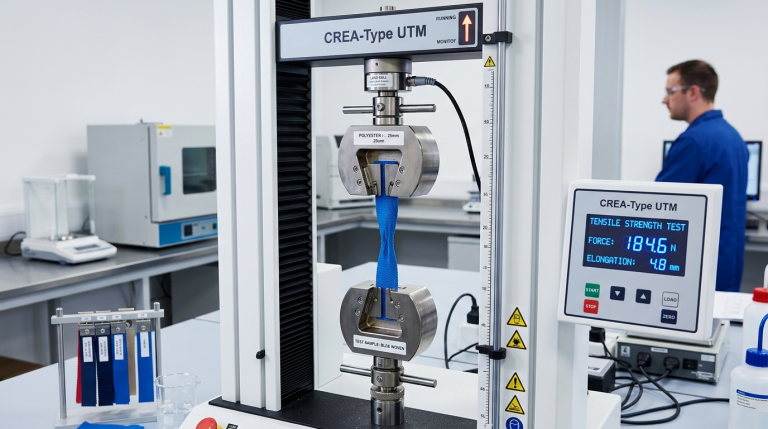
Moisture management testing follows strict standards like AATCC TM195. The test measures water vapor transmission and liquid transport time. What moisture-wicking claims really mean is measurable transport speed. They do not mean the fabric will never get wet.
Durability of wicking properties after washing matters immensely. Poorly finished fabrics lose effectiveness after twenty cycles. Rigorous quality control ensures performance claims hold up in real conditions. You can verify this by requesting third-party lab reports before committing to bulk production.
Micro-note: I once worked with a startup that skipped TM195 testing. Their shorts felt dry on day one. By day four, athletes reported heavy sweat retention. Always trust the data over the sales pitch.
If you need reliable transport mechanics, our Moisture-Wicking Fabrics collection is engineered for superior sweat management in high-intensity sports.
Compression garments have moved from medical recovery to everyday athletic training. The science is solid. The execution is difficult. Getting the pressure distribution right requires careful material selection and precise construction.
Graduated compression principles dictate tighter pressure at the extremities. Pressure eases toward the core. This gradient improves blood circulation and reduces muscle vibration. Reduced vibration means less micro-tearing and faster recovery.
Medical origins of compression technology focus on venous return. Athletic applications borrow the mechanics but adjust the pressure zones. You want support, not restriction.
High elasticity with excellent recovery is non-negotiable. Spandex content typically ranges from 15 to 30 percent. Consistent pressure distribution prevents binding or pinching. Breathability must remain intact despite the tight construction.
Durability under constant tension separates cheap knits from professional textiles. Heat setting the fabric after knitting locks in the memory. Without proper heat setting, compression fades after a few washes.
| Training Compression | Moderate support during activity. Focus on joint stability and muscle oxygenation. |
| Recovery Compression | Higher pressure post-workout. Designed to flush lactate and reduce swelling. |
| Medical-Grade vs Athletic | Medical follows strict mmHg standards. Athletic prioritizes comfort and mobility. |
Sport-specific needs vary wildly. Running demands calf support. Cycling requires hamstring and quad stability. Weightlifting focuses on shoulder and lower back bracing.
Major Case Study: A European cycling brand approached us with a frustrating problem. Their compression shorts were either too restrictive or lost elasticity after ten washes. They wanted 20 to 25 mmHg pressure at the calves. We started with a 28 percent spandex blend. The recovery was excellent. The breathability was terrible. Athletes complained of overheating during long rides.
We pivoted. We dropped the spandex to 18 percent and introduced a dual-density warp knit. The base layer provided structure. The outer layer added ventilation channels. We adjusted the needle size to 24G and tightened the stitch length to 3.5mm. The first sample failed the stretch test. We went back to the lab. We added a light heat-setting pass at 150 degrees Celsius. The second sample held pressure, breathed well, and survived fifty washes. The compromise was a slightly higher GSM. The brand accepted it because performance stabilized.
Functional rib constructions deliver structured compression. Custom spandex blending targets specific pressure levels. Rib and interlock options allow zoning across different muscle groups. Testing protocols must verify consistent compression values across production runs.
Our Functional Rib Compression fabric offers structured support with excellent recovery. It works exceptionally well for compression panels in sportswear.
Athletic garments endure brutal conditions. Sweat, friction, chlorine, and aggressive washing all attack the textile. Durability is not an afterthought. It is a structural requirement.
High-friction areas like underarms, inner thighs, and shoulders take the most damage. Fabric construction dictates abrasion resistance. Tighter knits resist pilling longer. Martindale rub test standards for sportswear usually require 15,000 to 20,000 cycles.
Reinforcement strategies should not sacrifice comfort. Double-layer panels or strategic flatlock seams distribute friction. Using finer denier yarns reduces surface roughness while maintaining strength.
Swimwear demands chemical resistance that general athletic wear does not. Chlorine exposure degrades elastane rapidly. UV fading resistance matters for outdoor sports. You need disperse dyes optimized for synthetic fibers.
Standard cotton reactive dyes will bleed and fade in pool water. Always specify chlorine-resistant finishes for water sports. The mill should provide wash-fastness ratings before cutting.
Performance property retention after fifty plus washes is the real test. Elastic degradation over time kills compression garments. Pilling resistance in high-movement areas keeps the aesthetic clean. Care instructions directly impact fabric lifespan.
Troubleshooting shrinkage usually points to improper heat setting or aggressive dryer cycles. If you notice seam slippage, check the stitch length. A 4.0mm stitch in a 180 GSM poly-spandex knit provides optimal lock. Shorter stitches restrict stretch. Longer stitches unravel under tension.
Micro-note: I saw a rugby brand use standard jersey for shoulder pads. The fabric shredded after one season. Switching to a double-knit interlock with higher martindale ratings solved it instantly. Material selection dictates product lifespan.
Our Performance Knits undergo rigorous durability testing. They withstand the demands of professional and amateur athletics without losing shape.
The textile industry moves fast. Smart integration, bio-based alternatives, and advanced finishes are shifting how brands approach athletic wear. Some innovations are ready for mass production. Others are still in the lab.
Fabrics with integrated biometric sensors are becoming viable. Heart rate, respiration, and hydration monitoring can be woven directly into the garment. Conductive yarns and micro-circuits replace bulky external wearables.
Current limitations include washing durability and signal interference. Future potential depends on flexible electronics that survive mechanical stress. Brands should treat smart textiles as premium niche products until manufacturing scales.
Silver ion technology and copper-infused fibers target bacteria at the molecular level. Zinc-based antimicrobial treatments offer a more budget-friendly alternative. Odor prevention differs drastically from odor masking.
Masking agents wash out quickly. True antimicrobial finishes neutralize the source. Our mill applies these treatments using plasma bonding for better wash retention. You should always request wash-cycle data before committing.
Temperature-regulating compounds embedded in fibers absorb excess heat. They release it when body temperature drops. This creates a microclimate buffer for athletes in extreme conditions.
Applications in endurance sports show promise. Durability considerations for PCM treatments remain a challenge. The microcapsules can rupture under heavy abrasion. Proper encapsulation in the yarn core solves most issues.
Recycled polyester from ocean plastics closes the material loop. Bio-based nylon alternatives reduce fossil fuel dependency. Bluesign and OEKO-TEX certifications guarantee safety standards. Performance without environmental compromise is no longer a luxury. It is a market expectation.
Many of our Moisture-Wicking Fabrics also feature antimicrobial treatments. They provide odor control during extended wear while meeting rigorous sustainability benchmarks.
Building a successful athletic line requires a manufacturing partner who understands textile mechanics. We operate with an integrated approach. Knitting flows directly into dyeing, finishing, and quality control. Everything stays in-house.
We have spent over two decades refining technical knit manufacturing. Our finished goods warehouse holds extensive performance fabric stock. Over fifty technicians monitor consistent specifications daily. This vertical control eliminates communication gaps between suppliers.
When you order directly from the mill, you avoid middleman markups and timeline delays. You get direct access to engineers who can adjust GSM, elastane ratios, and stitch tension on the fly.
Our library covers the full spectrum of athletic needs. Moisture-wicking knits come in jersey, interlock, and mesh constructions. Compression-ready rib and structured knits handle high-tension applications. Antimicrobial and odor-control finishes are standard across premium lines.
We develop custom performance blends for brand-specific requirements. Warp knit options deliver enhanced durability for rugged sports. Every fabric undergoes internal validation before reaching the catalog.
We keep minimum order quantities low. Most performance knits start at 500 meters. This allows smaller brands to test markets without financial risk. Sampling support includes detailed performance specification sheets.
Custom development covers proprietary fabric blends. Lab testing support validates moisture management, compression values, and abrasion resistance. Technical consultation helps you select the right textile for specific sports. You can Request Samples directly through our technical team.
Sports performance fabrics are engineered solutions. They enhance athletic results through precise moisture management, compression support, thermal regulation, and structural durability. The right fabric choice improves comfort, reduces fatigue, and helps athletes perform at their peak.
At XO Fabric, we specialize in high-performance knit fabrics for sportswear brands worldwide. From moisture-wicking jerseys to compression-ready ribs, our technical knits are engineered to meet the demanding requirements of modern athletic wear. We focus on long-term partnerships rather than quick transactions.
Ready to launch your next sportswear line? Contact XO Fabric to discuss your performance fabric needs and request technical samples. Let us help you build gear that actually holds up on the field.