Address
Nanlang Industrial Zone, Xingtan Town, Shunde District, Foshan, Guangdong, China
Work Hours
Mon–Fri, 9:00 AM – 6:00 PM (CST/UTC+8). We aim to respond to all inquiries within 48 hours.

Address
Nanlang Industrial Zone, Xingtan Town, Shunde District, Foshan, Guangdong, China
Work Hours
Mon–Fri, 9:00 AM – 6:00 PM (CST/UTC+8). We aim to respond to all inquiries within 48 hours.
Cooling Fabric Technology for Apparel: How It Works & Top Uses. This guide covers key properties, real-world applications, and a practical sourcing checklist for B2B buyers.
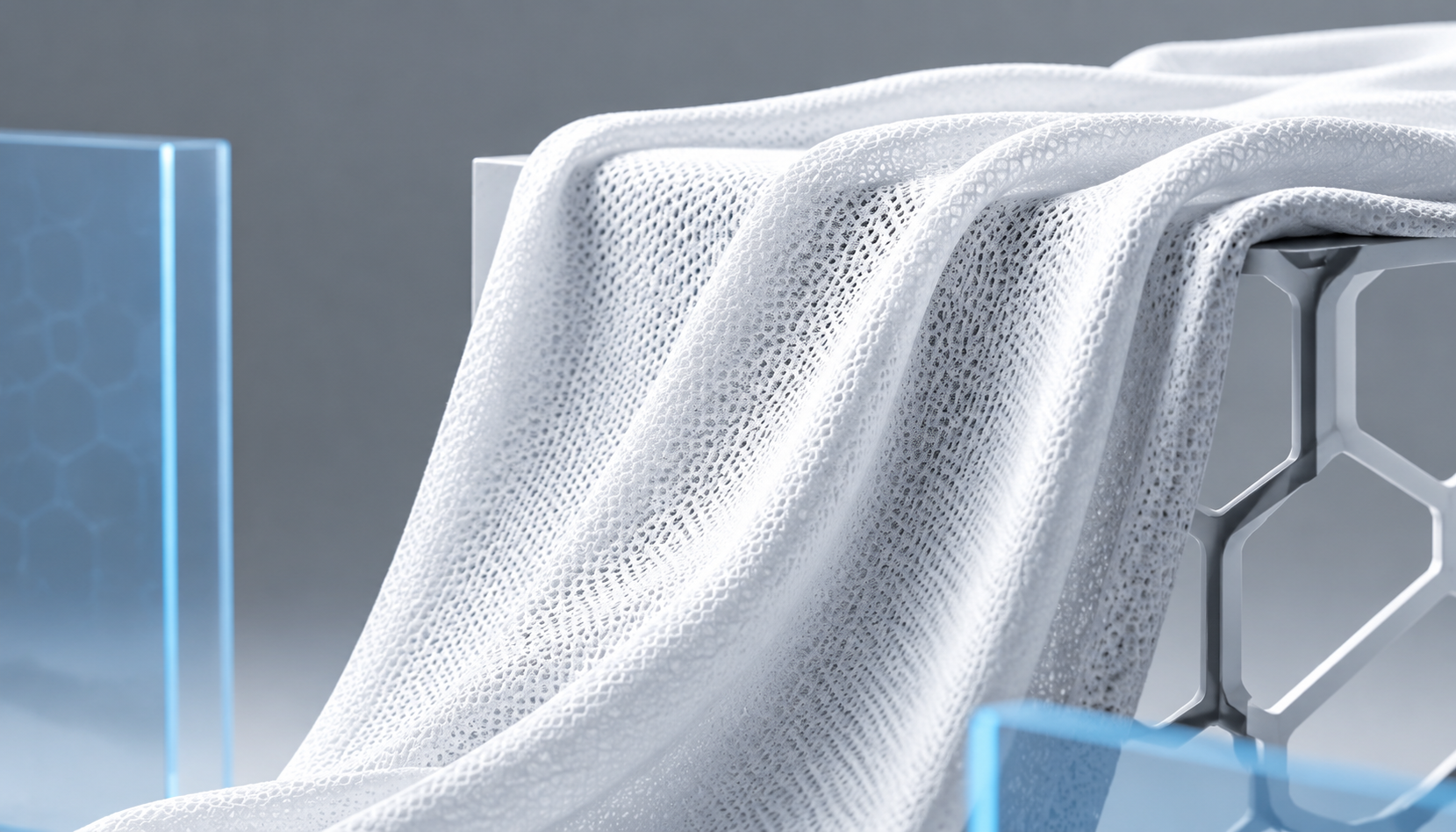
A B2B apparel buyer recently rejected a batch of “cooling” shirts after the supplier’s marketing claims failed a simple moisture-wicking test, costing weeks of lead time. This disconnect between hype and performance is the core problem. This guide moves beyond marketing jargon to explain the actual technology, measurable properties, and sourcing realities of cooling fabric for apparel, backed by over 20 years of integrated textile manufacturing experience.
Cooling fabric technology apparel is not a single magic material, but rather a category of engineered textiles designed to manage heat and moisture. It’s a common misconception to equate it simply with “breathable” or “moisture-wicking.” While those properties are often components, true cooling technology is a system. It actively works to lower the microclimate temperature between the fabric and the skin, providing a tangible sensation of coolness.
The evolution from natural fibers like cotton—which absorbs but holds moisture—to advanced synthetics represents a fundamental shift. We moved from passive absorption to active management. Modern cooling fabrics are engineered with specific goals: move sweat away from the body, accelerate its evaporation, and in some cases, conduct heat away more efficiently.
At its core, cooling technology operates through three primary mechanisms. Understanding these helps you, as a buyer, cut through vague specifications and ask the right questions.
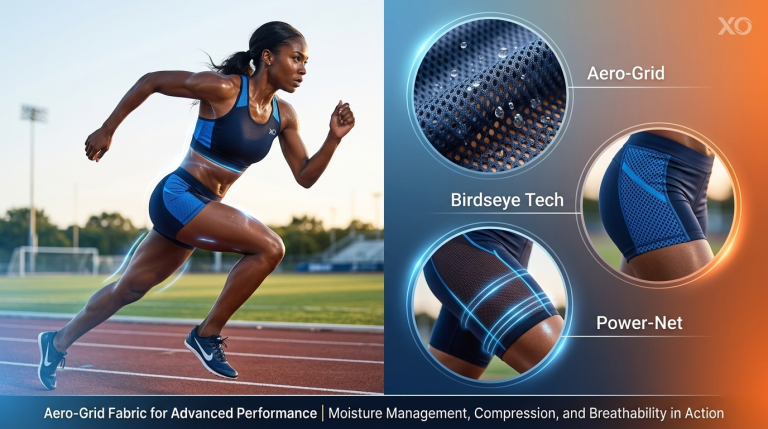
A practical example of a fabric engineered with these combined principles is a cooling mesh performance fabric, which uses an open-knit structure for air permeability alongside a moisture-wicking finish to address both evaporation and airflow simultaneously.
The journey of a sweat droplet starts at the skin. In a standard cotton t-shirt, that droplet is absorbed into the fiber, making the fabric heavy and damp. In a performance cooling fabric, the story is different. Synthetic fibers like polyester or nylon are often engineered with a modified cross-section—think of channels or grooves along the fiber’s length.
These micro-channels, combined with the fabric’s knit or weave construction, create a capillary action. The liquid sweat is literally pulled away from the skin’s surface and transported through the fabric to its outer face. This is the wicking process. The goal isn’t just absorption, but rapid transport.
Once on the outer surface, the physics of evaporative cooling takes over. For sweat to change from a liquid to a vapor, it requires energy. It draws this energy as heat from the immediate environment—which, in this case, is your skin and the air trapped between you and the fabric. The faster the evaporation, the more pronounced the cooling sensation. A fabric with a high moisture vapor transmission rate (MVTR) excels here.
This is where cooling fabric technology apparel gets more sophisticated. Some materials don’t just manage moisture; they interact directly with heat. Thermal conductivity refers to a material’s ability to transfer heat. Metals are highly conductive; wool is a poor conductor (an insulator).
Certain advanced fibers are infused with minerals like jade or titanium dioxide, which have higher thermal conductivity than standard polymers. When woven or knitted into a fabric, they can help conduct body heat away from the skin more efficiently, providing a cooler touch. This is a passive, continuous process.
An even more active approach involves Phase-Change Materials (PCMs). These are micro-encapsulated substances that absorb excess body heat as they change state from solid to liquid. Think of it like tiny ice packs embedded in the yarn. When the heat load is high, they absorb it. When the environment cools, they can release that stored heat, providing a buffering effect against temperature swings.
| Fiber/Material | Thermal Conductivity (W/m·K) | Cooling Mechanism |
|---|---|---|
| Cotton | ~0.04 | Insulator; absorbs moisture |
| Polyester | ~0.14 | Low conductor; wicking via structure |
| Nylon | ~0.25 | Moderate conductor; durable wicking |
| Mineral-Infused Fiber | ~0.30 – 0.50+ | Enhanced heat conduction |
| PCM-Infused Yarn | N/A (Heat Storage) | Absorbs/releases heat during phase change |
For a deeper dive into the standardized test methods that measure these properties, such as those from ASTM or ISO, the knowledge base offers detailed technical explanations.
When sourcing the best cooling fabric technology apparel, marketing language is insufficient. You need data. Here are the critical, measurable properties and what they mean for your product’s performance.
Your action step: When you receive a fabric spec sheet, don’t accept “excellent wicking” as a descriptor. Demand the test standard (e.g., “AATCC 195”) and the numerical result. This is the only way to compare materials objectively and ensure your supplier’s claims are verifiable. For specific test reports on our performance fabrics, you can request the data directly.
This is the primary market for cooling fabric technology apparel. Runners, cyclists, and gym-goers prioritize rapid moisture transfer and lightweight construction above all else. The fabrics used are often highly engineered: open-mesh knits, seamless constructions, and body-mapped ventilation zones. The focus is on maximizing the rate of sweat evaporation during intense, short-duration activity. A 135 Fabric GSM Calculator (4.0 oz/yd²) polyester mesh, for instance, offers an ideal balance of minimal weight, high air permeability, and effective wicking for a men’s running singlet or women’s training top.
This is a critical and growing application: cooling clothing for extreme heat environments. Think of construction sites, utility work, firefighting, and manufacturing floors. Here, the requirements shift dramatically. Durability, compliance with safety standards (like FR ratings or high-visibility EN ISO 20471), and sustained cooling over a 10-12 hour shift become non-negotiable. The fabric must withstand abrasion from tools and repeated industrial laundering.
Cooling shirts for construction workers aren’t just about comfort; they’re a productivity and safety tool. A worker suffering from heat stress is a safety risk. The ideal fabric here might be a heavier-weight (170-200 gsm / 5.0-5.9 oz/yd²) polyester-cotton blend or a treated synthetic that balances cooling performance with the ruggedness required for the job site.
The demand for comfort has seeped into everyday wear. Cooling properties are now a value-add for polo shirts, travel pants, dresses, and even business-casual attire. In this segment, the cooling effect is a secondary benefit to aesthetics, drape, and hand-feel. The technology is often integrated more subtly—perhaps through a finer-gauge knit or a finish that doesn’t alter the fabric’s appearance. The priority is a pleasant, non-clammy feel during a commute or in an air-conditioned office, not peak athletic performance.
| Application Sector | Top Priority | Typical Weight Range | Key Test Standard Focus |
|---|---|---|---|
| Athletic/Performance | Moisture Wicking & Weight | 100-150 gsm (3.0-4.4 oz/yd²) | High MVTR, High Air Perm |
| Occupational/Workwear | Durability & Compliance | 170-250 gsm (5.0-7.4 oz/yd²) | Wicking + Abrasion (ASTM D4966) |
| Casual/Fashion | Hand-feel & Aesthetics | 120-180 gsm (3.5-5.3 oz/yd²) | Moderate MVTR, Low Rct |
Finding the best cooling fabric technology apparel supplier requires a systematic approach. Don’t be swayed by catalogs alone. Use this checklist to vet potential partners and materials.
When evaluating a supplier’s history and capabilities, verifiable credentials matter. A manufacturer established in 2005 with a 2,000 m² (21,500 ft²) ready-stock warehouse and full certification matrix (OEKO-TEX, GRS, ISO 9001) demonstrates a depth of experience and operational stability that reduces your sourcing risk. You can review such credentials and company history on an about us page.
Industry: Occupational Workwear (Construction & Utilities)
Scenario: A European distributor needed a cooling polo shirt for outdoor workers that met EN ISO 20471 high-visibility standards while providing genuine cooling comfort in temperatures exceeding 35°C (95°F).
Conflict: The initial requirement hit a classic engineering wall. High-performance cooling meshes, with their open structures for excellent MVTR, often failed the abrasion and colorfastness tests mandated by the safety standard. Conversely, fabrics that could pass the rigorous durability and colorfastness requirements of the safety norm were typically heavier, tighter-knit, and offered poor breathability—defeating the cooling purpose.
Trial-and-Error: The first round of samples was a standard cooling polyester mesh. It felt great and wicked moisture impressively in lab tests. However, after simulated wash cycles required by the safety standard, the fabric pilled severely, and the high-visibility color faded beyond the acceptable delta E limit. The second round used a heavier, more durable twill weave. It passed all safety tests with flying colors. But when sent to a field trial with workers, the feedback was unanimous: “It’s like wearing a plastic bag.” The breathability was abysmal, and workers reported feeling hotter.
Compromise & Solution: The project required a custom-engineered solution. The final fabric was a medium-weight (170 gsm / 5.0 oz/yd²) polyester knit. It used a tighter, more durable knit structure than the initial mesh but incorporated a durable water-repellent (DWR) finish that also enhanced moisture transport. It achieved an MVTR of over 800 g/m²/24h and passed all EN ISO 20471 durability tests. The trade-offs were clear: the cost per meter was approximately 25% higher than the initial mesh option, and the custom development added three weeks to the lead time. However, it was the only solution that met the non-negotiable safety requirements while delivering a meaningful cooling benefit.
Think of it as a hierarchy. “Breathable” is the broadest term, meaning the fabric allows air and water vapor to pass through. “Moisture-wicking” is a specific function where the fabric actively pulls liquid sweat away from the skin. “Cooling” is the desired outcome, which can be achieved through superior wicking and breathability (evaporative cooling) or through additional mechanisms like thermal conductivity. A fabric can be breathable but not wicking (like a loose linen), and wicking but not necessarily provide a strong cooling sensation if evaporation is slow.
It depends on the technology. For a fabric relying solely on its structure and fiber type (like a polyester mesh), the cooling effect is inherent and permanent, though it can be degraded by clogging from body oils or detergent residue. For fabrics with topical treatments (like a durable water-repellent finish that enhances wicking), the effect diminishes with washing. A high-quality finish should last 50+ industrial washes. Phase-Change Materials (PCMs) are encapsulated within the fiber and are designed to last the garment’s lifetime, though their capacity can be affected by extreme heat during ironing or drying.
Absolutely. The key is selecting the right base fabric and ensuring it is certified safe. For children’s wear and sensitive skin, prioritize fabrics with OEKO-TEX Standard 100 certification, which tests for harmful substances. Many cooling fabrics are 100% polyester, which is inherently hypoallergenic. The cooling effect itself—staying dry and cool—can actually reduce skin irritation caused by sweat and chafing.
For stock items, MOQs can be as low as 300-500 meters (328-547 yd). For a fully custom development project—which might involve a unique fiber blend, a specialized knit construction, or a proprietary finish—the MOQ is project-specific and typically starts at 1,000 meters (1,094 yd) or more. Lead times for custom projects range from 4-8 weeks for sampling and approval, followed by 3-6 weeks for bulk production. The most accurate way to get numbers for your project is to contact a supplier directly with your detailed specifications.
Choosing the right cooling fabric technology apparel is a decision that balances science, practical application, and commercial reality. It’s not about finding a single “best” material, but about understanding the mechanisms—wicking, evaporation, conduction—and matching them to your product’s specific demands, whether that’s shaving seconds off a marathon time or keeping a construction worker safe and productive through a summer heatwave. The most successful projects start with clear performance targets, demand verifiable data, and embrace the iterative process of sampling and testing. In the end, the fabric that performs is the one that was chosen with eyes wide open to the trade-offs.