Address
Nanlang Industrial Zone, Xingtan Town, Shunde District, Foshan, Guangdong, China
Work Hours
Mon–Fri, 9:00 AM – 6:00 PM (CST/UTC+8). We aim to respond to all inquiries within 48 hours.

Address
Nanlang Industrial Zone, Xingtan Town, Shunde District, Foshan, Guangdong, China
Work Hours
Mon–Fri, 9:00 AM – 6:00 PM (CST/UTC+8). We aim to respond to all inquiries within 48 hours.
Bonded Knit Fabric: What It Is and Where It's Used. This guide covers key properties, real-world applications, and a practical sourcing checklist for B2B buyers.
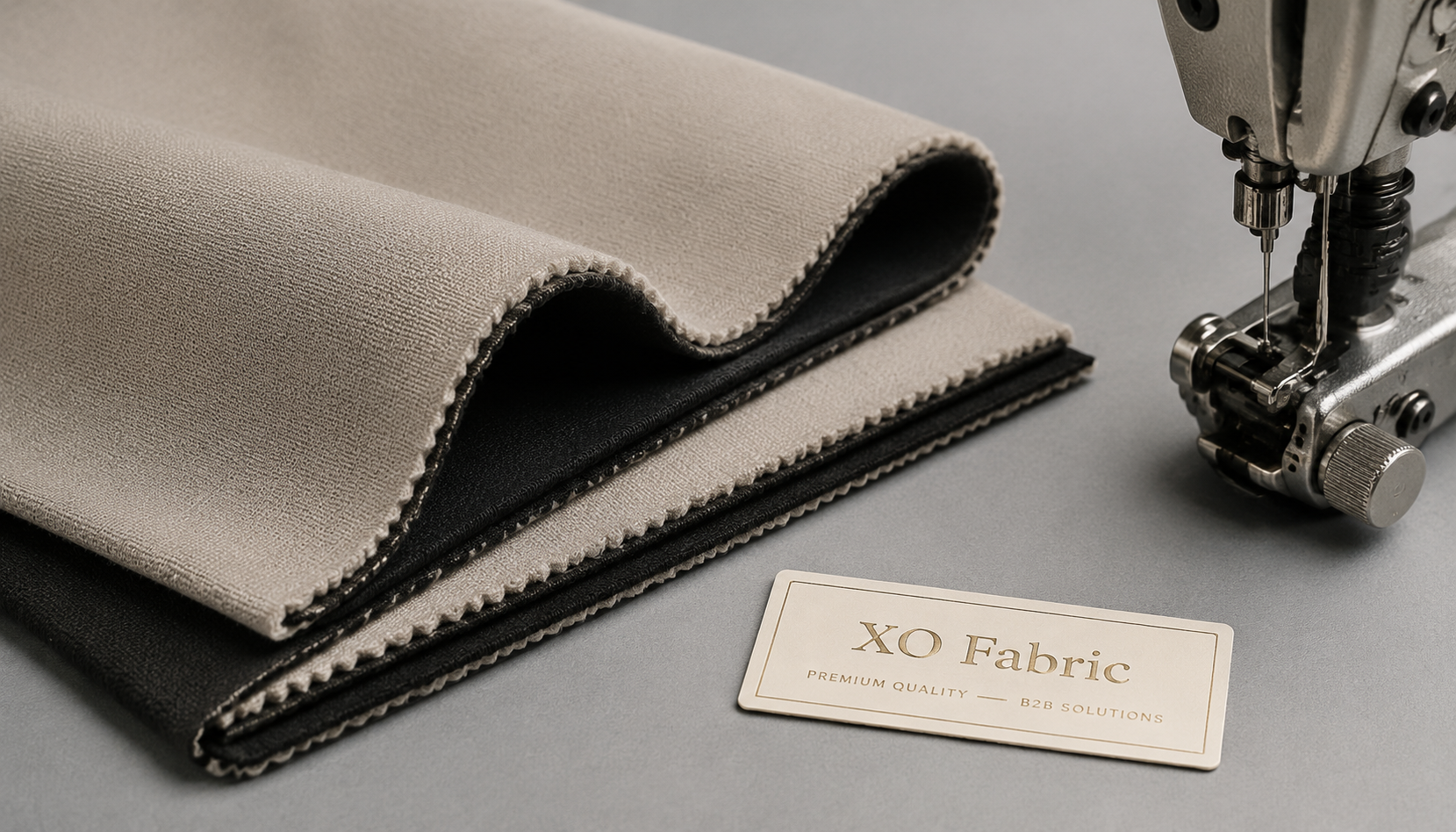
Imagine you’re a European outdoor brand’s sourcing manager. You’ve just received a $8,000 loss report. The root cause? Your first bonded knit fabric order for a mid-layer jacket failed in warehouse storage at 30°C (86°F). The layers delaminated because you didn’t distinguish between a hot-melt adhesive film and a solvent-based PU glue bond. This isn’t a hypothetical—it’s a common, expensive mistake in the world of bonded fabric clothes. The core issue is that “bonded knit fabric” isn’t a single product; it’s a category of composite solutions with vastly different technologies, performance, and risks. Getting it wrong costs real money.
Let’s clear up the confusion first. In the textile industry, the term “bonded” is dangerously ambiguous. What a Chinese supplier calls “bonded” might be flame lamination. An Italian mill’s “bonded” likely refers to TPU film bonding. A U.S. brand’s internal spec might assume a double-knit construction. This naming chaos is the first pitfall for any buyer exploring bonded knit fabric apparel.
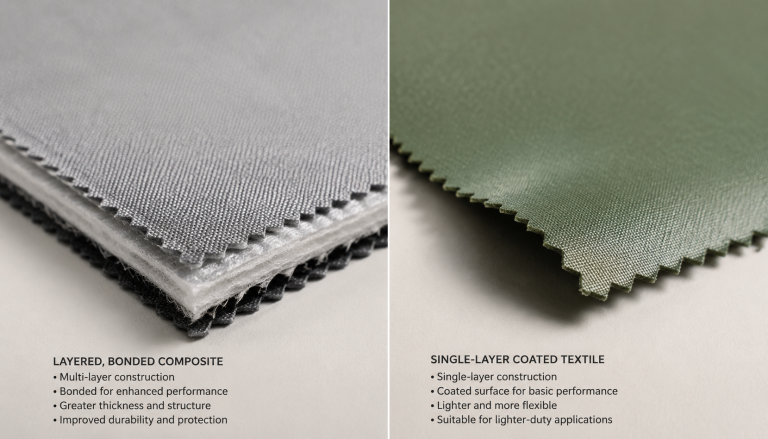
I’ve seen sourcing teams waste weeks in miscommunication because of this. One brand requested a “bonded fleece,” expecting a soft, stretchy composite. The supplier delivered a stiff, paper-like material made with a cheap adhesive. The technical definition we should all agree on is this: bonded knit fabric is a composite structure where two or more layers of knit base fabric are permanently joined using an intermediate bonding medium—be it a thermoplastic polyurethane (TPU) film, polyurethane (PU) glue, or a flame-induced adhesive layer. The key is that the bonding happens after the base fabrics are woven or knitted.
These terms get thrown around interchangeably, but the differences are critical. “Laminated” is often used synonymously with “bonded,” but in technical circles, it can imply a more industrial process. “Double-knit,” however, is fundamentally different. A double-knit fabric is woven on a special loom where two layers of fabric are integrated during the knitting process, creating a single, unified textile with no adhesive. A bonded knit, conversely, is a post-production assembly. For a buyer, this means double-knits generally offer better inherent stretch and breathability, while bonded knits provide superior wind resistance and structural rigidity by locking the layers together.
| Term | Process | Key Characteristic | Typical Cost Range |
|---|---|---|---|
| Bonded Knit | Post-production layering with adhesive | High wind resistance, structured hand feel | $$ – $$$ |
| Laminated Fabric | Often implies industrial film application | Similar to bonded, can be more rigid | $$ – $$$ |
| Double-Knit | Integrated during weaving/knitting | Superior stretch, breathable, single fabric | $ – $$ |
The performance of your final bonded fabric clothes hinges entirely on the bonding technology used. There are three dominant methods in the market, each with its own sweet spot and limitations. Choosing the right one isn’t just about cost; it’s about aligning the technology with your product’s end-use and your brand’s compliance standards.
This is the precision method. A thin film of thermoplastic polyurethane (TPU) or polyamide (PA) is placed between the fabric layers. The entire assembly is passed through heated rollers—typically between 130-180°C (266-356°F)—under controlled pressure. The film melts, flows into the fabric’s surface, and upon cooling, forms a strong, flexible bond. The film’s weight is crucial, usually ranging from 30 to 50 Fabric GSM Calculator (0.88 to 1.47 oz/yd²). This method dominates the seamless underwear and high-performance sportswear markets because it allows for precise control over bond strength and maintains excellent elasticity.
Here, a liquid polyurethane adhesive is applied to one fabric layer, then the second layer is pressed on top. The critical distinction is the solvent. Solvent-based PU glue uses chemicals like DMF, which are effective but raise environmental and health red flags. The industry is rapidly shifting to solvent-free PU glue, which eliminates VOC emissions. Bond strength is measurable; a good solvent-free bond can achieve a peel strength of 12-18 N/5cm. This method offers good durability but can sometimes result in a slightly stiffer hand feel compared to film bonding. For brands targeting OEKO-TEX or EU REACH compliance, solvent-free is non-negotiable.
This is the fastest and often cheapest method. A polyurethane foam sheet is passed over an open flame, which melts and carbonizes its surface, creating a sticky, adhesive layer. This tacky foam is immediately pressed against the second fabric. It’s incredibly efficient for creating thick, insulating bonded fabrics for winter jackets and linings. However, the process has environmental drawbacks, releasing VOCs, and is unsuitable for heat-sensitive fibers. The uses of bonded fabrics made this way are specific: think heavy-duty outerwear, not performance athletic wear.
| Process | Ideal Base Fabrics | Peel Strength (N/5cm) | Wash Cycles |
|---|---|---|---|
| Hot-Melt Film (TPU) | Nylon, Polyester, Elastane blends | 15 – 25 | 50+ |
| Solvent-Free PU Glue | Polyester, Cotton blends | 12 – 18 | 30 – 50 |
| Process | Environmental Rating | Typical Cost |
|---|---|---|
| Hot-Melt Film (TPU) | High (No VOCs) | $$$ |
| Solvent-Free PU Glue | High (No VOCs) | $$ |
| Flame Lamination | Low (VOC Emissions) | $ |
When evaluating a bonded knit fabric, you’re not just looking at a fabric hand feel. You’re assessing a system. The bonding layer acts as a functional membrane that defines the composite’s performance envelope. Here are the metrics that directly impact your product’s success in the market.
A primary reason to choose bonded knit fabric apparel is for wind protection. A well-made TPU-film bonded fleece can achieve an air permeability of less than 5 CFM (cubic feet per minute), making it effectively windproof. The challenge is maintaining breathability. The same TPU film should offer a Moisture Vapor Transmission Rate (MVTR) of over 5,000 g/m²/24h. This balance is what separates a good technical jacket from a sweaty plastic bag. For mid-layers, this combination is gold.
Bonded fabrics must survive real-world abuse. The industry benchmark for a quality bonded knit is less than 3% shrinkage after 50 industrial wash cycles at 40°C (104°F). More importantly, the bond itself must hold. After those 50 washes, the peel strength should retain at least 80% of its initial value. This is critical for sportswear and workwear that undergo frequent, harsh laundering. Ask your supplier for test reports following ASTM D751 or ISO 2411 standards.
Bonding a knit fabric inherently reduces its stretch. A pure knit might have 95%+ stretch recovery, but after bonding, that can drop to 85-92%. This “locking effect” is a trade-off for structure and wind resistance. To compensate, advanced suppliers use elastic TPU films that allow for 4-way stretch. The goal is to find the sweet spot where you gain weather protection without sacrificing the comfortable, dynamic feel that knitwear is known for.
Understanding the technology is one thing; knowing where to apply it is another. Bonded knit isn’t a universal solution. Its value is highly context-dependent. The following table outlines where it shines and where you should look for alternatives.
| Application | Typical Product | Key Performance Need | Bonded Knit Match |
|---|---|---|---|
| Outdoor Outerwear | Technical jackets, mid-layers | Wind resistance, warmth, packability | Excellent |
| Performance Sportswear | Running tights, compression tops | Support, muscle compression, moisture management | Good |
| Urban/Commute Wear | Blazers, lightweight shells | Structure, clean lines, light weather protection | Good |
| Intimate Apparel | Seamless bras, shaping garments | Smooth finish, no-chafe seams, light support | Excellent (with film bonding) |
| Casual Knitwear | Sweaters, cardigans | Soft drape, high stretch, cozy feel | Poor |
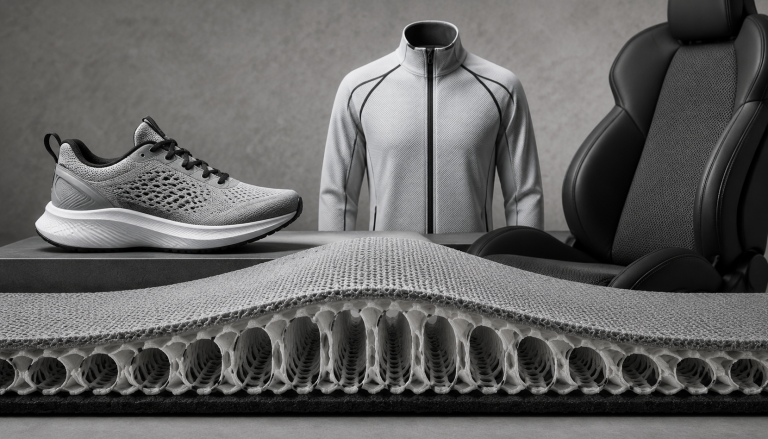
This is the home turf for bonded knit. A classic bonded fleece mid-layer—say, a nylon jersey face bonded to a microfleece backer via TPU film—offers the wind protection of a hardshell with the comfort of a fleece. It’s why many brands have moved away from separate fleece-plus-liner systems. The uses of bonded fabrics here are clear: creating versatile, single-garment solutions that perform across a wider temperature range.
In this category, the bonding provides structure. A bonded knit can offer targeted compression and support without seams, reducing chafing. The market for men bonded knit fabric apparel, in particular, is growing in running and training gear. The key is selecting a bonding method that preserves enough stretch for athletic movement—often pointing to hot-melt film with an elastic TPU.
I’ve seen designers specify bonded knit for products where it’s doomed to fail. First, avoid it for any garment that undergoes high-temperature finishing processes after construction, like certain dyes or prints that exceed 180°C (356°F). The bond will likely delaminate. Second, for ultra-lightweight fabrics below 100 gsm (2.95 oz/yd²), bonding often creates an undesirable, papery stiffness. Finally, for high-stretch applications like yoga wear, the 5-10% loss in stretch recovery from bonding is often unacceptable. The fabric will fight the body’s movement rather than complement it.
Let’s ground this in a real decision. A European mid-tier outdoor brand (annual fabric spend $500K-$2M) needed a bonded fleece mid-layer jacket for their 2026 Fall/Winter line. Target FOB price: $12-15, lead time: 8 weeks. They received two quotes. Supplier A offered $10.50 using solvent-based PU glue (peel strength: 12 N/5cm). Supplier B quoted $14.20 for a solvent-free TPU film bond (peel strength: 18 N/5cm). The brand’s BSCI audit rules immediately disqualified Supplier A’s solvent-based process, but their budget ceiling was a firm $13.
The first compromise was to try Supplier A’s “upgraded” solvent-based PU glue, which they claimed had VOC levels under 50ppm. Initial lab tests passed. However, when they ran a simulated warehouse storage test at 35°C (95°F) for two weeks, localized delamination appeared. The bond failed under prolonged heat stress.
Turning to Supplier B, they tried to reduce cost by asking for a thinner adhesive film—from 50μm down to 30μm. The hand feel improved, but the peel strength dropped to 14 N/5cm, barely meeting the brand’s internal QC minimum. After weeks of back-and-forth, they accepted a final compromise: Supplier B’s original 50μm film specification at $13.80 FOB (6% over budget). To offset this, they negotiated that Supplier B would cover the cost of the warehouse simulation test and reduced the order quantity from 3,000 to 2,000 pieces to manage total cash outlay. This case is a perfect bonded fabric example of the trade-offs between cost, compliance, and performance that define real-world sourcing.
Finding the best bonded knit fabric apparel supplier is about risk mitigation. Based on the case above and countless similar scenarios, here’s a framework to follow. Don’t just ask for a swatch; run a structured evaluation.
Before you even request a sample, get answers to these five questions. They form the foundation of your due diligence.
Once you have samples, your lab (or a third-party lab) must conduct these tests. This is your only protection against receiving a bulk order that fails.
| Test Item | Standard | Pass Criteria (Example) | Common Failure Cause |
|---|---|---|---|
| Peel Strength | ASTM D751 / ISO 2411 | ≥ 15 N/5cm | Poor adhesive application, wrong pressure/temp |
| Dimensional Stability (Wash) | AATCC 135 / ISO 6330 | < 3% shrinkage (length & width) | Unstable base fabric or poor bonding tension |
| Color Fastness to Washing | ISO 105-C06 | Grade 4 or higher | Dye migration during bonding heat |
| Breathability (MVTR) | ASTM E96 / JIS L 1099 | > 5,000 g/m²/24h | Adhesive film blocking moisture vapor paths |
| Hand Feel & Stretch | Subjective + Instron Test | Meets target spec sheet | Over-bonding (too much heat/pressure) |
| Visual Inspection | 4-Point System | No bubbles, wrinkles, or delamination | Machine calibration, fabric tension issues |
Know the market norms to negotiate effectively. For bonded knit, a typical sample MOQ is 50m (55 yd) with a 7-10 day lead time. Bulk production MOQs often start at 500m (547 yd), with lead times of 25-35 days (extending to 40-45 days in peak season). Standard payment terms are 30% T/T deposit with the balance 70% against a copy of the Bill of Lading. For orders over $10,000, Letter of Credit (L/C) at sight may be an option. Having these benchmarks from the factory helps you separate serious suppliers from those quoting unrealistic terms.
Q: What is bonded knit fabric?
A: Bonded knit fabric is a composite textile where two or more layers of knit fabric are permanently joined using an intermediate adhesive like a TPU film or PU glue. For buyers, the key is identifying the specific bonding technology used, as it dictates performance, cost, and compliance.
Q: What are the disadvantages of bonded fabrics?
A: The primary drawbacks are a reduction in the fabric’s natural stretch (typically 5-10% less recovery), a potentially stiffer hand feel compared to pure knits, and sensitivity to high-temperature processes (usually above 180°C/356°F), which can cause delamination.
Q: Is bonded fabric waterproof?
A: Not inherently. Bonded knit can be water-resistant or even waterproof, but this depends entirely on the adhesive film (e.g., a microporous TPU film) and the face fabric’s DWR (Durable Water Repellent) treatment. Always specify your required waterproof rating (e.g., 10,000mm water column).
Q: How do you wash bonded fabric?
A: For end consumers, wash inside-out in cold water on a gentle cycle and avoid high-heat tumble drying. For B2B validation, your QC lab should test according to standards like AATCC 135 or ISO 6330 to simulate 50+ industrial wash cycles and verify the bond’s longevity.
Choosing a bonded knit fabric is a decision that sits at the intersection of material science, manufacturing process, and brand strategy. The case of the European brand overspending by 6% to secure a compliant, durable bond isn’t a failure—it’s the cost of getting it right. Your sourcing checklist should move beyond price and swatches to a rigorous evaluation of bonding technology, validated test data, and supplier capability. The goal is to build a product that performs reliably, not just one that looks good in a sample room.
When you’re ready to move from research to validation, the next logical step is to request physical samples and conduct your own performance tests. You can initiate a sample request through the 3-step process on our contact page, which allows you to specify your exact technical requirements. For custom development or to discuss the technical nuances of your specific application with an engineer, the same page provides a direct line for a one-on-one consultation. Getting the right bonded knit fabric apparel into your line starts with asking the right questions and verifying the answers with data.