Address
Nanlang Industrial Zone, Xingtan Town, Shunde District, Foshan, Guangdong, China
Work Hours
Mon–Fri, 9:00 AM – 6:00 PM (CST/UTC+8). We aim to respond to all inquiries within 48 hours.

Address
Nanlang Industrial Zone, Xingtan Town, Shunde District, Foshan, Guangdong, China
Work Hours
Mon–Fri, 9:00 AM – 6:00 PM (CST/UTC+8). We aim to respond to all inquiries within 48 hours.
Common Fabric Quality Defects: Types, Causes & Prevention. This guide covers key properties, real-world applications, and a practical sourcing checklist for B2B buyers.
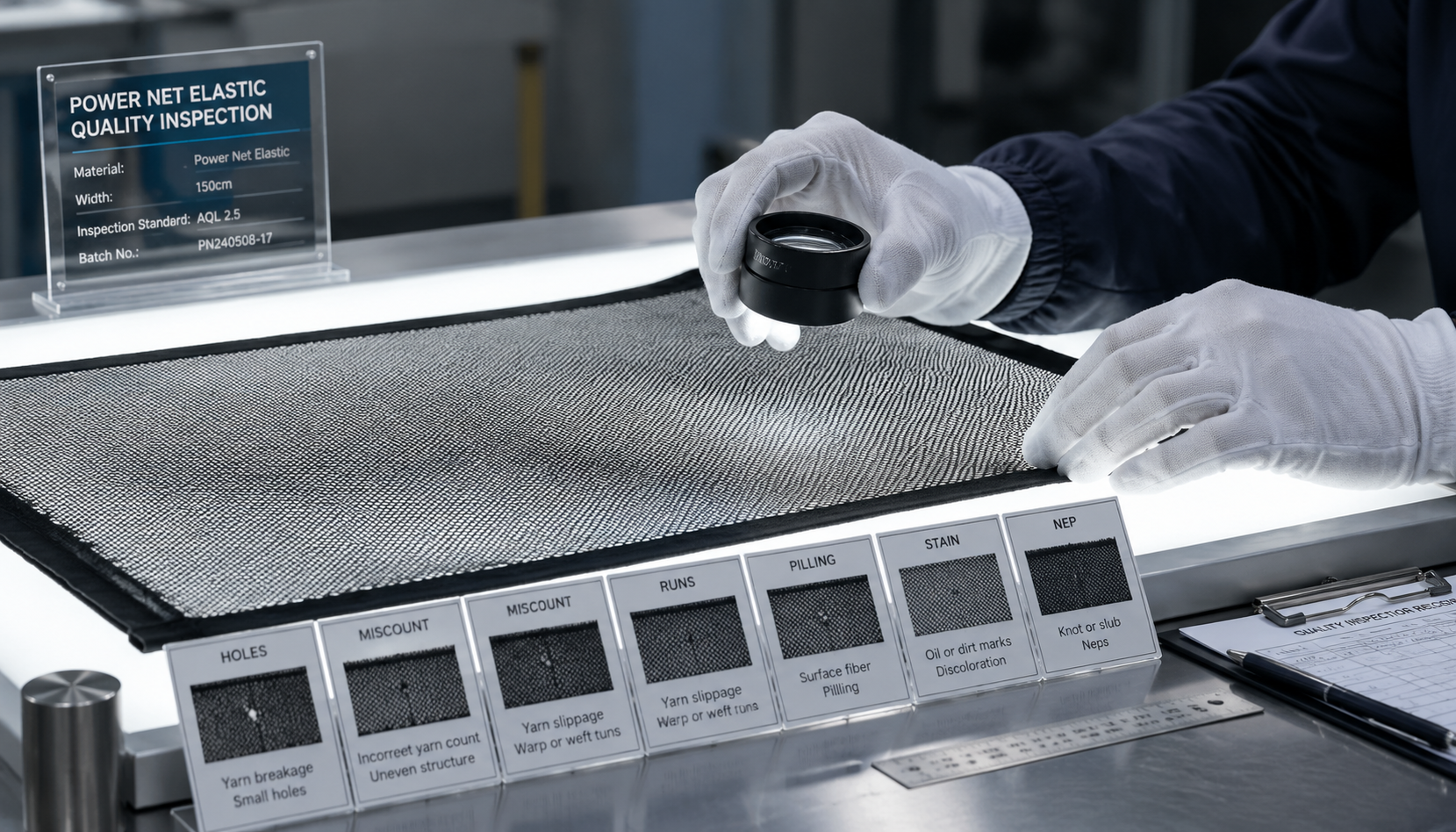
A Southeast Asian apparel buyer recently shared a cautionary tale: a full container of knitwear, valued at over $12,000, was rejected upon arrival in Europe. The culprit? Undetected “needle lines” and inconsistent dye uptake—defects that a more informed purchasing team might have caught at the source. For B2B buyers, understanding fabric quality defects common types isn’t just a technical nicety; it’s a direct line to protecting your margins and your brand’s reputation.
There’s a persistent myth in the supply chain that quality control is the factory’s problem. The moment the fabric leaves the mill, responsibility shifts. This mindset is a costly error. For a B2B buyer, a deep understanding of common defects in fabric translates directly into commercial leverage. It informs smarter sourcing decisions, sharper negotiation on specifications, and a realistic assessment of supplier capability.
When a buyer lacks this knowledge, the consequences are tangible and painful. The most obvious is a soaring rejection rate, leading to costly rework, air freight for replacements, or worse, lost shelf space. Then come the delays. A shipment held for re-inspection can derail an entire production schedule, missing critical retail windows. Perhaps most damaging is the reputational hit. Consistently delivering subpar quality erodes trust with your own clients, whether they are retailers or end consumers.
This is where standardized frameworks like AQL (Acceptable Quality Level) become your best friend. AQL isn’t a mysterious factory code; it’s a agreed-upon statistical sampling method that defines how many defects are acceptable in a batch. Understanding the difference between AQL 2.5 (stricter, common for premium brands) and AQL 4.0 (more lenient, often for promotional goods) allows you to set clear, contractual expectations from the start. It transforms a subjective argument about “bad fabric” into a data-driven discussion.
| AQL Level | Batch Size Range | Sample Size | Accept Defects |
|---|---|---|---|
| AQL 2.5 | 2,801 – 5,000 units | 200 pcs | 10 |
| AQL 2.5 | 5,001 – 10,000 units | 315 pcs | 14 |
| AQL 4.0 | 2,801 – 5,000 units | 200 pcs | 14 |
| AQL 4.0 | 5,001 – 10,000 units | 315 pcs | 21 |
Forget the internal jargon of a mill’s QC department. For a buyer, defects need to be classified by their impact on the final product and your business. A useful framework, aligned with principles from standards like ISO 8402, is to sort them into three tiers: Critical, Major, and Minor. This isn’t just semantics; it’s a decision-making tool.
These are non-negotiable deal-breakers. A critical defect renders the product unusable, unsafe, or fundamentally non-compliant. Think of a hole in a medical gauze roll, a zipper that doesn’t function, or a color so off it misrepresents the product entirely. In a well-drafted contract, the acceptance number for critical defects is almost always zero. Finding one should trigger an immediate halt and investigation.
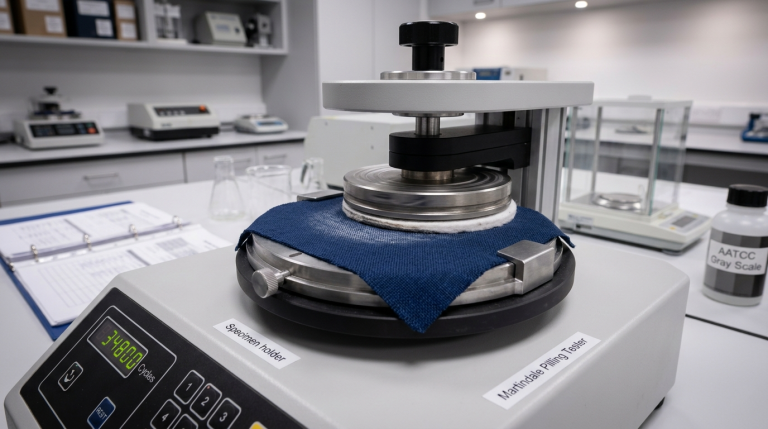
A major defect is likely to result in product failure or reduce its usability for the intended purpose, making it unacceptable to the average buyer. This includes things like significant pilling after a standard abrasion test, a seam that slips under normal stress, or a noticeable skew in the fabric grain. These defects might not make the product dangerous, but they will certainly lead to returns and customer complaints. The tolerance here is low, often defined by your AQL agreement.
These are deviations from the specification that are unlikely to affect the product’s fitness for purpose. A small, loose thread on a non-visible seam, a faint press mark from finishing, or a single, tiny slub in the yarn. While you’d prefer them not to be there, a certain number are often considered acceptable within industry norms. The key is to define what “minor” means in your specific context—what’s a minor flaw in workwear fabric could be a major flaw in luxury apparel.
| Severity | Example Defects | Typical Origin Stage | Buyer Acceptability |
|---|---|---|---|
| Critical | Hole, severe color mismatch, width shortage > 5% | Any (raw material to finishing) | Zero tolerance |
| Major | Skew > 3%, pilling grade 2, poor colorfastness | Weaving/Knitting, Dyeing | Strict AQL limits (e.g., 2.5) |
| Minor | Light press mark, minor yarn slub, slight soil | Finishing, Handling | Higher AQL limits (e.g., 4.0) |
A buyer of performance knitwear once received a shipment that looked perfect on the roll. But when cut and sewn, the fabric revealed a ghostly, vertical stripe pattern—classic “needle lines.” The factory argued it was within acceptable limits. The brand saw a ruined collection. This scenario underscores a critical point: the majority of fabric defects, perhaps 60% or more, are born during the weaving or knitting stage. They are baked into the fabric’s structure.
The root causes are often systemic: worn or damaged machine components (like needles or sinkers), inconsistent yarn tension, poor yarn quality, or incorrect machine settings. These aren’t random accidents; they’re process control failures. For a buyer, knowing what to look for on the roll can save a fortune downstream.
Physical parameters matter here. A fabric specified at 28 picks per centimeter (71 picks per inch) should not deviate by more than ±2 picks/cm (±5 picks/in) across the roll. Such deviations indicate machine instability. This is where an integrated manufacturing approach shows its value. A factory that controls the entire process, from yarn sourcing to knitting, can trace a needle line defect back to a specific needle batch or a tension calibration issue. For instance, a product like Power Net elastic fabric, with its 85% Nylon and 15% Spandex blend knitted into a power net construction, demands extreme precision. The slightest tension variation can cause visible streaks in the final product, making integrated quality control from yarn to finished roll not just an advantage, but a necessity.
If weaving defects are the obvious wounds, dyeing and finishing defects are the internal bleeding. They can be subtle, only revealing themselves under specific lighting or after the first wash, making them a major source of post-delivery disputes. The benchmark for color consistency, for example, is measured in Delta E (ΔE). A ΔE ≤ 1.0 is generally imperceptible to the human eye and a solid Pass. A ΔE between 1.0 and 2.0 is Borderline—noticeable in a side-by-side comparison. A ΔE > 2.0 is a clear Fail, indicating a visible color difference.
The causes are complex chemistry: incompatible dye lots, incorrect fixation temperatures, insufficient rinsing, or over-aggressive finishing treatments. These issues often lurk beneath the surface of a seemingly perfect fabric sample.
| Defect | Test Standard | Acceptable Threshold | Common Cause |
|---|---|---|---|
| Color Difference | AATCC 173 / ISO 105-J03 | ΔE ≤ 1.5 (Pass) | Inconsistent dye bath, poor mixing |
| Wash Colorfastness | ISO 105-C06 | Grade 4 or better | Inadequate fixation, wrong dye type |
| Rubbing Colorfastness | ISO 105-X12 | Dry: Grade 4; Wet: Grade 3 | Excess surface dye, poor washing |
| Skew/Bow | ASTM D3882 | < 3% for apparel | Uneven tension in finishing stenter |
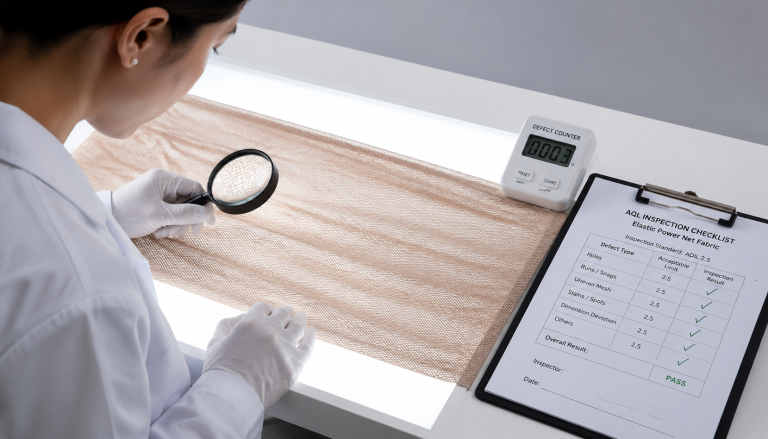
Knowing the defects is one thing; systematically catching them is another. Here’s a condensed field SOP for a buyer’s QC team or a third-party inspector. This isn’t theory—it’s a practical checklist. The goal is consistency and defensibility in your findings.
The four-point system is the global standard for apparel and home textiles. It’s intuitive, with defect penalties (1, 2, 3, or 4 points) directly tied to the defect’s length in inches or centimeters. The ten-point system is older and more granular, often used for specialty or technical fabrics. For most B2B apparel sourcing, the four-point system is the default. It’s simpler, widely understood, and its pass/fail thresholds are well-established. Insisting on a ten-point system without clear justification can create unnecessary complexity in disputes.
When you find a defect, the immediate question is: who’s responsible? This matrix is a rapid triage tool for buyers, not a definitive forensic analysis. It helps you ask the right questions to the right supplier department.
| Defect Observed | Most Probable Cause | Responsible Process | Buyer’s Next Step |
|---|---|---|---|
| Vertical needle lines | Damaged knitting needle, yarn tension | Knitting | Request machine maintenance log for that batch. |
| Color lot variation | Different dye lot, uneven dyeing | Dyeing | Compare lab dip records and dyeing machine logs. |
| Excessive pilling (Grade 2) | Poor yarn quality, loose twist | Yarn Sourcing / Knitting | Request yarn supplier certificate and test report. |
| Width shortage > 5% | Over-stretching in finishing, wrong greige width | Weaving/Knitting & Finishing | Check greige fabric width report vs. finish width spec. |
This matrix is a starting point. Complex defects, especially those involving multiple potential causes like inconsistent hand feel, often require laboratory analysis from third-party labs like SGS or Intertek. A common misstep is blaming the dye house for a shade issue when the real culprit is the uneven absorption properties of the base fabric from the knitting stage. Always consider the entire production chain.
The most effective quality control happens before production begins. Your Technical Specification Sheet (TSS) is your first and strongest line of defense. A vague TSS is an open invitation for disputes. A precise one sets clear, measurable, and enforceable standards.
A robust TSS should explicitly define: the acceptable defect density per 100 linear meters, the maximum number of major defects per roll, the ΔE tolerance for color, the exact test methods for physical properties (e.g., ASTM D5034 for tensile strength), and the acceptable range for width and weight. Don’t just write “good colorfastness.” Write “ISO 105-C06, Test 2, Grade 4 minimum.”
Once you have a strong TSS, the next step is ensuring your supplier can actually meet it. This is where due diligence on the manufacturer’s capabilities is critical. Understanding a factory’s history, infrastructure, and certifications provides insight into their process control maturity. For instance, a manufacturer that has been operating since 2005, maintains a 2,000 square meter ready-goods warehouse, and runs an integrated production line from weaving to finishing is more likely to have the systemic controls needed to consistently meet a tight spec. You can learn more about such operational foundations on the about us page of a supplier’s website. If you need help developing a customized TSS template for your next order, the technical engineering team at the factory is available for consultation—just reach out via the contact us page.
Consider the case of a North American outdoor brand sourcing waterproof-breathable fabric for the first time. Their TSS specified “good adhesion” for the polyurethane coating but omitted a specific peel strength test method and value. When the goods arrived, their internal test showed a peel strength of only 8 N/25mm (1.8 lbf/in), below their internal expectation of 12 N/25mm (2.7 lbf/in). The supplier, rightfully, pointed to the ambiguous spec. After weeks of negotiation, a compromise was reached: the current shipment was accepted at a discount, and the next order would include a precise spec of 10 N/25mm (2.2 lbf/in) using the ASTM D751 test method. The lesson? Vague language in a spec is a financial liability.
For knit fabrics, needle lines, drop stitches, and uneven dye uptake top the list. For wovens, look out for broken ends/picks, starting marks, and selvedge defects. In both categories, color inconsistency between rolls and width shortages are perennial issues that directly impact cutting efficiency and final product consistency.
There’s no universal number—it depends on the defect grading system and your AQL agreement. Under the widely used four-point system, a single roll typically fails at 28 penalty points per 100 square yards (approx. 84 m²). A lot fails if the average exceeds 40 points per 100 square yards. Always define the system and thresholds in your contract.
A critical defect is one that could harm the user or render the product completely unusable (e.g., a sharp object embedded in the fabric, a non-functional zipper). The acceptance number is almost always zero. A major defect is one that would likely make the product unsuitable for its intended purpose or significantly reduce its usability (e.g., severe pilling, a large stain, a broken seam), but it is not a safety hazard. Tolerance for major defects is defined by your AQL level.
For a deeper dive into textile science, testing methodologies, and material selection guides, you can explore the comprehensive knowledge library. It contains technical articles that go beyond defect identification into the realms of performance characteristics and application engineering.
To help you and your QC team in the field, we’ve compiled a condensed, one-page cheat sheet based on the frameworks discussed in this article. This fabric quality defects common types pdf is designed for quick reference during inspections.
This resource is available as a fabric defects pdf free download for sourcing professionals. To request your copy of the cheat sheet, simply submit your details through the contact us form, and our technical team will send it directly to your inbox.
Mastering the language of fabric defects shifts you from a passive buyer to an empowered sourcing partner. It allows you to have precise, data-driven conversations with suppliers, set realistic expectations, and build specifications that prevent problems rather than just document them. The goal isn’t to find fault, but to build a supply chain resilient enough to deliver consistent quality, roll after roll. Start with your spec sheet, inspect with a system, and use every defect as a data point to refine your process. Your bottom line—and your peace of mind—will thank you.