Address
Nanlang Industrial Zone, Xingtan Town, Shunde District, Foshan, Guangdong, China
Work Hours
Mon–Fri, 9:00 AM – 6:00 PM (CST/UTC+8). We aim to respond to all inquiries within 48 hours.

Address
Nanlang Industrial Zone, Xingtan Town, Shunde District, Foshan, Guangdong, China
Work Hours
Mon–Fri, 9:00 AM – 6:00 PM (CST/UTC+8). We aim to respond to all inquiries within 48 hours.
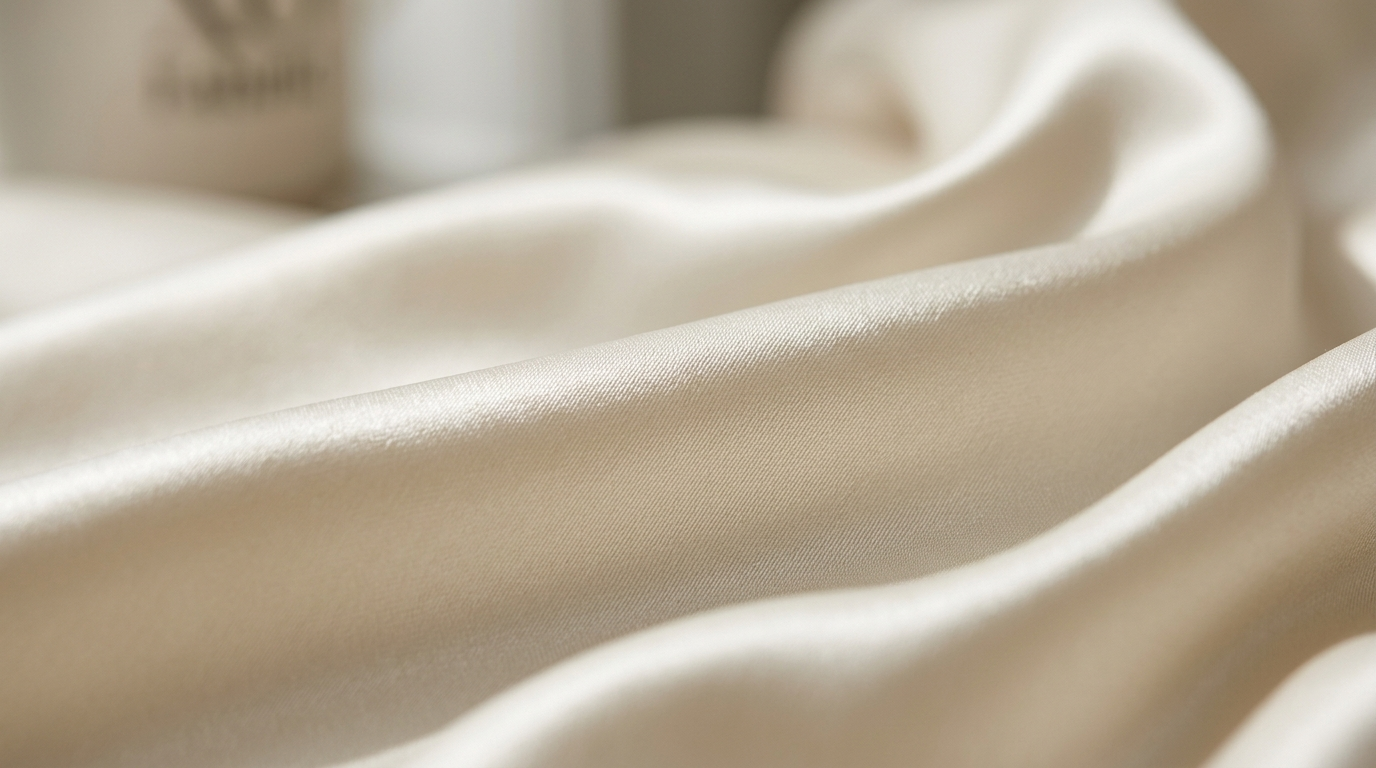
You’ve probably chased that perfect drape only to watch the fabric ladder after one careless snip. Traditional satin looks beautiful until it unravels, and standard knits lack the polish you need for high-end silhouettes. That’s exactly why warp knit satin exists. It merges the signature luster of conventional satin with the structural reliability of warp knit engineering. The result is a textile that actually survives the production floor.
I’m going to walk you through how it’s made. We’ll cover why it behaves differently on the bias, how to spec it correctly for lingerie, and how to match weights to your patterns. You’ll also learn where to find reliable mills and how to avoid common seam failures.
Let’s start with the mechanics. Unlike weft knitting, which builds fabric horizontally loop by loop, warp knitting interlaces yarns vertically. Think of it as multiple parallel threads moving down the fabric simultaneously. Guide bars oscillate to form stitches.
To get that classic satin look, the machine is programmed to create long float stitches on the face. Short anchor stitches stay on the back. It’s a calculated trade-off. Longer floats mean higher luster. They also increase snag risk if not properly stabilized.
Most mills use a 2- or 3-bar setup. Two bars give you a tighter, more stable knit. The sheen drops slightly. Three bars open up the stitch geometry. Longer face floats create that liquid finish you see on high-end evening gowns.
I usually recommend sticking to two bars for activewear. Run resistance trumps pure shine there. If you want to explore the full range of vertical-knit architectures, our Warp Knit Fabrics catalog breaks down the stitch variations clearly.
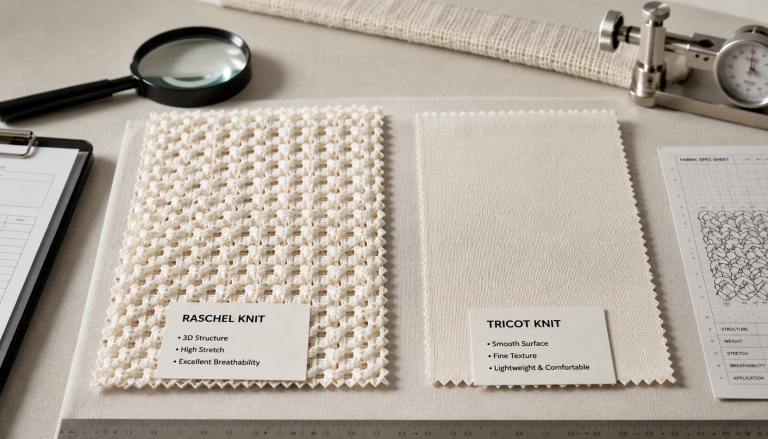
Take a recent sample run we worked on for a luxury bridal line. The designer wanted maximum shine. She kept complaining about seam slippage during pressing. We swapped from a 3-bar tricot to a 2-bar raschel configuration.
The luster dropped about fifteen percent. The interlock density doubled immediately. Suddenly, the hems held their position under steam. The fabric stopped shifting on the cutting table. It wasn’t the flashiest choice. It saved three days of rework though.
When you look at a cross-section, the difference is stark. Woven satin shows a clear over-under grid. Warp knit satin looks more like vertical columns. Suspended face threads create the smooth surface. That structural shift is why it resists laddering so well.
One snag won’t cascade down the entire garment. The loops are mechanically locked in place. You can pull a thread gently, and it stays right where you left it.
Production starts long before the knitting needles move. Yarn selection dictates nearly everything downstream. You’re usually looking at continuous filament polyester, nylon, or silk blends. Denier typically ranges from 75 to 150.
The warp beam has to be loaded with precision tensioning. If the tension varies even slightly across the width, you’ll get barrié defects. Those horizontal lines ruin surface uniformity. I’ve seen entire rolls scrapped because of a single misaligned tensioner.
Once the green fabric comes off the needle bar, finishing takes over. Heat setting is non-negotiable. We typically run the fabric through a stenter at 165°C for about twelve seconds. This locks in dimensional stability.
Shrinkage drops below three percent lengthwise and widthwise after this step. Calendar rollers press the surface flat next. Optical brighteners and silicone softeners are applied through a padding mangle. The hand feel shifts from crisp to buttery almost instantly.
Quality control happens at every phase. Operators check stitch uniformity with magnifying lenses. They measure width tolerance within ±2%. Luster consistency gets verified under standardized D65 lighting.
For base layers that will undergo further lamination or coating, referencing our Knit Base Fabrics guide will help you match the right substrate. Skipping substrate testing usually leads to delamination later.
Quick note on finishing logs. Overloading softener masks surface defects initially. It washes out quickly though. You’ll end up with a patchy appearance. Dial the chemistry back. Let the calendering rollers do the heavy lifting.
You’ll immediately notice how this fabric behaves differently than its woven cousin. Dimensional stability is the standout metric. Predictable behavior makes pattern grading straightforward. You won’t fight unexpected warping during construction.
Stretch is directional too. You’ll get about twelve to eighteen percent elongation in the lengthwise grain. Crosswise stretch stays near zero. It’s a controlled give. Not a rubbery bounce.
| Run Resistance | High (mechanically locked loops) |
| Surface Luster | Medium to High (float-dependent) |
| Moisture Management | Good for synthetics, poor for unblended silk |
| Pressing Tolerance | High (with 150°C max iron) |
The drape is fluid but structured. It falls cleanly without billowing. Technical designers love it for compression wear. Breathability depends entirely on yarn composition and knit density.
A 130 GSM polyester run will wick decently. A tight 170 GSM version will feel warmer against the skin. I’ve learned the hard way to always request a wash test before committing to a bulk order. Synthetic satin holds heat more than people expect during summer production runs.
Compared to woven satin, it’s lighter and more flexible. Production costs stay lower at scale. The trade-off is clear though. It won’t hold sharp pleats or heavy embroidery without interfacing.
If you’re sewing delicate linings, skip the thick needles. A size 70/10 microtex with a fine ballpoint tip slices through filaments cleanly. Going larger creates permanent needle holes. They catch light and ruin the finish.
This textile crosses over into more categories than you’d initially guess. In fashion, it’s the go-to for seamless lingerie. The soft hand feel glides against skin. Directional stretch provides comfort without bagging out.
Slip skirts and bias-cut blouses benefit from the controlled drape. The fabric won’t twist after laundering. You get consistent grain alignment every time.
Home decor is another surprising stronghold. Throw pillow covers and lightweight drapery hold up to frequent cleaning. The run resistance means a pulled thread won’t ruin a whole curtain panel.
Medical manufacturers specify it for graduated compression sleeves. The knit structure distributes pressure evenly. Patient comfort improves significantly over woven alternatives.
If you’re playing with mixed media, pairing it with Flocked on Tricot Jersey Base creates interesting texture contrasts. The satin provides a smooth overlay. The flocked tricot adds friction and grip.
I once prototyped a costume jacket using this exact combo. The satin sleeve started buckling every time we moved the arm. We switched to a narrow stretch stitch. Stay tape went along the underarm seam.
The compromise sacrificed a millimeter of mobility. It eliminated the unsightly rippling though. Sometimes less stretch is exactly what the pattern needs. You just have to accept the trade-off early.
Choosing the right variant comes down to your priority list. Woven satin gives you maximum sheen. It offers a stiff drape. It lacks stretch and snags instantly though.
Weft knit satin is highly elastic. It feels cozy against the skin. It pills easily and loses shape over time. Double knit satin feels substantial. It’s great for structured garments but terrible for fluid drapes.
| Metric | Warp Knit | Woven | Weft Knit |
| Stretch | 2-way (lengthwise) | None | 4-way |
| Run Resistance | High | Very Low | Medium |
| Cost Efficiency | High | Medium | High |
| Drape Profile | Fluid but controlled | Stiff and crisp | Heavy and clingy |
| Luster Uniformity | Consistent | Peak intensity | Variable |
Use warp knit satin when you need a polished look. It must survive machine washing and frequent handling. It’s the workhorse for production garments. Consistency matters more than luxury theater here.
Woven satin still wins for high-end bridal trains. It works best for items that will barely be worn. Weft knit belongs in loungewear. Comfort overrides structure in that space.
I’ll admit I used to overcomplicate this. I’d default to double knit satin for everything. Heavier always felt better to me. Then I watched a client’s dancewear collection fail. The fabric was too stiff for dynamic movement.
Switching to a lightweight warp knit version solved the mobility issue. It kept the professional finish intact. Learn to match the knit architecture to the garment’s actual function. Don’t just follow the mood board.
Our current runs cover the most requested weights and finishes in the market. We stock standard widths from 58 inches up to 62 inches. Custom roll lengths are available for larger production orders.
Color matching is handled through a proprietary dye lot system. Variation stays under two points on the Pantone scale. If you need specific hand finishes or anti-static treatments, the team coordinates directly with the finishing mill.
Browsing our Warp Knit Fabrics section will give you a clearer view of the stitch variations we keep in stock. The filtering options help you narrow down GSM and fiber content quickly.
For projects that require a stable underlayer before lamination, the Knit Base Fabrics lineup covers the structural requirements. You won’t add unnecessary bulk to your final product.
Ready to feel the difference? Order a swatch kit to test drape and stretch against your existing patterns. For bulk quotes or custom specifications, reach out through our trade portal. We usually turn around production samples within five business days.
Fabric selection is rarely about finding perfection. It’s about understanding where the material will bend. You need to know where it will hold, and where it will eventually fail.
Warp knit satin thrives when you respect its directional stretch. Plan your pattern lines accordingly. Test it on the bias before committing to a cut. Adjust your needle sizes. Heat set your hems properly.
Once you stop fighting the knit structure, the production headaches disappear. The sheen stays sharp. The seams stay flat. Your garments actually look like they were meant to move. Trust the mechanics. The results follow.