Address
Nanlang Industrial Zone, Xingtan Town, Shunde District, Foshan, Guangdong, China
Work Hours
Mon–Fri, 9:00 AM – 6:00 PM (CST/UTC+8). We aim to respond to all inquiries within 48 hours.

Address
Nanlang Industrial Zone, Xingtan Town, Shunde District, Foshan, Guangdong, China
Work Hours
Mon–Fri, 9:00 AM – 6:00 PM (CST/UTC+8). We aim to respond to all inquiries within 48 hours.
How to Start a Clothing Brand: A Fabric Sourcing Playbook. This guide covers key properties, real-world applications, and a practical sourcing checklist for B2B buyers.
You’ve spent six months perfecting your first capsule collection. The silhouettes are dialed in, the fit samples are approved, and your Instagram launch campaign is ready to go. Then the fabric shipment arrives — and the color is off by a full shade, the hand feel is nothing like the swatch, and half the bolt is 4 inches narrower than spec’d. Suddenly, your $15,000 launch budget has a $4,000 hole in it, and you’re scrambling to find replacement fabric while your launch window shrinks by three weeks. This scenario plays out hundreds of times a year for first-time brand founders, and it almost always traces back to one root cause: a broken fabric sourcing process.
Fabric sourcing isn’t a procurement task. It’s the single decision that ripples through every downstream process — from pattern grading to pricing to customer reviews. Get it right, and your production runs smoothly, your margins hold, and your product earns repeat purchases. Get it wrong, and you’re looking at returns, chargebacks, and a brand reputation that’s nearly impossible to rebuild.
The numbers are sobering. Industry surveys consistently show that textile-related defects account for 40-60% of all garment quality complaints in the first year of a brand’s operation. For startups operating on thin margins, a single bad fabric order can consume an entire quarter’s profit. The fabric sourcing job isn’t glamorous — nobody posts about it on mood boards — but it’s the foundation everything else sits on.
Consider what happens when you choose a fabric without verifying its shrinkage rate. The supplier’s spec sheet says 3%, but the actual tested value comes in at 7%. Your pattern maker graded the markers based on the spec’d dimensions. After the first wash cycle, every medium-sized garment has shrunk to a small. Customer complaints flood in. Returns spike. Your refund rate climbs past 15%, and suddenly your acquisition cost per profitable order has doubled.
These aren’t edge cases. They’re the norm for founders who skip systematic fabric sourcing and rely on supplier promises alone. The good news is that every one of these failures is preventable with a structured approach. This playbook will walk you through exactly how to build that system from scratch.
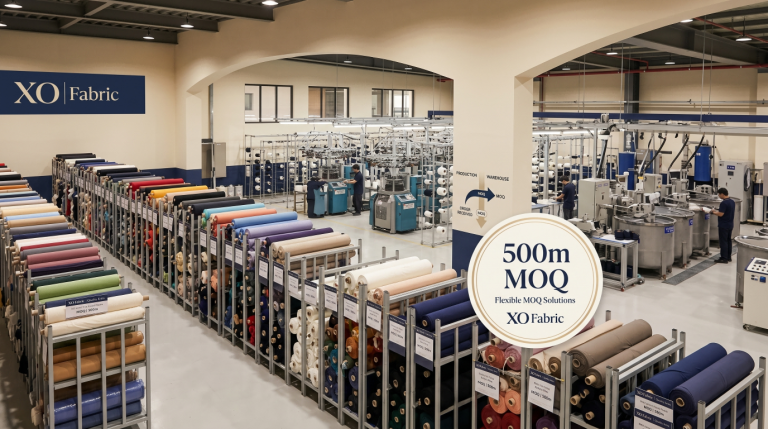
A DTC streetwear founder I spoke with learned this the hard way during his first season. He ordered 800 meters (875 yards) of cotton-nylon ripstop from a small Alibaba supplier for his debut 12-SKU capsule collection. The swatch stage looked promising — hand feel was good, color matched the Pantone reference. But when the bulk order arrived, the color had shifted by ΔE 3.8, well beyond any acceptable tolerance. The entire batch was unusable. He pivoted to a mid-tier factory with better quality control, but hadn’t specified shrinkage rates in the purchase agreement. After garment washing, the finished pieces came back 6% smaller than graded. His compromise: switching to an OEKO-TEX certified supplier, accepting a 500-meter (547-yard) MOQ, and splitting his color orders into 100-meter (109-yard) runs to manage risk. The fabric cost ended up 18% above his original budget, but the product actually worked. Sometimes paying more upfront is the cheapest option in the long run.
Systematic fabric sourcing follows a predictable sequence. Miss a step, and you’re gambling with your production timeline and budget. Here’s the five-stage SOP that experienced textile mills and procurement teams use to move from initial concept to verified bulk order.
Your tech pack is the contract between your design intent and the supplier’s production capability. Vague specifications breed expensive misunderstandings. Don’t write “medium weight cotton blend” — specify “60% cotton / 40% nylon, 180 Fabric GSM Calculator (5.3 oz/yd²), 58-inch (147 cm) width, Pantone 19-4024 TCX, minimum 4/5 rating on ISO 105-B02 lightfastness test.” Every parameter you leave undefined is a parameter the supplier will optimize for their own convenience, not yours.
For founders who don’t have a textile engineering background, the fabric product catalog from an established manufacturer can serve as a reference library for understanding standard specifications. Browsing a structured catalog with weight classes, composition options, and finish categories helps you learn the vocabulary before you start conversations with suppliers. A comprehensive fabric product catalog with technical parameter matrices gives you a baseline for what’s commercially available and at what price points.
The supplier screening phase is where most new brands either over-commit or under-invest. Over-committing means sending your tech pack to 40 suppliers simultaneously and drowning in responses. Under-investing means picking the first supplier who responds with a reasonable price. Neither works. The sweet spot is a shortlist of 4-6 suppliers, each evaluated against a weighted scorecard covering certification status, MOQ compatibility, lead time, sample quality, and communication responsiveness.
When evaluating textile mills directly, ask for their production audit reports, OEKO-TEX certificates (verify the certificate number on the OEKO-TEX website), and references from existing clients in your product category. A mill that specializes in activewear knits may struggle with woven technical fabrics, and vice versa.
Never skip the testing phase. Lab dips confirm color accuracy, but they don’t tell you how the fabric behaves under real-world conditions. Request a minimum 3-meter (3.3-yard) sample in each colorway and subject it to the tests that matter for your product: wash testing (5 cycles at 40°C / 104°F), pilling assessment (Martindale method, minimum 4,000 cycles), and dimensional stability measurement. If your product involves any performance claims — moisture-wicking, UV protection, water resistance — those claims need third-party lab verification before you commit to bulk.
MOQ, pricing tiers, and payment terms are interconnected levers. A supplier offering $3.20 per meter at 1,000-meter MOQ might drop to $2.85 at 3,000 meters — but that 3,000-meter commitment ties up $8,550 in fabric inventory before you’ve validated market demand. For first-season brands, the smarter play is accepting a higher per-unit cost in exchange for lower MOQ, then negotiating volume discounts once you have sell-through data to justify larger orders.
| Stage | Key Action | Common Pitfall |
|---|---|---|
| Pre-sampling | Define shrinkage tolerance in tech pack (≤ 3% warp, ≤ 2% weft) | Leaving shrinkage specs vague, resulting in 5-8% post-wash distortion |
| Pre-production | Conduct AQL 2.5 inspection on bulk fabric before cutting | Skipping inspection and discovering defects after garment assembly |
| Shipping | Specify moisture-barrier packaging and container humidity controls | Fabric arriving with mold, mildew, or salt staining from ocean transit |
Learning how to get into fabric sourcing as a new brand founder feels overwhelming because the textile supply chain operates on relationships built over decades. But you don’t need 20 years of experience — you need a framework for evaluating suppliers, a checklist for validating materials, and the discipline to test before you commit. The difference between a successful first production run and a costly disaster often comes down to asking the right questions during your first supplier conversation.
An outdoor performance brand founder faced this learning curve head-on when sourcing a three-layer waterproof fabric for a jacket line. His target spec was Gore-Tex Pro Shell level performance: 20,000 mm H₂O waterproof rating, 25,000 g/m²/24h moisture vapor transmission rate (MVTR). The Gore-Tex authorized mills quoted a 3,000-meter (3,280-yard) MOQ — completely out of reach for a 600-meter (656-yard) first order. He tried a domestic alternative claiming “equivalent performance.” The waterproofing test passed, but real-world wear testing revealed the MVTR was only 8,000 g/m²/24h — a third of what he needed. Customer complaints about overheating rolled in within weeks. His second attempt hit a different wall: the fabric parameters were solid, but the seam-sealing tape cracked at -15°C (5°F), failing in actual cold-weather conditions. The eventual solution was a mid-tier factory with GORE-TEX licensing aspirations, accepting a tiered MOQ of 1,500 meters (1,640 yards) with 40% upfront and 60% on reorder. The fabric cost 42% more than the domestic alternative, but the complete brand authorization chain and technical documentation enabled a 35% retail price premium that more than offset the material cost increase.
Understanding the three primary sourcing channels — direct mill relationships, trading companies, and B2B platforms — is essential for making informed procurement decisions. Each channel has distinct trade-offs in MOQ thresholds, unit pricing, quality control reliability, and communication overhead. The right choice depends on your order volume, risk tolerance, and how much QC infrastructure you’re willing to build internally.
| Channel Type | Typical MOQ | Price vs. Baseline | QC Risk Level |
|---|---|---|---|
| Textile mills direct | 1,000-5,000 m (1,094-5,468 yd) | Baseline | Low (established QC systems) |
| Trading companies | 200-500 m (219-547 yd) | +15-25% | Medium (dependent on upstream) |
| B2B platforms | 50-300 m (55-328 yd) | +5-15% | High (self-managed QC required) |
For brands placing fewer than 1,000 meters (1,094 yards) on a first order, the practical path is usually a trading company or specialized sourcing agent who can aggregate smaller orders and provide basic QC oversight. Once order volumes stabilize above 2,000 meters (2,187 yards) per season, transitioning to direct mill relationships makes financial sense — you eliminate the middleman markup and gain direct access to the production schedule. If you’re exploring options for custom fabric development or need technical guidance on material selection, reaching out directly to a manufacturer’s technical team can clarify feasibility and pricing before you commit resources. You can request fabric samples and technical consultations to validate material options against your specific product requirements.
Most first-time founders fixate on the per-meter fabric price and treat everything else as noise. That’s a costly mistake. The fabric itself typically accounts for only 55-70% of your total material cost. The remaining 30-45% gets eaten by testing fees, sample charges, international freight, import duties, warehousing, and the occasional write-off from quality failures. Understanding the full cost structure is essential for building an accurate product margin model.
| Cost Component | Typical Range | % of Total Cost |
|---|---|---|
| Fabric unit price (dyed) | $2.50-8.00/m ($2.29-7.32/yd) | 55-70% |
| Testing and certification | $150-500/batch | 5-10% |
| International freight (sea) | $0.30-0.80/m ($0.27-0.73/yd) | 8-12% |
| Import duties and customs | HS Code dependent, 6-12% | 6-12% |
These percentages shift based on order volume and destination. A 500-meter (547-yard) order shipped to the United States will carry a higher per-unit freight cost than a 5,000-meter (5,468-yard) container load. But the duty rate stays constant regardless of volume — it’s calculated on declared value, not quantity.
Deadstock fabric — surplus material from other brands’ cancelled orders or mill overruns — offers a genuine cost advantage. Prices typically run 40-60% below equivalent first-quality goods, and availability is immediate since the fabric is already produced and sitting in a warehouse. For capsule collections, limited-edition drops, or market-testing new silhouettes, deadstock can be a smart tactical play.
The trade-offs are real, though. Color consistency between batches is unpredictable. Once a deadstock lot sells out, replenishment is essentially impossible. And you have limited visibility into the original production conditions or chemical treatments applied. I personally like deadstock for one-off statement pieces where the slight unpredictability adds character, but I’d never build a core product line around it. For mood fabrics exploration and early-stage design development, it’s a useful tool — just not a long-term sourcing strategy.
Smart negotiation on first orders isn’t about driving the absolute lowest price — it’s about structuring the deal so you can validate demand without overcommitting capital. Ask suppliers for tiered pricing that rewards volume growth: for example, $3.50/m at 500 meters (547 yards), $3.10/m at 1,000 meters (1,094 yards), $2.75/m at 3,000 meters (3,280 yards). Then place your first order at the lowest tier, test the market, and use sell-through data to justify the next volume step. This approach costs more per unit initially but dramatically reduces the risk of sitting on $10,000 worth of fabric that doesn’t move.
A European DTC brand learned about compliance the expensive way. Their first container of cotton-blend knits arrived at the Port of Hamburg and was flagged for REACH SVHC screening. The fabric contained trace levels of a restricted phthalate that exceeded the threshold by 0.3%. The entire shipment — 4,200 meters (4,593 yards) worth $28,000 — was held for six weeks while additional testing was conducted. Between port storage fees, re-testing costs, and the penalty assessment, the total damage came to approximately €12,000 ($13,000). And that’s before accounting for the lost sales from a six-week production delay.
Compliance isn’t a nice-to-have checkbox. It’s the entry ticket for selling in regulated markets. Here are the certifications and standards that matter most, depending on your target geography:
Different markets enforce different standards, and the penalty for non-compliance ranges from shipment seizure to market bans. EU markets are the strictest, followed by North America and Japan. If you’re selling globally, build your compliance baseline to the highest standard you’ll encounter — it’s cheaper than maintaining multiple compliance tracks.
When evaluating supplier compliance capabilities, look for manufacturers that maintain current certifications and can provide certificate numbers for independent verification. A factory that has operated since 2005 with established OEKO-TEX, GRS, and ISO 9001 certifications — and maintains a 2,000-square-meter (21,500 sq ft) ready-stock warehouse — demonstrates the kind of institutional stability that reduces your supply chain risk. The factory profile and certification matrix from a long-established manufacturer provides verifiable evidence of compliance infrastructure, which matters when you’re presenting your supply chain credentials to retail partners or investors.
This checklist covers every critical gate from initial requirements definition through final goods acceptance. Each stage has specific deliverables and acceptance criteria — if you can’t check a box, don’t proceed to the next step.
How to do fabric sourcing efficiently comes down to discipline at each gate. Skipping sample testing to save two weeks might feel productive, but discovering a defect after cutting 2,000 meters (2,187 yards) of fabric costs far more than the testing delay. Build buffer time into your development calendar — 3-4 weeks for sampling and testing is standard, and rushing it almost always backfires.
For brands ready to move from checklist to action, having access to pre-qualified fabric options with documented specifications accelerates the entire process. You can submit a sample request to receive physical swatches that align with your technical requirements, allowing you to complete the validation steps in your sourcing checklist with real materials in hand.
These are the questions that come up most often when brand founders start navigating the fabric sourcing landscape for the first time.
Start with your product requirements — not with supplier databases. Define exactly what fiber composition, weight, and performance characteristics your product needs before you contact anyone. Then build your supplier network through three channels: industry trade shows (Intertextile Shanghai, Première Vision Paris, Texworld), B2B platforms with verified supplier profiles, and direct outreach to textile mills whose product ranges match your category. The critical rule: always validate with physical samples and third-party test reports before committing to bulk orders. No amount of spec sheet documentation replaces hands-on material evaluation.
At this budget level, strategy matters more than volume. Focus on stock fabrics (ready-made, available in smaller quantities) rather than custom-dyed goods. Explore deadstock fabric channels for limited-edition pieces where color exclusivity is a feature, not a bug. Negotiate split-color orders — instead of 500 meters (547 yards) in one color, request 100 meters (109 yards) each in five colors to test market response. Work with trading companies who offer lower MOQs than direct mills, even at a 15-20% price premium. And prioritize OEKO-TEX certified suppliers even on tight budgets — the cost of non-compliant fabric getting rejected at customs dwarfs any savings from skipping certification.
The “rule of 5” is a practical framework for managing complexity in a brand’s first season. It suggests limiting your launch to 5 core styles, each available in 5 sizes, with a minimum fabric order of approximately 500 meters (547 yards) per colorway. This structure balances design variety with procurement efficiency — you’re offering enough range to test customer preferences while keeping your fabric sourcing manageable and your inventory risk contained. It’s not a hard law, but it’s a useful guardrail for founders tempted to launch with 20 styles and spread their sourcing budget dangerously thin.
You don’t need a legal entity to order fabric samples or even to place small initial orders. Many suppliers will work with individual buyers on a prepayment basis. However, forming an LLC (or equivalent business entity in your jurisdiction) significantly improves your negotiating position. Suppliers are more likely to offer favorable payment terms — Net 30 instead of 100% prepayment, for example — to a registered business. An LLC also provides liability protection and makes it easier to open business bank accounts, which streamlines international wire transfers. If you’re planning to scale beyond a single collection, form the entity before your first bulk order.
Fabric sourcing is the unglamorous backbone of every successful clothing brand. It doesn’t photograph well for Instagram, and no customer ever compliments your supplier selection process. But it’s the single highest-leverage activity in your first year of business. A systematic SOP, verified compliance credentials, disciplined sample testing, and realistic cost modeling will save you more money and heartbreak than any marketing campaign or celebrity collaboration.
Start with the checklist. Define your specs with precision. Test before you commit. And remember that the cheapest fabric per meter is rarely the cheapest fabric per garment sold. Build your sourcing process like you’d build your product — with care, with data, and with the understanding that shortcuts in this stage compound into expensive problems downstream.