Address
Nanlang Industrial Zone, Xingtan Town, Shunde District, Foshan, Guangdong, China
Work Hours
Mon–Fri, 9:00 AM – 6:00 PM (CST/UTC+8). We aim to respond to all inquiries within 48 hours.

Address
Nanlang Industrial Zone, Xingtan Town, Shunde District, Foshan, Guangdong, China
Work Hours
Mon–Fri, 9:00 AM – 6:00 PM (CST/UTC+8). We aim to respond to all inquiries within 48 hours.
Recycled Polyester Knit Fabric: Sustainability Meets Performance. This guide covers key properties, real-world applications, and a practical sourcing checklist for B2B buyers.
You’re sourcing recycled polyester knit fabric for a new product line, and the supplier’s quote looks perfect—until you ask for the GRS certificate and the traceability chain falls apart. One missing document, and suddenly your brand’s sustainability claim is just words on a hangtag. This scenario plays out more often than you’d think, and it’s why understanding the material behind the label is non-negotiable.
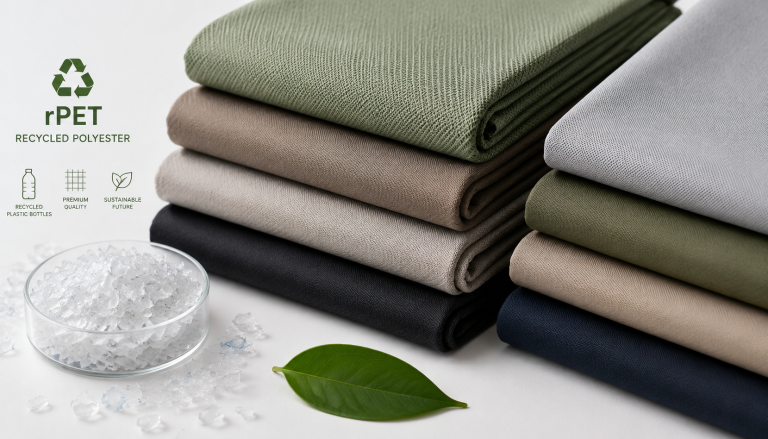
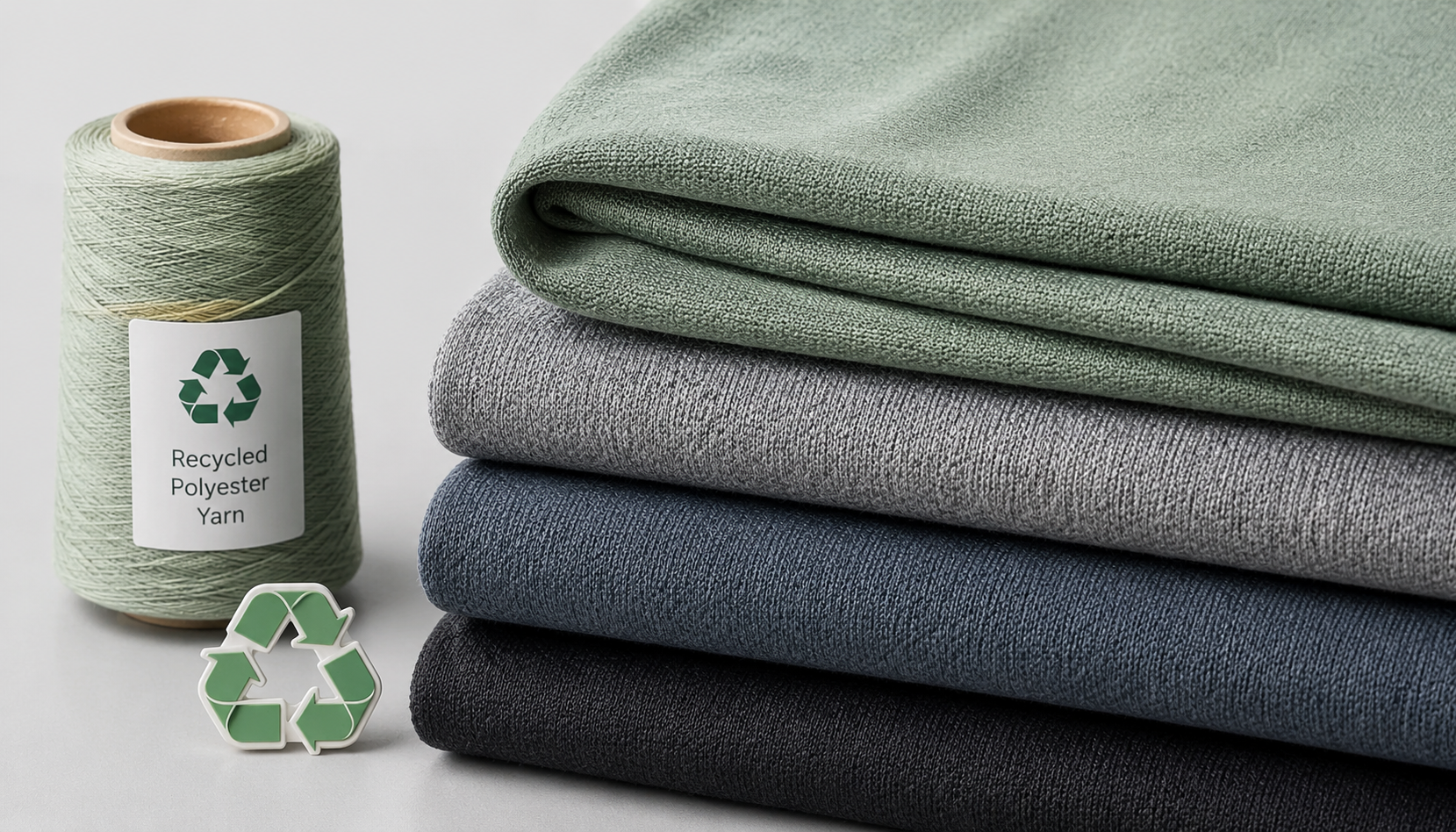
Recycled polyester, commonly abbreviated as rPET, is a synthetic fiber derived from post-consumer or post-industrial polyester waste. In the context of knit fabric, this means the yarn used to create the textile structure has been mechanically or chemically recycled from sources like discarded plastic bottles, manufacturing scraps, or even old garments.
The key distinction for B2B buyers lies in the source and verification. Post-consumer recycled (PCR) polyester, typically from PET bottles, is the most common and carries the strongest sustainability narrative. Post-industrial recycled (PIR) polyester comes from factory offcuts and is technically easier to process but often carries less weight in marketing claims.
For procurement, the critical differentiator isn’t just the recycled content—it’s the certification. The Global Recycled Standard (GRS), now at version 4.0, provides a chain-of-custody verification that tracks the recycled material from source to final product. Without this, you’re essentially taking the supplier’s word for it, which is a risky position when your end-client’s brand reputation is on the line.
| Parameter | rPET Knit | Virgin Polyester Knit | Cotton Knit |
|---|---|---|---|
| Primary Source | Recycled PET bottles/scraps | Petroleum derivatives | Cotton plant |
| Typical Cost (per meter) | $2.50 – $4.00 | $2.00 – $3.50 | $3.00 – $6.00 |
| Carbon Footprint | ~30-50% lower than virgin | Baseline | Variable (water-intensive) |
| Recyclability | Fully recyclable | Fully recyclable | Biodegradable |
The journey from plastic bottle to finished knit fabric is a multi-stage industrial process that demands precision at every step. Understanding this pipeline helps you evaluate supplier capabilities and identify potential weak points in quality control.
It starts with collection and sorting. Post-consumer PET bottles are collected, cleaned of labels and caps, and sorted by color. Clear bottles yield the cleanest fiber, while colored bottles may require additional processing or result in slightly tinted yarn.
The cleaned bottles are then shredded into flakes, which are melted and extruded through spinnerets to create continuous filaments. This is where the magic—and the potential for inconsistency—happens. The melt temperature, extrusion pressure, and cooling rate all affect the final fiber’s tenacity, elongation, and dye uptake.
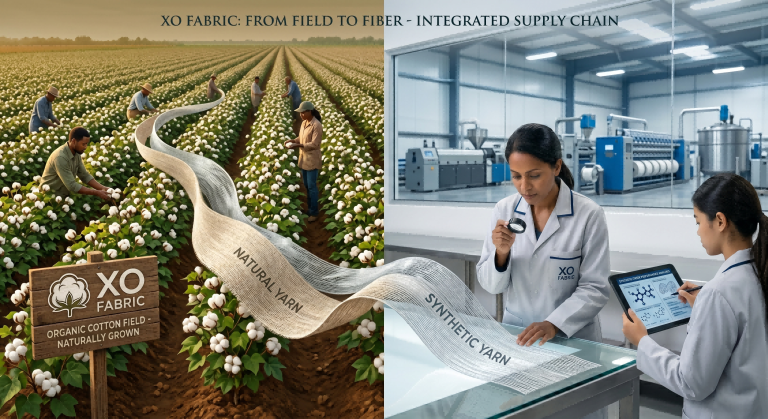
An integrated manufacturer—one that controls weaving, dyeing, and finishing under one roof—can maintain tighter batch-to-batch consistency. This vertical control is particularly crucial for rPET, where variations in the recycled feedstock can introduce subtle differences in fiber properties. When you’re sourcing recycled polyester knit fabric, ask about the supplier’s production chain integration. It’s a direct indicator of their ability to deliver consistent quality at scale.
The knit structure you choose dramatically affects the fabric’s hand feel, drape, stretch, and end-use performance. A single jersey might be perfect for a basic t-shirt, while a 1×1 rib offers superior recovery for form-fitting applications.
Take the 1×1 fine rib knit fabric as a technical example. With a composition of 100% recycled polyester and a weight of 135 gsm (4.0 oz/yd²), it offers a balanced combination of structure and softness. The rib construction provides inherent stretch and excellent shape retention, making it ideal for cuffs, neckbands, and body-hugging garments where recovery after stretch is critical.
| Knit Structure | Typical Weight (gsm) | Key Characteristics | Common rPET Applications |
|---|---|---|---|
| Single Jersey | 120-180 | Smooth face, curled edges, moderate stretch | T-shirts, casual wear, linings |
| 1×1 Rib | 130-200 | Vertical ridges, excellent widthwise stretch and recovery | Cuffs, neckbands, fitted tops |
| Interlock | 160-250 | Double-faced, stable, no curling | Polos, structured dresses |
| Mesh | 80-150 | Open structure, high breathability | Sportswear panels, overlays |
There’s a persistent myth that recycled materials mean compromised performance. In the case of quality rPET knit fabric, the opposite is often true. The inherent properties of polyester—strength, resilience, and moisture management—are preserved through the recycling process, and in some cases, enhanced.
Consider durability. Martindale abrasion testing typically shows rPET knits achieving 20,000-50,000 cycles before showing wear, comparable to or exceeding many virgin polyester fabrics. This makes recycled polyester knit fabric a viable choice for performance apparel where longevity is a key selling point.
The versatility of recycled polyester knit fabric makes it suitable for a surprisingly wide range of applications. Its performance characteristics align well with the demands of several key sectors, each with specific requirements for weight, stretch, durability, and aesthetics.
In sportswear, the quick-drying and moisture-wicking properties are paramount. A 140-160 Fabric GSM Calculator (4.1-4.7 oz/yd²) single jersey or mesh knit is ideal for base layers and training tops. For outdoor gear, abrasion resistance and colorfastness to light become critical—here, heavier interlock or double-knit structures in the 200-250 gsm (5.9-7.4 oz/yd²) range perform well.
Home textiles represent a growing market. Think cushion covers, throw blankets, and even upholstery where the fabric’s durability and easy-care properties are valued. The ability to achieve vibrant, consistent colors through piece dyeing is a significant advantage over natural fibers for decorative applications.
| Industry | Application Examples | Key Performance Requirements | Typical Fabric Weight (gsm) |
|---|---|---|---|
| Active/Sportswear | Training tops, leggings, sports bras | Moisture management, stretch, abrasion resistance | 140-200 |
| Outdoor/Technical | Mid-layers, fleece jackets, accessories | Warmth-to-weight, durability, colorfastness | 180-300 |
| Casual/Fashion | T-shirts, dresses, loungewear | Hand feel, drape, color vibrancy | 120-180 |
| Home Textiles | Cushions, throws, table linens | Stain resistance, durability, aesthetics | 160-280 |
For brands looking to explore the full range of options, reviewing a supplier’s complete knit base fabric portfolio is a logical next step. You can explore the knit base fabrics category to see how different constructions and weights might match your specific application needs.
This is where the rubber meets the road for many procurement decisions. The recycled polyester vs cotton debate isn’t about which is “better” in absolute terms—it’s about which is better for your specific product, market, and supply chain realities.
Cotton offers natural breathability, biodegradability, and a soft hand feel that consumers often perceive as more comfortable. However, it comes with significant environmental baggage: enormous water consumption, pesticide use in conventional farming, and variable supply chain stability due to weather and geopolitical factors.
rPET, on the other hand, provides consistent performance, lower environmental impact per kilogram (when sourced responsibly), and price stability tied to plastic waste streams rather than agricultural markets. The trade-off is in end-of-life: while recyclable, it doesn’t biodegrade like cotton.
| Factor | Recycled Polyester Knit | Cotton Knit | Best For |
|---|---|---|---|
| Cost Stability | High (tied to waste streams) | Variable (weather, market) | Budget-sensitive programs |
| Performance Consistency | High | Moderate | Technical applications |
| Environmental Impact | Lower carbon, higher recyclability | Water-intensive, biodegradable | Different sustainability angles |
| Consumer Perception | Growing acceptance | Strong “natural” preference | Market-dependent |
My personal take? For performance apparel where durability and consistent quality are non-negotiable, rPET is increasingly the smarter choice. For next-to-skin basics in markets where “natural fiber” marketing still reigns, cotton (or cotton-rPET blends) might still be necessary. The decision isn’t binary—it’s about matching material properties to product requirements and consumer expectations.
Procuring recycled polyester knit fabric requires a more rigorous verification process than sourcing conventional materials. The premium you pay—and the sustainability claim you make—hinges on the authenticity of the recycled content and the integrity of the supply chain.
Start with certification. The Global Recycled Standard (GRS) is the gold standard. As defined by Textile Exchange, GRS 4.0 verifies recycled content, tracks the chain of custody, and ensures environmental and social criteria are met throughout production. Don’t just ask for the certificate—verify it’s current and covers the specific product you’re ordering.
The cost of recycled polyester fabric per meter will vary based on certification, weight, order volume, and market conditions. Expect to pay a 10-20% premium over virgin polyester for GRS-certified material. However, this premium can be offset by the marketing value and increasingly, by regulatory compliance as more markets mandate recycled content.
A European sportswear brand was transitioning 60% of their line to recycled materials. They sourced a recycled polyester knit fabric from a new supplier offering prices 15% below the market rate. The samples passed initial quality checks, and the brand placed a 2,000 m (2,187 yd) order.
During their internal compliance review, they requested the full GRS transaction certificate. The supplier provided a certificate, but it covered only 30% of the fabric’s composition—the remaining 70% was unverified. The brand faced a dilemma: accept the fabric and risk their sustainability claims, or reject it and delay the collection.
They chose to reject the order. The cost wasn’t just the 3-week delay and the rush re-order at a higher price—it was the internal credibility hit to their sustainability team. The lesson? The cheapest option often carries the highest hidden costs. They now source exclusively from manufacturers with integrated production and verifiable, end-to-end traceability.
This is where understanding a supplier’s full capabilities becomes critical. A manufacturer with established credentials, like those detailed on their about us page, provides the transparency needed to avoid such pitfalls. Their integrated weave-dye-flock production line and full certification matrix (including GRS 4.0 and OEKO-TEX Standard 100) represent the kind of operational maturity that reduces procurement risk.
This is a common question, especially from brands marketing to consumers with sensitive skin or those transitioning from natural fibers. The short answer is: yes, quality recycled polyester knit fabric is safe for skin contact, provided it meets the right safety standards.
The concern often stems from two misconceptions: that recycled materials might contain harmful residues, and that synthetic fibers are inherently uncomfortable. Modern recycling processes, when properly controlled, produce fibers that are chemically identical to virgin polyester. The safety comes down to the finishing chemicals used, not the fiber origin.
This is where certifications like OEKO-TEX Standard 100 become your assurance. According to the OEKO-Yarn Count Converter official guidelines, this standard tests for a comprehensive list of harmful substances, including formaldehyde, heavy metals, and regulated phthalates. A fabric certified to OEKO-TEX Standard 100, Class I (suitable for babies), has passed the most stringent safety tests available.
The key is to specify the right safety standard in your purchase order and verify it on the test report. Don’t just take “it’s safe” as an answer—require the OEKO-TEX certificate number and verify it on their database.
From a B2B perspective, the answer depends entirely on the application and quality standard. A well-made polyester knit offers excellent durability, colorfastness, and easy care. The critical factor is sourcing from a reputable manufacturer with proper quality control and certifications. For applications where performance and longevity are key, polyester knit is often superior to natural alternatives.
Recycled knit fabric is a textile created from yarns derived from recycled materials, most commonly post-consumer PET bottles or industrial polyester waste. Its core value proposition is reducing reliance on virgin petroleum-based materials and diverting plastic waste from landfills, while delivering comparable performance to conventional fabrics.
For GRS-certified recycled polyester knit fabric, expect to pay between $2.50 and $4.50 per meter, depending on weight, construction, order volume, and certification level. This represents a 10-20% premium over virgin polyester. For an accurate quote based on your specific requirements, it’s best to contact the supplier directly with your technical specifications and volume needs.
The shift toward recycled polyester knit fabric isn’t a passing trend—it’s a fundamental restructuring of material sourcing driven by regulation, consumer demand, and genuine environmental necessity. For B2B buyers, the challenge isn’t finding suppliers; it’s verifying claims, understanding the technical nuances, and building supply chains that are both sustainable and resilient.
The brands that will win in this space are those that treat material sourcing as a technical discipline, not just a procurement checkbox. They’ll ask for the certificates, understand the manufacturing process, and build relationships with manufacturers who can prove their claims. The fabric you choose is more than a material—it’s a statement about your brand’s commitment to doing things right.