Address
Nanlang Industrial Zone, Xingtan Town, Shunde District, Foshan, Guangdong, China
Work Hours
Mon–Fri, 9:00 AM – 6:00 PM (CST/UTC+8). We aim to respond to all inquiries within 48 hours.

Address
Nanlang Industrial Zone, Xingtan Town, Shunde District, Foshan, Guangdong, China
Work Hours
Mon–Fri, 9:00 AM – 6:00 PM (CST/UTC+8). We aim to respond to all inquiries within 48 hours.
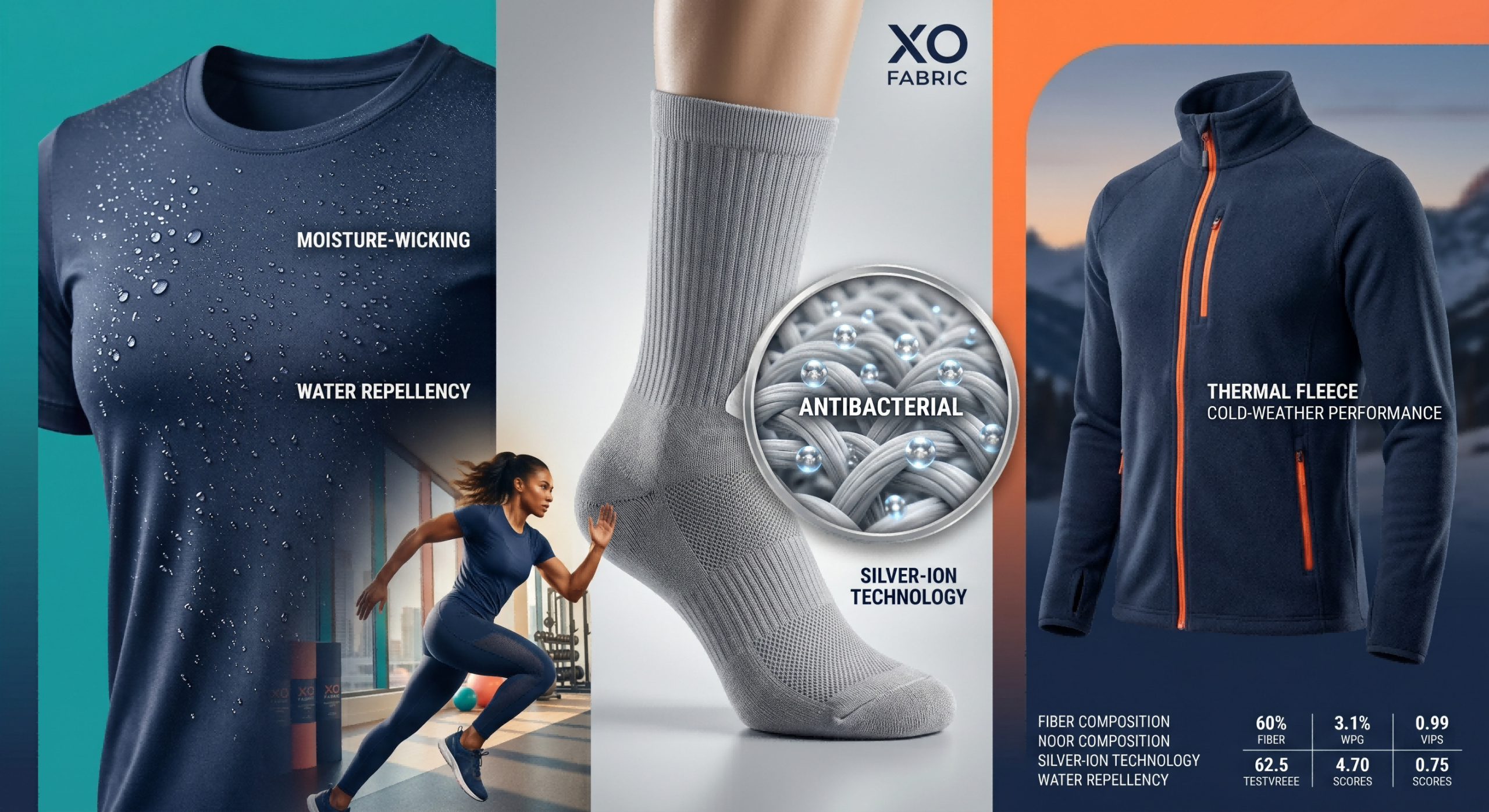
You’ve probably drafted a beautiful pattern only to watch the finished garment lose its shape after one intense hike. That’s exactly why a proper functional fabrics guide matters. Unlike standard cotton or basic upholstery polyester, engineered textiles are built with specialized performance properties that actually hold up to real-world stress. We’re talking moisture-wicking, antibacterial, and thermal technologies that transform everyday cloth into serious workhorses. Whether you’re an activewear designer, an outdoor gear sewer, or a small brand owner trying to avoid customer returns, understanding these performance textiles will save you hours of guesswork. Let’s break down exactly how they work and why they matter.
At its core, moisture-wicking relies on capillary action. The fibers are engineered with micro-channels that pull sweat away from your skin and spread it across the fabric’s outer surface. From there, it evaporates quickly. Synthetics like polyester and nylon dominate this space because manufacturers can literally spin the filament with hydrophobic and hydrophilic zones. Natural options like merino wool and bamboo cellulose handle moisture through absorption and micro-venting, though they dry slower.
When you’re sewing these fabrics, the weight matters significantly. A 150 GSM knit moves water faster than a 280 GSM version, but it offers zero wind resistance. I usually test the wicking rate by dropping water on a swatch. If it beads up and rolls off, the DWR coating is still active. If it soaks in immediately, you’re dealing with untreated material. For high-intensity pieces, I stick to a 2.5mm stitch length and a microtex needle. Ballpoint needles just push the fibers apart and create weak points that pill within weeks.
Common applications include athletic tops, hiking base layers, and even medical scrubs that face long shifts. You’ll notice the breathability drops when you layer these fabrics tightly against the skin without a mesh panel. Always balance the knit structure with ventilation zones. If you’re sourcing material for performance gear, our Moisture-Wicking Fabrics collection covers everything from lightweight runners’ tees to heavier training pullovers.
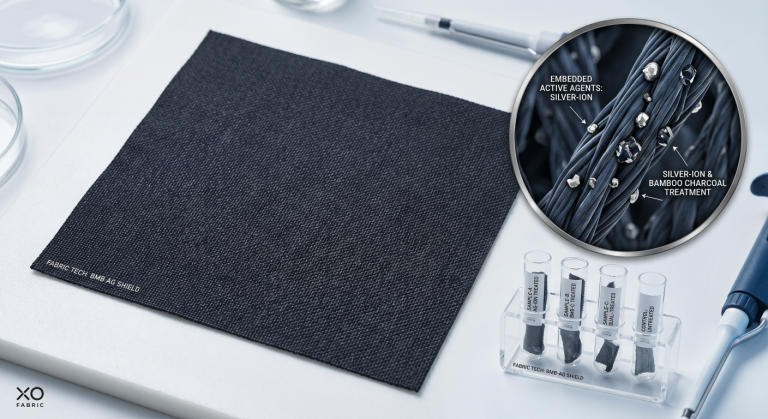
Antibacterial fabrics don’t just hide smells. They actively inhibit bacterial growth on a cellular level. Microbes thrive in damp, trapped environments. When they break down sweat proteins, you get odor. These textiles interrupt that cycle. Silver-ion technology releases metallic particles that puncture bacterial cell walls. Bamboo charcoal works through massive surface area adsorption, trapping odor molecules physically. Copper-infused yarns disrupt enzyme functions, while chitosan creates a positive charge that repels negatively charged bacteria.
I once spent three months developing a hiking sock line that promised zero odor. The first prototype used copper-infused nylon. It worked initially, but after twelve washes, the copper migrated into the wash water and the antimicrobial effect vanished. We switched to a silver-zinc hybrid treatment bonded directly to the polymer matrix during extrusion. The trade-off was immediate. The fabric felt noticeably stiffer. We compensated by knitting a lighter gauge and adding a brushed inner loop. It took four more prototypes, but the final version passed a 50-wash retention test with zero pitting. Sometimes you have to sacrifice hand feel for longevity.
You’ll find these materials in athletic socks, hospital linens, and summer apparel for humid climates. One quick tip applies to every maker. Never use fabric softener on antimicrobial yarns. The coating fills the micro-channels and neutralizes the active agents within three washes. Cold water only. If you’re looking for reliable base materials, check out the Antibacterial Fabrics section. They’re pre-tested for microbial reduction standards and ready for production.
Thermal fabrics don’t generate heat. They trap it. The mechanism is straightforward. Fibers create a matrix of tiny air pockets close to your body. Those pockets hold warm air and reflect radiant heat back. The trick is balancing insulation with breathability. If you seal it too tight, you sweat, the moisture cools you down, and you freeze faster.
| Fabric Type | Heat Retention | Breathability | Best Use |
| Polar Fleece | High | Medium | Mid-layers, casual outerwear |
| Thermal Rib Knit | Medium | High | Base layers, long-sleeve shirts |
| Down Alternative (Hollow Core) | Very High | Low | Puffer jackets, extreme cold |
| Aerogel-Infused Woven | Extreme | Medium-High | Ultralight expedition gear |
When sewing thermal knits, stabilize your seams. The stretch recovery can fatigue quickly under heavy stress. I use a twin needle at 3.2mm with a slight zigzag on high-stress hems. Pressing requires low heat and a press cloth. Direct iron contact melts the synthetic fibers and ruins the loft. You’ll notice fleece pills faster if you run it through a commercial dryer on high. Tumble dry low, or better yet, line dry to preserve the fiber structure.
These textiles power winter jackets, insulated gloves, and even heated home blankets. If you need reliable cold-weather materials, the Thermal Fabrics lineup includes everything from brushed polyesters to advanced phase-change blends. Just remember that insulation works best when paired with a moisture-wicking base. Otherwise, you’re just trapping sweat.
Real-world performance rarely relies on a single feature. The best technical garments layer or blend these technologies into one cohesive textile. Hybrid fabrics eliminate the need for three separate clothing layers while cutting bulk and weight. Take a moisture-wicking and antibacterial blend. You get rapid sweat transport paired with odor suppression. Perfect for gym leggings or trail running shorts.
Now add thermal regulation to the mix. A cold-weather base layer needs to move moisture away before it freezes, trap just enough heat to keep muscles loose, and resist bacterial buildup during multi-day expeditions. Engineering this balance means tweaking the yarn spin, altering the knit structure, and sometimes applying dual-sided finishes. I’ve seen small brands overcomplicate this by trying to source three different fabrics and laminating them together. It usually cracks at the seams after twenty washes.
A far better approach is buying a single technical knit that already incorporates micro-channel fibers and bonded antimicrobial treatment. The stitch integrity stays intact, and the hand feel remains consistent. When you combine these properties, you’re designing for endurance, not just aesthetics. Look for fabrics that pass multiple AATCC tests simultaneously. Our Performance Functional Knits section focuses specifically on these multi-role textiles. They’re engineered to handle conflicting demands without sacrificing durability or drape.
Picking the right textile comes down to matching three variables. Activity intensity, climate conditions, and maintenance reality. Ignoring any one of them guarantees disappointment. Start with the movement. High-intensity cardio demands maximum breathability and aggressive wicking. A 140 GSM polyester blend with mesh underarms works best. Casual weekend wear can tolerate heavier weights and lower wicking rates.
Extreme outdoor use requires wind resistance, thermal mapping, and reinforced stress points. I usually draft a quick movement map before cutting. Where does the fabric bend? Where does it stretch? Those zones dictate the stitch type and needle size. Climate changes everything. Humid environments need open weaves or honeycomb knits that promote airflow. Dry, cold climates prioritize loft and trapped air pockets. If you’re sewing for sub-zero temps, layer a thermal knit over a wicking base. Never rely on a single heavy fabric. It will saturate and lose insulation.
Care requirements often get ignored until the garment shrinks. Functional finishes degrade at high heat. Here’s your baseline checklist:
I once ruined a batch of thermal pullovers because I steam-pressed them on medium heat. The poly fibers relaxed, the seams puckered, and the shrinkage hit 8%. Never push heat beyond what the fiber tolerance allows. If you’re unsure, test a scrap first. The pattern alignment will show you exactly how the fabric behaves under pressure.
The functional textile landscape moves fast, but reliable sourcing shouldn’t feel like a guessing game. XO Fabric curates performance lines that meet strict industry benchmarks. Every roll goes through third-party lab testing for wicking efficiency, antimicrobial retention, and thermal stability. We track shrinkage rates, colorfastness, and seam slippage before anything reaches your door.
Small apparel brands and independent makers don’t need minimum order quantities to access technical grade material. We keep stock in manageable yardages so you can prototype, test, and scale without financial risk. The mill partners we work with update their chemical finishes annually to stay compliant with eco-regulations while maintaining performance.
When you’re building a brand around function, consistency is everything. You need the same GSM weight, the same dye lot, and the same hand feel across every production run. That’s why we batch-test every shipment and provide full spec sheets before checkout. Browse the full functional inventory, pull a sample yardage, and run your own wash tests. The data will tell you exactly where to place your seams.
Sewing with performance textiles isn’t about chasing trends. It’s about respecting how materials behave under real stress. You’ll make mistakes. A seam will slip. A finish will wash out. But every failure teaches you how to read the fabric better next time. Keep your needles sharp, your heat settings low, and your patterns honest about how the material moves. The right textile will do the heavy lifting so you can focus on the design.