Address
Nanlang Industrial Zone, Xingtan Town, Shunde District, Foshan, Guangdong, China
Work Hours
Mon–Fri, 9:00 AM – 6:00 PM (CST/UTC+8). We aim to respond to all inquiries within 48 hours.

Address
Nanlang Industrial Zone, Xingtan Town, Shunde District, Foshan, Guangdong, China
Work Hours
Mon–Fri, 9:00 AM – 6:00 PM (CST/UTC+8). We aim to respond to all inquiries within 48 hours.
Fleece seems straightforward until you’re holding two swatches that look identical but behave completely differently under the needle. One drapes like a dream; the other stands up stiff as a board and sheds lint all over your worktable. Getting fleece wrong doesn’t just ruin the hand feel—it wrecks the fit, the cost, and sometimes the whole season’s launch.
Fleece isn’t a fiber; it’s a finish. You’re looking at a knit base—usually polyester, though wool exists—that’s been mechanically abraded to lift fibers and create that signature napped pile. Modern fleece almost always runs polyester because the synthetic hollow fibers trap heat efficiently while keeping weight down, unlike wool which can feel heavy and scratchy if not treated right. Don’t confuse this with flocked fabric, which uses an adhesive process to stick fibers on; fleece relies on the integrity of the base knit, so the construction matters just as much as the surface fluff. If the base is weak, the pile falls apart the moment you wash it.
The process starts with the knit. Warp knits tend to be more stable and resist snagging, making them a favorite for outerwear that needs to hold a shape. Weft knits offer more stretch, which feels great on the body, but they require careful handling during brushing to avoid distorting the gauge. After knitting, the fabric goes through brushing machines with steel cards that tease the surface. High-end fleece gets sheared afterward to level the pile, which is the difference between a premium hand feel and a ragged, uneven texture. Quality fleece starts with the base knit fabric. Explore our Knit Base Fabrics to understand how foundation construction affects the final pile.
Insulation comes from trapped air pockets, not the fiber itself. A well-constructed fleece can deliver excellent warmth-to-weight ratios, often matching heavier cotton layers at half the bulk. Moisture management is where polyester shines; the fibers are hydrophobic, so they wick sweat and dry fast. Breathability varies wildly based on density and pile height—microfiber breathes better than dense polar. Durability is the trade-off. The napped surface is prone to pilling under friction. If the staple fibers aren’t anchored well in the yarn twist, or if the brushing is too aggressive, pills form quickly. I’ve seen orders fail just because the stitch length was too long for the pile height, causing seam slippage when the garment moved. Always check your seam security on high-pile knits.
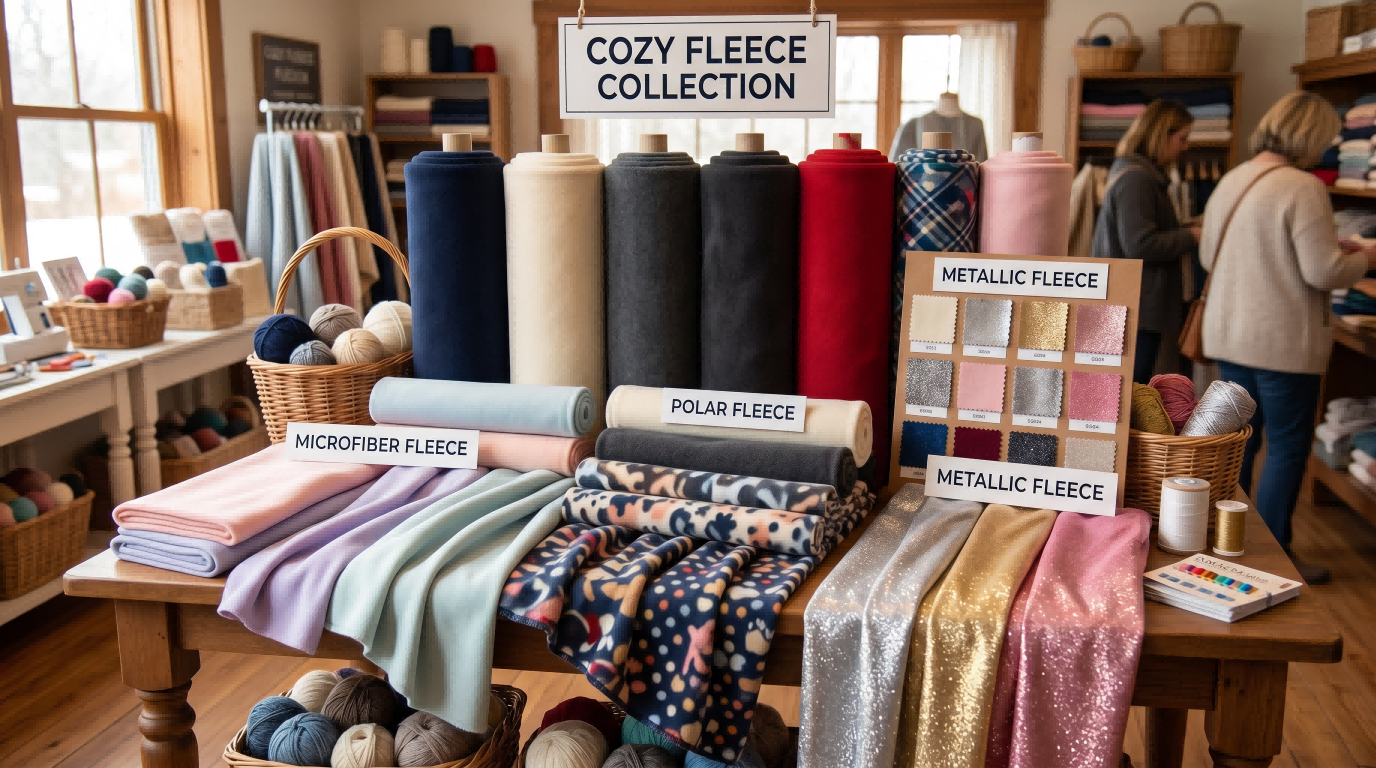
Our Microfiber Soft Fleece showcases the ultra-soft hand feel achievable with fine denier fibers.
Microfiber fleece takes softness to the extreme by using ultra-fine filaments, typically under 1 denier per filament. When you brush these fine fibers, they create a dense, smooth pile that feels closer to peach skin than traditional fleece. The drape is excellent; this fabric doesn’t puff up or stand away from the body like heavier knits. It flows well, making it ideal for garments where silhouette matters. You’ll find this in infant wear where scratchiness is a non-starter, and in premium loungewear that needs to look sophisticated, not bulky. It works for lightweight jackets and vests, or as a lining for structured winter coats. The trade-off is thermal insulation. Because the pile is finer and often less dense than polar, it won’t save you in sub-zero temps. It’s a layering piece, not a standalone shell for the Arctic.
I once advised a brand trying to use microfiber for ski bibs; the fabric was too light and tore under zipper stress—always check tear strength specs, not just hand feel. Microfiber generally runs in the 150 to 220 GSM range. The lower GSM offers better drape but less warmth; the higher end adds body but starts to lose that signature fluidity. Care is standard: machine wash cold, tumble dry low. High heat can melt the polyester tips and cause pilling to accelerate. Color fastness is critical here because light colors show stains, and dark colors show shedding. Look for AATCC 61 Class 4+ ratings. Experience the exceptional softness of our Microfiber Soft Fleece — perfect for premium loungewear. For performance apparel, you may also need moisture-wicking or antibacterial properties (covered in our Functional Fabrics guide).
Polar fleece is the workhorse of winter. It’s heavier, with a deeper nap that traps significantly more air. The name comes from the insulation efficiency compared to polar bear fur—lightweight for the warmth delivered. Most polar fleece is 100% polyester, often available in recycled PET versions for sustainability credits. It can be single-sided for a smoother exterior look or double-sided brushed for maximum thermal retention. Polar maintains warmth when damp, which is crucial for outdoor activity. Cotton gets heavy and cold when wet; polar keeps insulating. Breathability can suffer with heavy pile; sweat might get trapped if the knit is too dense. Construction adjustments help here. Custom weights are common. 180 GSM is light polar, 220 GSM is standard, 320 GSM+ is heavyweight. Anti-pilling finishes are almost mandatory for apparel; they treat the surface to reduce fiber release.
A recent project for a touring band jacket illustrates the headaches of polar fleece. The creative director demanded the “classic polar look” but also wanted the jacket to pack down small and resist static cling during performances under bright stage lights. We started with a standard 320 GSM double-sided polar; it was warm, but the static was electric, and the bulk ruined the tailored armholes. We swapped to a 220 GSM single-sided, which reduced bulk, but now the back panel lacked insulation. The compromise? We kept the 220 GSM single-sided for the body to maintain drape and used a bonded fleece insert on the back panel only. Sourcing from XO Fabric allowed us to mix weights and get the anti-static finish without a massive MOQ penalty. The trial-and-error involved three rounds of lab dips and fit tests because the anti-static agent initially darkened the black dye by a half-tone. It was messy, but the final piece packed flat, kept them warm in vans, and didn’t spark against microphones. It taught me that uniform fabric weight isn’t always the answer—strategic layering or paneling often solves the warmth-vs-drape conflict. Our Polar Fleece Thermal Knit delivers superior warmth-to-weight performance for winter apparel. Learn more about heat retention technologies in our Thermal Fabrics guide.
Metallic fleece introduces visual drama by incorporating metallic yarns directly into the knit or pile. This isn’t a coating; the shimmer is structural. It’s popular in fashion-forward evening wear and statement pieces where fleece needs to step up from casual to luxe. The challenge is maintaining softness. Some metallic yarns can feel sharp or compromise the drape if the core isn’t soft enough. Laminated metallic yarns tend to wrinkle less than wrapped ones, but they can restrict stretch. You have to test the recovery. A designer once ordered metallic fleece for a dance costume, and the stiffness restricted movement—always test stretch recovery with metallic content, as the metal filaments can add rigidity.
Specialty finishes go beyond metallic. Printed fleece requires care; ink must bond to the pile without clumping, which often means a heat-set process after printing. Embossed fleece adds texture via heat pressing, creating patterns that stand up to wear. Bonded fleece laminates fleece to a membrane for wind/water resistance, shifting it into performance territory. MOQs tend to be higher for metallics and specials. Color matching is harder with metallics; the reflection changes perception under different lights. Wash fastness of the print or finish is vital. Add a touch of luxury with our Metallic Gold Fleece — perfect for fashion-forward winter apparel. For performance apparel, explore our Performance and Functional Knits with moisture-wicking or antibacterial properties.
Choosing fleece isn’t just about picking a color. You have to weigh warmth, drape, budget, and durability against the garment’s function. Spring/fall calls for microfiber. Mild winter? Mid-weight polar. Extreme cold? Heavyweight polar or bonded fleece. A ski jacket needs more than a vest does. Structured outerwear needs body; polar gives that. Draped robes and loungewear need flow; microfiber wins. Sometimes a hybrid approach works, like ponte with fleece backing. Microfiber is mid-range cost. Polar is cost-effective at volume. Specialty runs higher. XO Fabric’s integrated production model helps manage these costs by eliminating middlemen and streamlining the knit-to-finish workflow. Pilling is the enemy. Ask for anti-pilling finishes. Check test reports. AATCC 61 for color fastness, ISO 105 standards. If seams are slipping, increase stitch density to 14-16 stitches per inch and use a walking foot to feed the pile evenly. Press with low heat and a press cloth; high heat will shine or melt the surface. Not sure which fleece is right for your apparel line? Request Samples. Fabric weight (GSM) also impacts warmth and drape. Read our Understanding Fabric Weight guide for more details.
| Type | GSM Range | Warmth | Drape | Best Use | Pilling Risk |
| Microfiber Soft Fleece | 150-220 | Light to Medium | Excellent | Loungewear, Infant, Linings | Low to Medium |
| Polar Fleece | 220-320+ | Medium to Heavy | Good (Structured) | Outerwear, Sportswear, Blankets | Medium to High |
| Bonded Fleece | 250-400+ | Heavy | Poor (Stiff) | Shells, Technical Outerwear | Low |
Integrated production makes a difference. When knitting, dyeing, and finishing happen under one roof, lead times shrink to 10-20 business days. Quality control is consistent because you’re not dealing with variability between outsourced finishers. Customization is where things get interesting. You can request custom GSM ranges, wider cuts for production efficiency, or specific Pantone matches with reliable lab dips. Finishes like anti-pilling or water repellency can be added without massive MOQ hurdles; 500 meters is often the threshold for most fleece fabrics. Quality assurance isn’t an afterthought. With a team of over 50 technicians inspecting in-process and a finished goods warehouse covering 2,000 square meters, you get faster delivery and verified test reports for color fastness, pilling resistance, and more. Two decades of experience in fleece production means the mill knows how to troubleshoot pilling before it reaches the cutting table. Browse our complete All Products collection. Contact Us to discuss your fleece fabric needs.
Fleece is versatile, but it demands respect. Microfiber brings the softness for intimate layers, polar delivers the thermal punch for outdoor rigor, and specialty finishes open creative doors. The key is matching the construction to the garment’s life, not just the mood board. When the specs align, fleece becomes a reliable foundation for winter lines that perform as well as they look. Contact our team to discuss your project requirements and request samples.