Address
Nanlang Industrial Zone, Xingtan Town, Shunde District, Foshan, Guangdong, China
Work Hours
Mon–Fri, 9:00 AM – 6:00 PM (CST/UTC+8). We aim to respond to all inquiries within 48 hours.

Address
Nanlang Industrial Zone, Xingtan Town, Shunde District, Foshan, Guangdong, China
Work Hours
Mon–Fri, 9:00 AM – 6:00 PM (CST/UTC+8). We aim to respond to all inquiries within 48 hours.
Bamboo Fabric vs Cotton: Breathability, Cost & Sustainability. This guide covers key properties, real-world applications, and a practical sourcing checklist for B2B buyers.
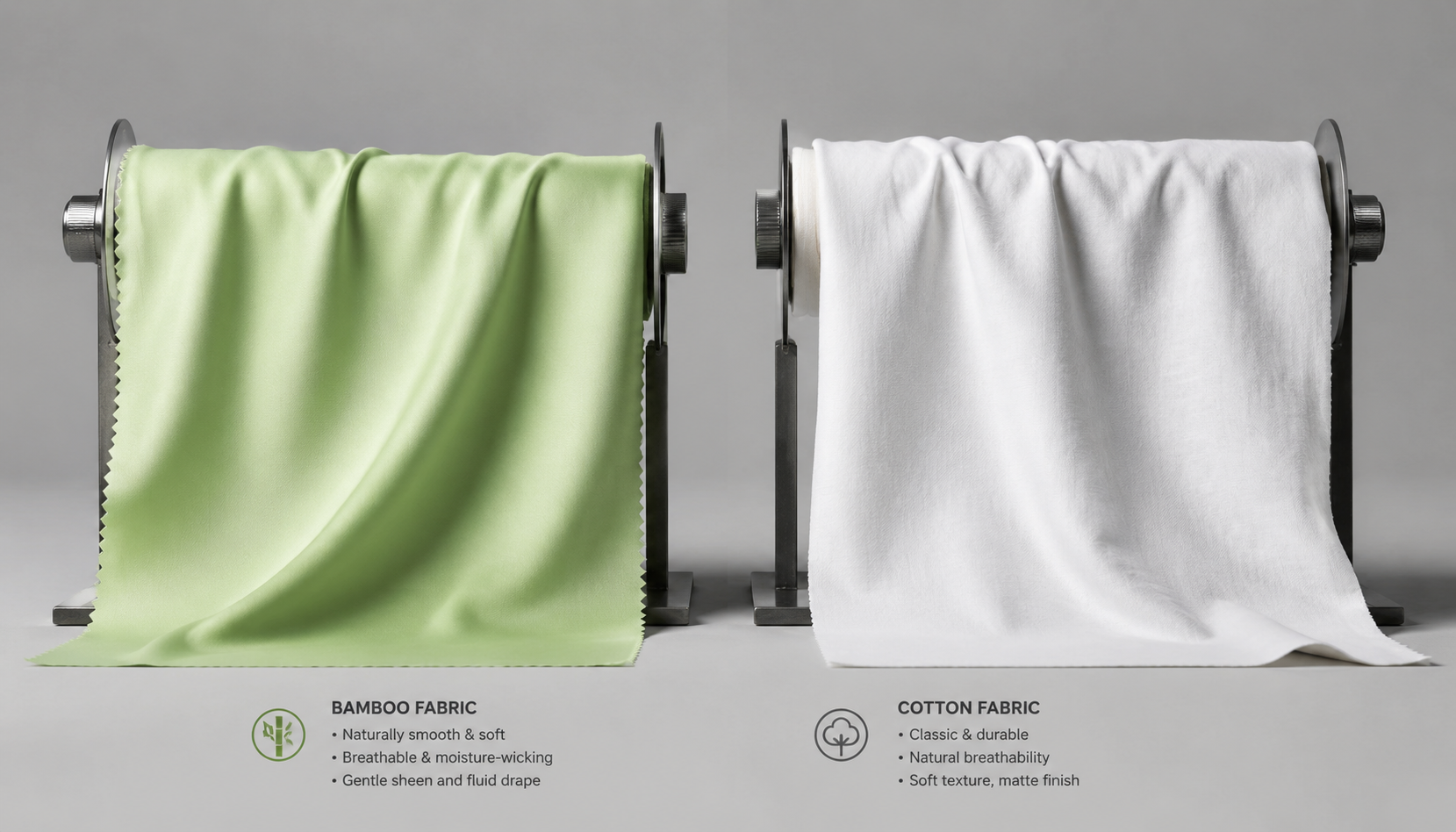
A European activewear brand recently placed a large order for what their spec sheet called “bamboo fabric.” When the samples arrived, the hand feel was silky and drapy—lovely, but nothing like the crisp, slightly textured natural bamboo linen they’d envisioned for their new eco-line. The reason? They’d inadvertently sourced bamboo viscose, a chemically regenerated fiber, not the mechanically processed bamboo fiber they had in mind. This kind of confusion is surprisingly common, and it can cost brands tens of thousands of dollars in rework and missed deadlines.
For B2B buyers navigating the bamboo fabric vs cotton decision, the stakes are high. The choice impacts everything from product performance and cost structure to marketing claims and supply chain risk. This guide cuts through the noise, offering a technical, factory-floor perspective on how these two fibers truly compare.
The term “bamboo fabric” is a marketing catch-all that obscures critical technical distinctions. In reality, over 95% of what’s sold as bamboo fabric in the global market is bamboo viscose (or bamboo rayon). This is a regenerated cellulose fiber, chemically derived from bamboo pulp. It’s a fundamentally different material from the bamboo plant itself.
True, mechanically processed bamboo fibers—sometimes called bamboo linen—are rare, expensive, and have a coarse, linen-like hand feel. They represent a tiny fraction of the market. For the vast majority of applications, when a buyer says “bamboo,” they mean bamboo viscose.
Cotton, by contrast, is a natural seed fiber. It grows in bolls on cotton plants and undergoes a primarily mechanical processing journey. The main varieties include:
The processing paths for bamboo viscose and cotton are worlds apart, which directly impacts their final properties and environmental footprint.
Bamboo Viscose Production (Chemical Method): This is a multi-step chemical process. Bamboo chips are first steeped in a strong sodium hydroxide (NaOH) solution to break them down into a pulp. This pulp is then treated with carbon disulfide (CS₂) to create cellulose xanthate. The xanthate is dissolved in more NaOH to form a viscous spinning solution. This solution is extruded through a spinneret into an acid bath, where it regenerates into solid filaments. The process is water and chemical-intensive.
Cotton Production (Mechanical Method): The journey is more physical. After harvesting, cotton bolls are ginned to separate fibers from seeds. The fibers are then carded (combed to align them), drawn (multiple strands combined and slightly twisted), roved (further twisted), and finally spun into yarn. While bleaching and finishing chemicals are used later, the core fiber formation is mechanical.
| Attribute | Bamboo Viscose | Cotton |
|---|---|---|
| Fiber Source | Bamboo plant pulp (cellulose) | Cotton plant seed fibers |
| Core Processing | Chemical regeneration (viscose/lyocell process) | Mechanical processing (ginning, carding, spinning) |
| Fiber Morphology | Smooth, round cross-section; can be engineered | Naturally twisted, ribbon-like cross-section |
| Primary End Use | Apparel (especially knitwear), home textiles, non-wovens | Apparel (all types), home textiles, industrial fabrics |
Understanding this distinction is the first step in making an informed sourcing decision. The “bamboo” in bamboo viscose vs cotton breathable claims refers to this chemically engineered fiber, not a natural one.
When comparing bamboo fabric vs cotton clothing performance, the devil is in the data. The following matrix provides a snapshot of key technical properties, based on industry-standard test methods. Remember, these are general ranges; specific values depend heavily on Yarn count, fabric construction (knit vs. weave, density), and finishing treatments.
| Property | Bamboo Viscose | Cotton | Test Standard (Typical) |
|---|---|---|---|
| Moisture Regain (%) | 12-13% | 8.5% | ASTM D2654 |
| Air Permeability (cm³/cm²/s) | High (variable with construction) | Moderate to High | ASTM D737 |
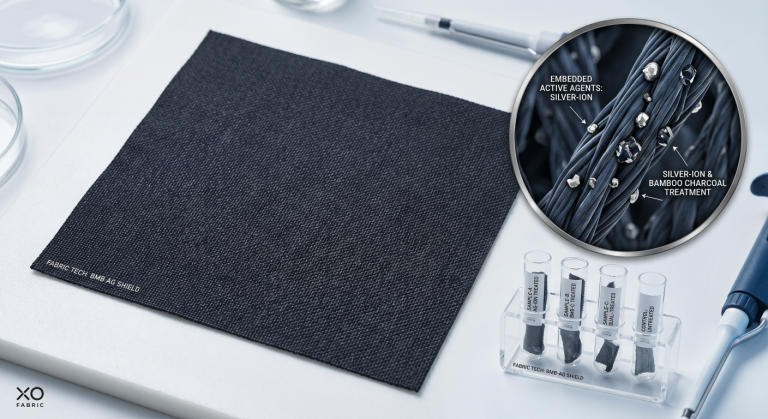
| Antibacterial Rating | Inherent (some claims); often requires finish | None inherent | AATCC 100/147 |
| UV Protection (UPF) | Good (15-50+ depending on weight/dye) | Low to Moderate (5-15) | AS/NZS 4399 |
| Tensile Strength (wet, cN/tex) | Lower than dry (20-30% loss) | Higher than dry (up to 20% gain) | ASTM D5035 |
| Shrinkage (%, after 3 washes) | 3-5% (can be higher without pre-shrink) | 2-4% (with sanforization) | AATCC 135/150 |
| Hand Feel | Silky, drapy, smooth | Soft, slightly textured, familiar | Subjective panel |
| Colorfastness (Wash, Rating) | Good (3-4) | Good to Excellent (4-5) | ISO 105-C06 |
For shirting, the question of bamboo viscose vs cotton breathable performance is nuanced. Bamboo viscose’s higher moisture regain (12-13% vs. 8.5%) means it absorbs moisture from the skin more readily. This can create a feeling of coolness in humid conditions. Its smooth fiber surface also allows for excellent drape, creating a flowing silhouette.
However, breathability is also a function of fabric construction. A tightly woven cotton poplin may feel less “breathable” than a loosely knit bamboo viscose jersey, even if the cotton fiber itself has lower moisture regain. In terms of dry time, bamboo viscose generally dries faster than cotton, which is a plus for travel or active shirts. For a classic dress shirt with a crisp hand, cotton remains the benchmark. For a soft, casual, or resort-wear shirt, bamboo viscose offers a compelling alternative.
The bamboo vs cotton for baby market is booming, driven by claims of superior softness and natural antibacterial properties. For B2B buyers, this category demands extreme rigor. The primary concern is not just performance, but safety.
The gold standard for infant textile safety is OEKO-TEX Standard 100, Class I. This certification tests for a comprehensive list of harmful substances, including:
Here’s the critical nuance: while bamboo viscose is often marketed as “natural” and “antibacterial,” its chemical production process introduces risks. The solvent carbon disulfide (CS₂) used in the viscose process is toxic. If not fully washed out during production, residues can remain in the final fabric. Reputable manufacturers control this through rigorous washing protocols, but it’s a key quality checkpoint.
| Safety Metric | Bamboo Viscose | Cotton |
|---|---|---|
| OEKO-TEX Class I Eligible? | Yes, if produced to standard | Yes, if produced to standard |
| Key Risk Area | CS₂ residue from production | Pesticide/herbicide residues from farming |
| Common Claim vs. Reality | “Naturally antibacterial” — often requires a topical finish to be durable | “Hypoallergenic” — generally true for well-processed, un-dyed cotton |
A B2B buyer sourcing bamboo viscose vs cotton for babies must look beyond the hang tag. The actionable step is to request the specific, valid OEKO-TEX certificate for the exact fabric and color you are ordering, and to verify the CS₂ residue test report from the dyeing/finishing mill. Softness is a given with bamboo viscose, but safety is earned through due diligence.
Price is never just a number on an invoice. For bamboo fabric vs cotton, the cost structure reveals significant differences in supply chain risk and volatility.
The following are indicative price ranges for common fabric constructions, FOB China, based on a 3,000-5,000 meter order. Prices are highly sensitive to order volume, color (solid vs. print), and specific finishing requirements (e.g., brushing, anti-pilling).
| Fabric Specification | Bamboo Viscose Price Range (USD/m) | Cotton Price Range (USD/m) | Key Cost Driver |
|---|---|---|---|
| 150 gsm (4.4 oz/yd²) Single Jersey | $3.80 – $4.50 | $3.20 – $3.80 | Yarn count, dyeing complexity |
| 200 gsm (5.9 oz/yd²) Piqué | $4.50 – $5.20 | $3.90 – $4.60 | Weave structure, finishing |
| 260 gsm (7.7 oz/yd²) French Terry | $5.20 – $6.00 | $4.50 – $5.30 | Weight, loop construction |
A key takeaway for buyers of bamboo fabric vs cotton pants or other garments: the price premium for bamboo viscose is typically 15-25% over comparable cotton. This premium is justified by its performance and marketing attributes, but it must be factored into the product’s final retail price and margin structure.
Sustainability claims in textiles are a minefield. Let’s dissect the bamboo and cotton narratives with a critical eye.
The Bamboo Story: The raw material—bamboo grass—is a champion. It grows incredibly fast (up to 91 cm / 36 in per day), requires no pesticides, little water, and regenerates from its own roots. This is a genuine environmental win. However, the process to turn it into viscose fabric is where the story gets complicated. The conventional viscose process uses hazardous chemicals (NaOH, CS₂) and generates significant wastewater. The Textile Exchange’s reports highlight that the industry is working on closed-loop systems, but adoption is not universal.
A more sustainable alternative is bamboo lyocell, which uses a non-toxic amine oxide solvent in a closed-loop process with over 99% solvent recovery. It’s the gold standard for regenerated bamboo fiber, but it’s more expensive and has limited production capacity.
The Cotton Story: Conventional cotton is a thirsty crop, with a significant water and land footprint. Organic cotton (GOTS certified) eliminates synthetic pesticides and fertilizers, improving soil health, but it often has lower yields, requiring more land. The real innovation lies in recycled cotton (often blended with other fibers) and better agricultural practices like the Better Cotton Initiative (BCI).
Certifications are your shorthand for verified claims. Don’t just ask “is it sustainable?”; ask “which standard certifies it, and can I see the certificate?”
| Certification | Applicable Fiber | What It Actually Guarantees |
|---|---|---|
| OEKO-TEX Standard 100 | Any fiber | Product safety from harmful substances. Does NOT speak to organic or environmental processing. |
| GOTS (Global Organic Textile Standard) | Natural fibers (cotton, wool, etc.) | Organic fiber content (≥70% for ‘made with organic’) + environmental & social criteria throughout the entire supply chain. |
| GRS (Global Recycled Standard) | Recycled content (any material) | Verification of recycled content (≥20% for logo use) + environmental & social criteria. Managed by Textile Exchange. |
| FSC (Forest Stewardship Council) Chain of Custody | Wood-based fibers (viscose, lyocell, modal) | Traces the fiber from a responsibly managed forest to the final product. Critical for bamboo viscose sustainability claims. |
| ISO 14001 | Manufacturing facility | The facility has an environmental management system in place. It’s a system standard, not a product standard. |
For bamboo viscose, the FSC Chain of Custody certificate for the pulp is a non-negotiable for any serious sustainability claim. Without it, you cannot verify the origin of the bamboo, opening you up to greenwashing accusations. This was the hard lesson for a European home textile brand we worked with. They wanted to launch a premium “sustainable bamboo” bedding line. Their initial supplier quoted a competitive price, but couldn’t provide FSC documentation for the pulp. After a costly misstep with an uncertified batch that was held at customs, they switched to a certified pulp source—a move that increased their raw material cost by 12%. They ultimately settled on a 60% bamboo viscose / 40% organic cotton blend, accepting a slight reduction in the “pure bamboo” marketing angle to achieve a verifiable, cost-effective, and truly sustainable product. It’s a classic trade-off between idealism and commercial reality.
There’s no universal winner in the bamboo fabric vs cotton debate. The right choice depends entirely on your product’s target market, performance requirements, and brand positioning.
| Decision Factor | Choose Bamboo Viscose | Choose Cotton | Consider a Blend |
|---|---|---|---|
| Target Market & Positioning | Premium, eco-conscious, luxury casual, resort | Mass market, classic, workwear, everyday basics | Mid-market, balancing cost and “natural” appeal |
| Product Category | T-shirts, dresses, underwear, loungewear, socks | Denim, shirting, chinos, towels, heavy outerwear | Knitwear, polo shirts, babywear |
| Budget | Higher cost acceptable for perceived value | Cost-sensitive, volume-driven | Moderate cost, value-engineered |
| Sustainability Priority | Renewable raw material (must verify FSC) | Organic (GOTS) or recycled content (GRS) | Can blend sustainable inputs (e.g., organic cotton + FSC bamboo) |
For pants, durability and structure are paramount. Cotton, especially in twill or canvas weaves, offers excellent abrasion resistance (Martindale test >20,000 cycles is common) and good shape retention. It’s the default for denim and chinos.
Bamboo viscose, being a softer fiber, typically has lower abrasion resistance. It’s better suited for soft, drapey pants like palazzo styles, joggers, or pajama bottoms rather than structured trousers. Its elastic recovery is also generally lower than cotton, meaning it may bag out at the knees more readily. For pants that need to hold their shape through a workday, cotton or a cotton-dominant blend is usually the safer choice.
Here are some quick rules of thumb:
Whether you’re sourcing bamboo viscose or cotton, a systematic approach minimizes risk. This checklist is your first line of defense.
Beyond the checklist, watch for these red flags:
Once you’ve narrowed down your material choice and have a clear technical specification, the next step is to engage directly with a mill. You can submit your tech pack and requirements through our contact page. A technical engineer will provide a feasibility assessment and custom quote within one business day, helping you move from decision to action.
In terms of the fiber itself, bamboo viscose has a higher moisture regain (about 12-13%) than cotton (about 8.5%). This means it can absorb more moisture vapor from your skin, which can feel cooler in humid conditions. However, “breathability” in a garment is also heavily influenced by fabric construction. A loose, open-weave cotton gauze will be more breathable than a tight, dense bamboo viscose knit. So, the answer isn’t absolute; it depends on the specific fabric design.
Yes, it can be, provided it is certified to the highest safety standard. Look for OEKO-TEX Standard 100, Class I certification, which is specifically for items intended for babies and toddlers. This certification tests for harmful substances, including residual chemicals from the production process. Always request the valid certificate for the exact fabric you are purchasing.
The cost difference stems from the production process. Turning bamboo grass into a soft, spinnable pulp involves complex chemical processing steps (steeping, xanthation, dissolving, spinning) that are more costly and energy-intensive than the mechanical processing of cotton fibers. Additionally, the global supply of bamboo pulp is highly concentrated, which can affect pricing and supply chain resilience.
Absolutely. Blending is a common and practical strategy. A 60% bamboo viscose / 40% cotton blend, for example, can combine the softness and moisture management of bamboo with the strength, durability, and lower cost of cotton. These blends are popular for t-shirts, underwear, and baby clothing, offering a balanced product at a more accessible price point than 100% bamboo viscose.
For a deeper understanding of our manufacturing capabilities and the rigorous quality systems behind our production, you can learn more about our facility and processes on our about us page. Established in 2005, our integrated production line and 2,000 square meter warehouse are backed by a full matrix of international certifications, ensuring consistency from yarn to finished fabric.
The bamboo fabric vs cotton choice is not about finding a “better” fiber. It’s about aligning a material’s inherent properties, processing story, and cost profile with your product’s purpose and your customer’s values. Cotton offers proven durability, familiarity, and a more diversified supply chain. Bamboo viscose delivers exceptional softness, drape, and a compelling renewable resource story, but demands greater scrutiny of its chemical processing and supply chain transparency.
Your decision should be driven by data—test reports, cost breakdowns, and certification documents—not by marketing buzzwords. The most successful B2B partnerships are built on this foundation of technical clarity and shared understanding of the trade-offs involved.