Address
Nanlang Industrial Zone, Xingtan Town, Shunde District, Foshan, Guangdong, China
Work Hours
Mon–Fri, 9:00 AM – 6:00 PM (CST/UTC+8). We aim to respond to all inquiries within 48 hours.

Address
Nanlang Industrial Zone, Xingtan Town, Shunde District, Foshan, Guangdong, China
Work Hours
Mon–Fri, 9:00 AM – 6:00 PM (CST/UTC+8). We aim to respond to all inquiries within 48 hours.
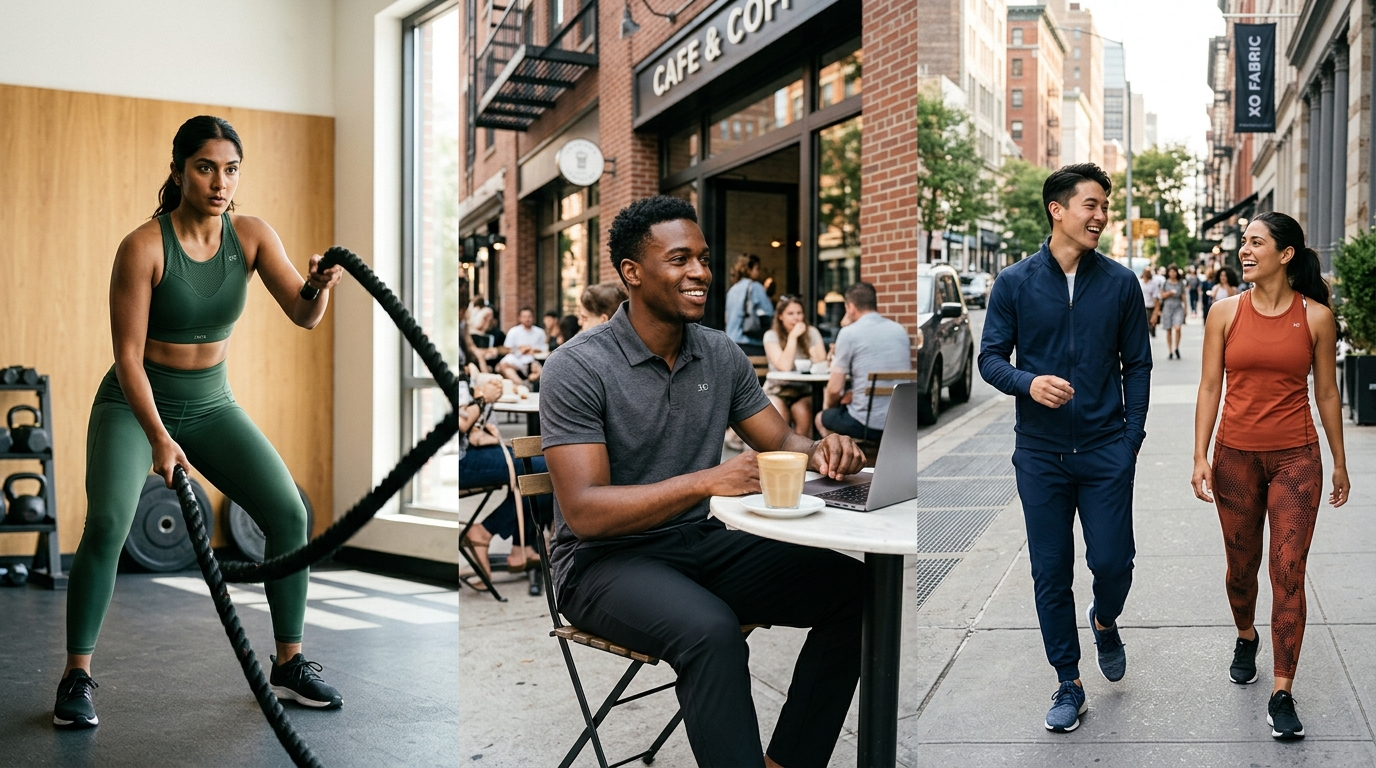
The performance wear market has exploded over the past decade, outpacing traditional apparel growth for seven consecutive years. It’s not just about gym clothes anymore—athleisure has blurred the line between workout gear and everyday style.
Once limited to professional athletes, performance wear now dominates gym bags, office dressers, and weekend wardrobes alike. Global brands and niche DTC players are racing to capture market share.
For textile suppliers, apparel brands, and retailers, understanding this market’s growth trajectory is critical to making informed sourcing, product development, and inventory decisions.
This post breaks down the latest performance wear market size statistics, key consumer segments, regional growth patterns, core growth drivers, and actionable opportunities for brands—plus how specialized fabric suppliers support performance wear manufacturers with technical materials.
The global performance wear market hit $185 billion in 2023, according to Grand View Research. By 2026, that number is projected to reach $220 billion—a 6.2% CAGR that outpaces the broader athletic apparel market (5.1%) and sportswear industry (4.8%).
What’s driving this? Performance fabrics demand. Brands aren’t just looking for “activewear” anymore; they need materials that wick, stretch, recover, and hold color after dozens of washes. That upstream pressure ripples through the entire supply chain.
Long-term projections stay optimistic: $280 billion by 2030, with a steady 6.0% CAGR from 2026 onward. Post-pandemic, 68% of consumers report exercising at the same or higher frequency than in 2021.
Performance wear now accounts for 32% of total apparel market value, up from just 18% in 2015. That shift isn’t slowing down.
Subsegments tell an even more interesting story. Women’s performance wear is growing 2.3x faster than men’s. Compression wear leads with an 8.1% CAGR. And sustainable performance wear? It’s expanding at 12% annually, leaving conventional options behind.
High-performance Moisture-Wicking Fabrics are a top growth driver in the performance wear market, as brands prioritize functional, comfortable materials that keep up with multi-activity lifestyles.
When sourcing for this growth, pay attention to GSM ranges. Lightweight performance knits often sit between 140-180 GSM for base layers. Compression pieces may require 200-240 GSM for adequate support.
Shrinkage control matters too. Aim for under 3% after three wash cycles to maintain fit integrity. Anything higher risks customer returns and brand damage.
| Market Segment | 2023 Value | Projected CAGR |
| Global Performance Wear | $185B | 6.2% |
| Athletic Apparel (broader) | – | 5.1% |
| Sportswear Industry | – | 4.8% |
Understanding who buys performance wear—and why—is half the battle. By usage, the market breaks down cleanly. Professional athletes represent 12% of market value, prioritizing technical performance like compression, recovery, and durability.
Frequent gym-goers (3+ times/week) make up 38%, balancing performance with style. Casual athleisure wearers dominate at 42%, prioritizing comfort and versatility for everyday wear. Senior active individuals (55+) are the fastest-growing demographic at 8% of value.
Demographically, Gen Z and Millennials account for 71% of total performance wear spending. The women’s segment now represents 58% of market value, up from 42% in 2015.
Inclusive sizing is no longer optional. 64% of consumers say they would pay more for plus-size performance wear options. That’s not a niche request anymore—it’s market demand.
Emerging segments are where things get interesting. Adaptive performance wear for people with disabilities is growing 15% annually. Kids’ performance wear sees a 7.2% CAGR, driven by youth sports participation.
And corporate athleisure—performance wear suitable for hybrid work environments—is quietly reshaping office dress codes. I’ve seen clients pivot entire lines to target this segment with subtle styling tweaks.
For compression-focused applications, fabrics like Functional Rib are popular among fitness enthusiasts and professional athletes alike for their supportive, performance-enhancing properties.
Quick note: A recent client struggled with seam slippage on high-stretch compression leggings. The fix wasn’t a new fabric—it was adjusting the stitch length from 2.5mm to 3.2mm and switching to a ballpoint needle. Sometimes the solution is in the sewing, not the sourcing.
When working with high-stretch performance knits, needle selection matters. Use a stretch needle (size 75/11 or 80/12) to prevent skipped stitches. For pressing, avoid high heat on synthetic blends.
Steam at medium temperature with a press cloth to avoid glazing or fiber damage. Small adjustments, big impact on final quality.
North America holds the largest market share: 36% of global performance wear value in 2025. Mature fitness culture, high DTC brand penetration, and an average annual spend per consumer of $210 define this region.
The key growth driver? Sustainable and eco-friendly performance wear adoption. Consumers here are willing to pay more for transparency and recycled content.
Asia-Pacific is the fastest-growing region, with a 9.4% CAGR projected from 2023-2030. China accounts for 52% of regional market value, driven by rising middle class and fitness culture.
India is emerging as a high-growth market with an 11.2% CAGR, fueled by youth demographic and sports participation. Local manufacturing partnerships are key to navigating import duties and lead times.
Europe represents 28% of global market share, focused on regulatory compliance and sustainable fabric innovation. The EU textile strategy is pushing for circular performance wear production by 2030.
Premium performance wear segments are growing at 7.1% CAGR here. Quality expectations are higher, and certifications matter more.
Emerging markets show promise too. Latin America sees a 7.8% CAGR, led by Brazil and Mexico. Middle East & Africa grows at 7.2%, driven by expat fitness communities and luxury activewear demand.
Troubleshooting regional sourcing? If you’re manufacturing in Asia for Western markets, factor in 2-3 weeks for ocean freight. Build in a 5% buffer for customs delays.
For faster turnaround, consider near-shoring options in Turkey or Mexico. Lead times drop to 10-14 days, though fabric costs may run 8-12% higher. It’s a trade-off worth modeling for time-sensitive launches.
The athleisure lifestyle shift is real. 74% of consumers wear performance wear for non-athletic activities at least three times per week. This isn’t a fleeting trend anymore; it’s a permanent lifestyle shift blurring work-leisure boundaries.
Hybrid work models are driving demand for performance wear suitable for both office and gym. Think polished joggers, structured tops with stretch, and neutral color palettes that transition seamlessly.
Fabric technology innovation keeps pushing boundaries. Moisture-wicking, anti-microbial, temperature-regulating, and UV-protective fabric technologies are now table stakes.
Smart fabrics with embedded sensors for performance tracking are emerging as a premium subsegment. Performance fabrics demand is driven by consumer expectation of multi-functional garments.
Sustainability pressures are intensifying. 62% of consumers prioritize eco-friendly performance wear and are willing to pay a 15-20% premium. Recycled polyester and bio-based performance fabrics are growing 14% annually.
Circular fashion initiatives—take-back programs, recyclable fabrics—are gaining traction. Brands ignoring this risk losing shelf space to more conscious competitors.
DTC and social media influence can’t be ignored. DTC performance wear brands are growing three times faster than traditional retail brands. Fitness influencer partnerships drive 42% of Gen Z performance wear purchase decisions.
Social commerce (TikTok Shop, Instagram Checkout) now accounts for 18% of DTC performance wear sales. If your product isn’t “scroll-stopping,” you’re missing a channel.
Advanced Performance Knits support brands developing innovative, tech-forward performance wear lines that meet these evolving consumer expectations.
Case Study: The Compression Legging Dilemma
A mid-sized activewear brand came to the supplier with a problem: their bestselling compression leggings were pilling after 10-12 wears. The fabric was a 220 GSM nylon-spandex blend with a brushed interior. Initial assumption? Upgrade to a higher-denier yarn.
But the mill suggested a different approach. Instead of changing the yarn, they tested three variables: (1) increasing the twist level in the face yarn by 15%, (2) adjusting the knit structure from single jersey to a tighter interlock, and (3) adding a light enzymatic wash post-dyeing to remove loose fibers.
The trial-and-error phase was messy. Option 1 reduced pilling but made the hand feel slightly crisper—customers noticed. Option 2 improved durability but increased fabric weight to 235 GSM, pushing the retail price up $3.
Option 3 worked well for pilling but added two days to lead time. The compromise? Combine a 10% twist increase (not 15%) with the enzymatic wash. The hand feel stayed soft, pilling dropped by 70% in wear tests, and the lead time impact was absorbed into existing production buffers.
The brand launched the “v2” leggings with a “more durable” marketing angle—and saw a 22% repeat purchase rate increase. Sometimes the fix isn’t one big change. It’s layering small, thoughtful adjustments and being willing to test, fail, and iterate.
Pilling happens when short fibers work loose from the yarn structure and tangle into small balls on the fabric surface. In performance knits, high-stretch areas (knees, inner thighs) experience the most friction.
Niche market expansion is where margins hide. Plus-size performance wear represents a $12 billion untapped market opportunity. Adaptive activewear is growing 15% annually with minimal competition.
Eco-friendly performance wear lines command 22% higher profit margins than conventional lines. That premium isn’t just ethical—it’s financially smart.
Supply chain optimization matters more than ever. Private label partnerships with textile suppliers can reduce lead times and costs. Near-shoring production reduces supply chain risk and carbon footprint.
Low MOQ fabric sourcing supports emerging DTC brands that can’t commit to 1000m+ orders. Flexibility here can be a competitive advantage for agile players.
Omnichannel retail strategy blends online convenience with in-store fit experiences. Think pop-up shops, fitness studio partnerships, and virtual try-on technology that reduces return rates by 30%.
Co-branded collections with fitness studios, influencers, and sports leagues create built-in audiences. It’s marketing that feels authentic because it’s embedded in the product.
For compression-focused applications in niche segments, fabrics like Functional Rib offer the supportive, shape-retaining properties that adaptive activewear and professional sports gear demand.
Micro-note: A startup brand launched a plus-size performance line using the same base fabric as their standard sizes but adjusted the pattern grading and added reinforced side seams. Result? 40% higher customer satisfaction scores and a waitlist for the next drop.
When designing for inclusive sizing, seam stabilization becomes critical. For sizes 1X and up, consider adding clear elastic to shoulder and side seams to prevent stretching out.
Use a 3-step zigzag stitch for seam allowances on high-stretch fabrics—it moves with the garment better than a straight stitch. Small technical choices drive big satisfaction gains.
| Opportunity Area | Growth Rate | Key Consideration |
| Plus-Size Performance Wear | $12B untapped | Pattern grading, seam reinforcement |
| Adaptive Activewear | 15% annual growth | Functional closures, easy-on designs |
| Eco-Friendly Lines | 22% higher margins | Recycled content certification, transparent sourcing |
At XO Fabric, specialized mills offer more than just fabric—they offer partnership. Performance Functional Knits provide moisture-wicking, anti-microbial, compression-ready base fabrics.
Moisture-wicking fabrics are engineered for high-intensity activity, with quick-dry and breathable constructions. Functional rib compression fabrics deliver supportive, shape-retaining properties for structured activewear.
Brand support services make a difference. Low MOQs (300m for performance knits) support emerging DTC brands. In-house sampling and lab dip services enable custom color and performance requirements.
Technical consultation helps brands choose the right performance fabrics for their target segment. It’s not just about selling yards—it’s about solving design challenges.
Industry expertise matters. With 20+ years of knit fabric manufacturing experience, integrated production—from knitting to dyeing to finishing—ensures quality control and fast lead times.
The supplier can navigate the technical nuances that generic mills might miss. That depth saves time, reduces sampling rounds, and gets product to market faster.
Explore the full range of Performance Knits designed for the growing performance wear market. Source high-performance Moisture-Wicking Fabrics for your next activewear collection.
When evaluating performance knits, ask for: GSM (typical range 140-240 for performance wear), composition (nylon-spandex blends offer best recovery), shrinkage data (target <3% after 3 washes), and colorfastness ratings (4+ on AATCC scale for active wear).
These specs aren’t just numbers—they predict how the garment will perform in real life. A fabric that looks great on the roll but shrinks 8% after washing will sink a collection.
The performance wear market shows no signs of slowing, driven by athleisure growth, fabric innovation, and shifting consumer lifestyles. Brands that prioritize niche segments, sustainable practices, and omnichannel engagement will capture the most growth.
At the mill, we specialize in high-performance knit fabrics tailored to the performance wear market’s unique demands. From moisture-wicking basics to compression-ready functional rib, we support brands of all sizes with flexible MOQs and expert technical guidance.
Ready to source performance fabrics for your next line? Contact our team to discuss your needs and request physical samples.