Address
Nanlang Industrial Zone, Xingtan Town, Shunde District, Foshan, Guangdong, China
Work Hours
Mon–Fri, 9:00 AM – 6:00 PM (CST/UTC+8). We aim to respond to all inquiries within 48 hours.

Address
Nanlang Industrial Zone, Xingtan Town, Shunde District, Foshan, Guangdong, China
Work Hours
Mon–Fri, 9:00 AM – 6:00 PM (CST/UTC+8). We aim to respond to all inquiries within 48 hours.
Fair Trade Textile Certifications: What They Cover & Who Needs Them. This guide covers key properties, real-world applications, and a practical sourcing checklist for B2B buyers.

A mid-sized German fashion brand lost a €47,000 (£40,000) shipment at Rotterdam port because the Fair Trade claim on its cotton jersey couldn’t be verified with the right documentation. For B2B textile buyers, navigating the alphabet soup of certifications—FT, GOTS, OEKO-TEX, SA8000—isn’t about ethics alone; it’s a risk-management exercise that directly impacts margins, lead times, and market access.
Let’s be honest. Most procurement managers aren’t buying certified textiles purely out of altruism. The business case is concrete and measurable. Consumer demand is a massive driver. Recent surveys indicate that over 60% of consumers in the EU and US are willing to pay a premium for products with verified ethical and sustainable credentials. This isn’t a niche market anymore; it’s the mainstream expectation.
Retailer mandates are the other side of this coin. Major players like H&M, Zara, and Target have made public commitments to sourcing certified supply chains. If you want to be a supplier to these giants, a credible certification isn’t optional—it’s your ticket to the table. Without it, you’re locked out of the largest volume contracts.
Then there’s risk avoidance, which is where the real financial calculus comes in. Non-compliance isn’t just about fines, though those can be steep. It’s about rejected shipments, like our German brand’s Rotterdam nightmare. It’s about brand reputation damage that can take years to rebuild. It’s about losing consumer trust in an age of radical transparency. A certification acts as a verified shield against these operational and reputational risks.
This is where the pedigree of your manufacturing partner becomes critical. For instance, a factory with over two decades of integrated production history, from weaving to finishing, provides a level of traceability and control that simplifies compliance. You can see this operational maturity in established manufacturers who have built their processes around quality and compliance from the ground up, as detailed on their about us page.
Choosing a certification isn’t a one-size-fits-all decision. It’s a strategic choice based on your primary market, product type, and brand narrative. Think of it as a decision matrix. The first axis is scope: are you certifying a product’s chemical safety, the social conditions in a factory, or the entire supply chain’s environmental impact? The second axis is cost and complexity, which can vary wildly.
Here’s a simplified comparison of the major players to frame your thinking:
| Certification | Primary Focus | Typical Audit Cost Range | Ideal For |
|---|---|---|---|
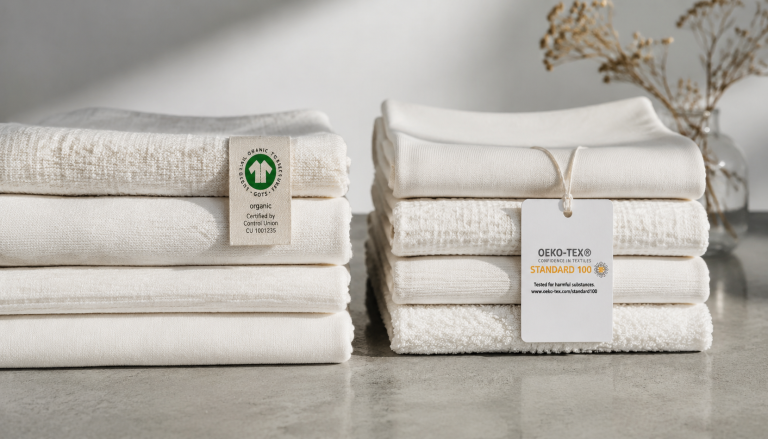
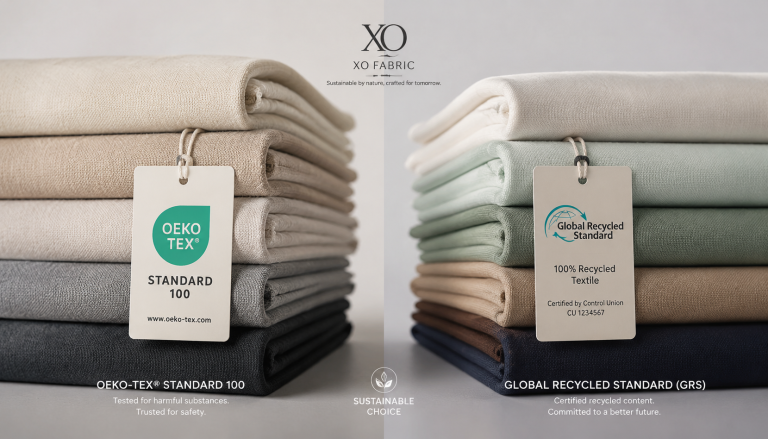
| OEKO-TEX Standard 100 | Chemical safety (product) | $800 – $2,500 | All textiles, especially those touching skin. |
| GOTS | Organic fiber & social | $3,000 – $10,000+ | Brands marketing organic cotton/linen. |
| SA8000 | Social accountability | $5,000 – $15,000+ | Large retailers focused on labor practices. |
| Fair Trade (Movement/Textile) | Social, environmental, fair price | Varies; often percentage of sales | Co-ops, brands with specific ethical narrative. |
Let’s contrast two heavyweights: Fair Trade Textiles and GOTS. The Fairtrade Textile Standard is deeply focused on the social and economic fabric of production. It mandates fair wages, safe working conditions, and the payment of a Fairtrade Premium to workers for community projects. Its traceability requirements follow the entire chain of custody, from raw cotton to the final garment. The Fair Trade logo on products signals this comprehensive social commitment.
GOTS, on the other hand, as defined in its Version 7.0 implementation manual, starts with the material. It requires that textiles be made from certified organic natural fibers. Its social criteria are robust, often aligning with SA8000 principles, but the core driver is the environmental integrity of the fiber and its processing. A key difference is in chemical inputs; GOTS has a stringent positive list of approved chemicals.
This brings us to a critical point for material-specific buyers. For certain product categories, like flocked or printed fabrics, product-level chemical compliance isn’t just a nice-to-have—it’s a mandatory baseline. The adhesives and fibers used in flocked and printed fabrics must pass rigorous testing like OEKO-TEX before you even begin to consider social or supply-chain certifications. You can’t build a house on a shaky foundation.
A supplier quotes 15% more for “certified goods.” Is that markup justified? Often, yes, and the reasons are buried in what I call the “hidden ledger.” The certificate fee itself is just the tip of the iceberg. The real costs are internal.
First, there’s the factory preparation. This involves a complete documentation overhaul—rewriting SOPs, implementing new chemical management systems, and often, adjusting wage structures to meet fair wage benchmarks. This isn’t a weekend project; it requires dedicated staff and sometimes external consultants. Then come the pre-audit costs, where a consultant identifies gaps before the official auditor arrives. Corrective actions from this phase can mean capital expenditure on new wastewater treatment or ventilation systems.
The timeline is a major hidden cost. A single-site OEKO-TEX product certification can be achieved in 4-8 weeks. But for a full supply-chain traceability certification like Fair Trade Textiles, you’re looking at 6-12 months, sometimes longer. This is the “lead time tax.” It directly impacts your product launch calendar and cash flow. When discussing these timelines and material options, it’s invaluable to consult with an established manufacturer who has navigated these processes for over two decades to get a realistic preview. You can start that conversation here.
Let’s address the elephant in the room. Certification systems aren’t perfect. A common criticism is the “premium absorption” problem. Does the Fairtrade premium paid by the brand actually reach the farmer or factory worker? Or is it siphoned off by middlemen? This is a valid concern for any procurement manager building a fair trade certification checklist.
Another pitfall is complexity bias. The sheer volume of paperwork and audit requirements can disadvantage smaller, artisanal factories that might have excellent practices but lack the administrative capacity to prove it on paper. This can inadvertently centralize certified supply chains among large, well-resourced mills, limiting buyer options.
So, how do you practice due diligence? Don’t just ask for the certificate PDF. Dig deeper.
Risk Signal 1: A supplier presents a certificate for an unrelated product line. If you’re buying polyester fleece, their certificate for organic cotton weaving is meaningless.
Risk Signal 2: The certificate is about to expire with no renewal plan visible. This indicates a lack of ongoing commitment.
Risk Signal 3: The auditor is unknown or not accredited by a body like Social Accountability International (SAI) for SA8000. Always verify the auditor’s credentials.
You need to understand the exact scope. Does the certificate cover the dyeing mill, or just the fabric weaving stage? A broken chain of custody, as one European retailer learned the hard way, can render the entire claim invalid.
Case Study: The Dutch Retailer’s Fair Trade Cotton T-Shirt
A Dutch retailer mandated Fair Trade cotton for a new t-shirt line, believing it a straightforward swap in their existing supply chain in India. Their Tier-1 weaving supplier had the Fair Trade certificate. However, their primary dye house (Tier-2) was not certified. This created a broken chain of custody. Re-sourcing a certified dye house added 8 weeks and a 22% cost increase.
The supplier attempted to “fast-track” the dye house audit by hiring a local consultant for documentation. But the actual facility failed the on-site test due to inadequate chemical management and wastewater treatment. The retailer also discovered their preferred fabric weight of 150 Fabric GSM Calculator (4.4 oz/yd²) was not available from the certified dye house’s standard menu.
The compromise was painful but practical. The retailer accepted a 4-week delay and an 18% cost hike. They chose a slightly different fabric construction, a 160 gsm (4.7 oz/yd²) option, from the certified dye house and agreed to a longer, phased audit plan for the dye house itself. The final product carried the Fair Trade mark but required revised hang-tag marketing to explain the slight material change. This case underscores that certification is a supply chain project, not a checkbox.
Armed with this knowledge, how do you operationalize it? The next step is creating a robust supplier questionnaire or RFQ that separates real capability from paper claims. Your questions need to be surgical.
Move beyond “Do you have X certification?” Ask instead: “Is the certificate for your company entity or the specific production line and output I’m ordering?” The latter is what matters. Request the scope certificate, which details exactly which processes and sites are covered. Ask for their recertification schedule and the name of their auditing body.
Before you even visit, request these documents. They reveal a supplier’s transparency and readiness:
Certification impacts logistics too. Fair Trade labeling has specific requirements for hang tags and packaging. You must ensure the certificate’s chain of custody is maintained in shipping documents, with clear batch numbering that links back to the certified production run. This traceability is what port authorities, like the one in Rotterdam, will scrutinize.
When discussing fabric specifications and tolerances in your RFQs, precision is key. For technical discussions around yarn counts and fabric weights, having a reliable conversion tool is invaluable. You can access a free, practical yarn count converter here to ensure your specifications are unambiguous from the start.
Let’s tackle some high-intent questions directly, cutting through the generic advice.
There is no universal “best.” The right choice is a function of your primary market (EU vs. US), product type (raw fiber vs. finished garment), and brand narrative. If your story is about chemical safety for baby clothes, OEKO-TEX is your baseline. If it’s about organic cotton and full supply chain ethics, GOTS is the gold standard. If the core of your brand is social justice and fair wages for workers, then the Fairtrade Textile Standard is your north star. It’s a strategic alignment, not a ranking.
Realistically, budget 3 to 12 months. A single-site OEKO-TEX product certification is the fastest, often 4-8 weeks. A multi-tier, supply-chain-level certification like GOTS or Fair Trade Textiles is the slowest, typically 6-12 months, due to the need to audit and verify every link in your chain, from farm to factory.
Both models exist. You can certify a raw material (like organic cotton fiber) or a finished product (like a dyed and finished fabric). The key is integrated control. A manufacturer that controls the process from weaving to dyeing to finishing in-house can streamline the material certification path significantly, as there are fewer external links in the chain to verify. This is the advantage of a full mill.
Beyond the price premium, it’s the internal compliance overhead. Someone on your team must manage the documentation, audit scheduling, and ongoing monitoring. It also can mean a loss of supplier flexibility. Once you commit to a certified supplier pool, switching becomes more complex and costly, as you have to re-verify the entire new chain. For a deeper dive into these technical and commercial considerations, the knowledge hub offers extensive guides.
Navigating the world of textile certifications is complex, but it’s the new cost of doing business in a conscious market. The goal isn’t to collect the most badges, but to build a transparent, resilient supply chain that aligns with your brand’s values and your customers’ expectations. Start with a clear understanding of why you need a certification—market access, risk mitigation, or storytelling. Then, use the decision matrix to choose the right tool for the job.
Remember, your supplier is your partner in this journey. Their capability, transparency, and history are as important as the certificate on the wall. Do your due diligence, ask the hard questions, and build relationships based on verified trust, not just claims. The shipment you save from being stuck at port might just be your own.