Address
Nanlang Industrial Zone, Xingtan Town, Shunde District, Foshan, Guangdong, China
Work Hours
Mon–Fri, 9:00 AM – 6:00 PM (CST/UTC+8). We aim to respond to all inquiries within 48 hours.

Address
Nanlang Industrial Zone, Xingtan Town, Shunde District, Foshan, Guangdong, China
Work Hours
Mon–Fri, 9:00 AM – 6:00 PM (CST/UTC+8). We aim to respond to all inquiries within 48 hours.
Flocked Fabric for Upholstery & Apparel: A Complete Guide. This guide covers key properties, real-world applications, and a practical sourcing checklist for B2B buyers.
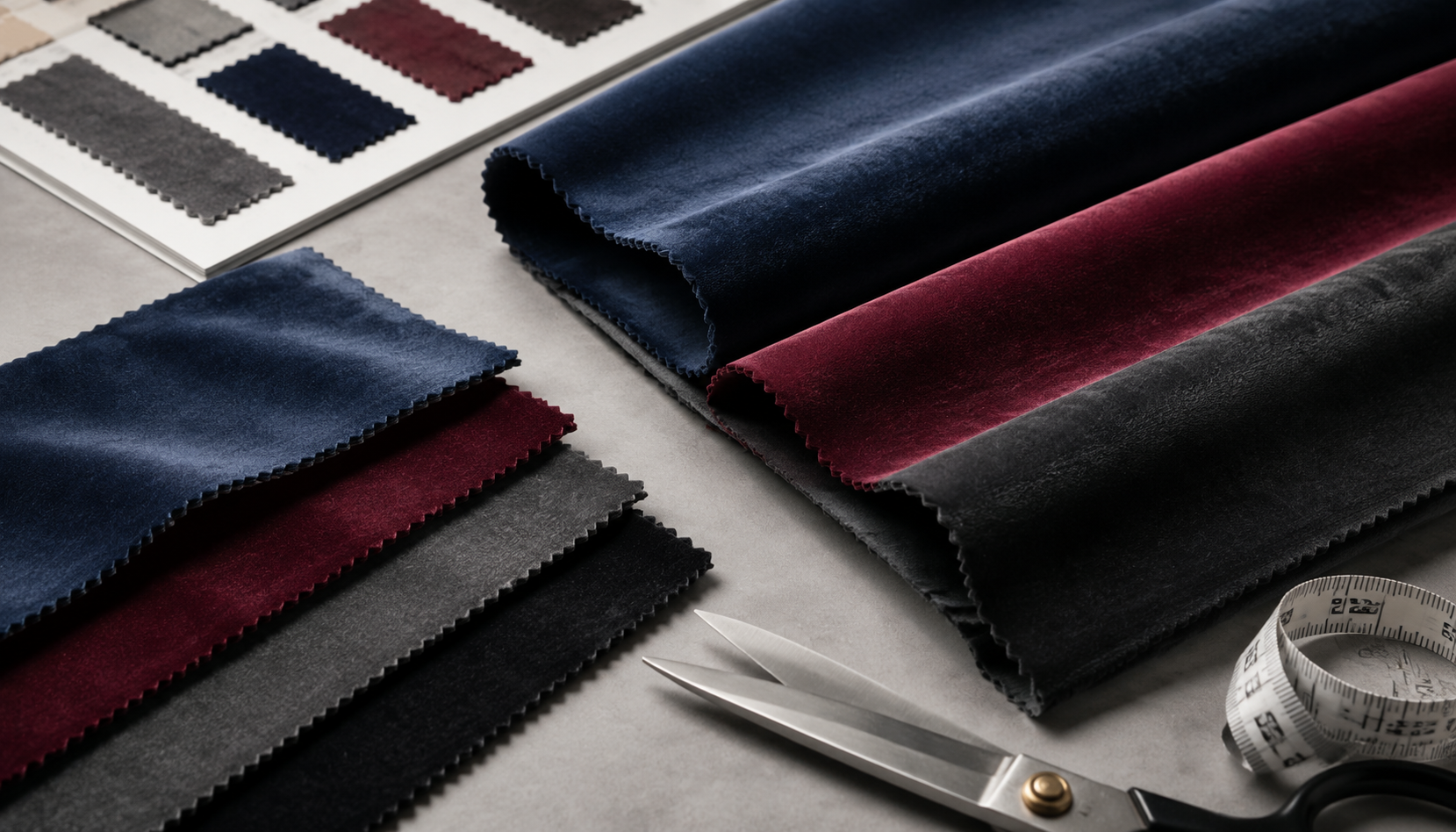
When a furniture maker first samples a flocked fabric, expecting the plush depth of traditional velvet, they often find something unexpectedly different—lighter, smoother, and sometimes less resilient than anticipated. This gap between expectation and reality is where most sourcing missteps begin. The core issue isn’t quality, but a fundamental misunderstanding of what flocked fabric truly is: not a woven textile, but a surface treatment where microscopic fibers are electrostatically implanted into a adhesive-coated base. Grasping this distinction is the first, critical step toward making informed procurement decisions for your next upholstery or apparel project.
At its heart, flocked fabric is an engineered composite. A base material—often a polyester knit, cotton, or even a non-woven—is coated with a specialized adhesive. This prepared substrate then passes through an electrostatic field. Here, tiny, precisely cut fibers (the flock) are charged and propelled vertically, embedding themselves into the adhesive like a dense forest of microscopic pillars. This process creates a uniform, velvet-like surface from almost any base fabric.
The result is a material with distinct physical characteristics that set it apart from traditional woven textiles:
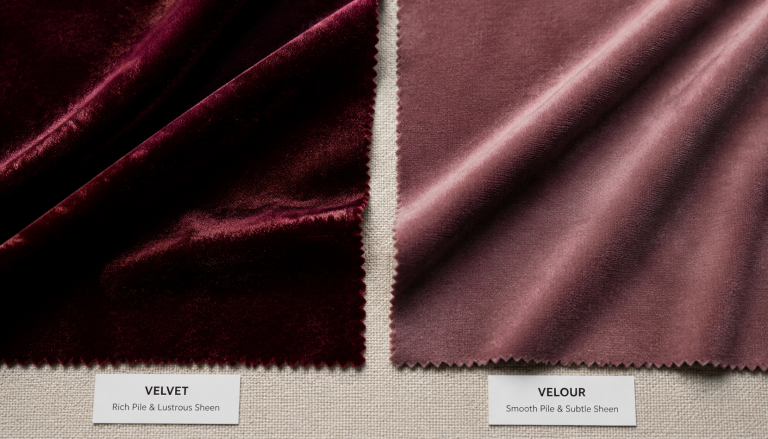
This is where market confusion often starts. The term “flocked velvet” is widely used, but it’s a misnomer that conflates two different worlds. True, traditional velvet is a woven fabric created on a specialized loom where extra warp yarns are woven in, then cut to form a dense, luxurious pile. Flocked velvet fabric, on the other hand, is almost always a knit or woven base that has undergone the electrostatic flocking process to mimic the look and feel of velvet.
The differences are tangible. A traditional woven velvet has a deeper, more fluid drape and a distinctive, warm hand feel derived from its yarn construction. A high-quality flocked version can achieve a similar visual density and a silky-smooth touch, but its drape is often influenced by the stiffness of the adhesive layer and the base fabric. The cost structure and production scalability are worlds apart, which directly impacts your sourcing strategy.
| Dimension | Flocked Velvet | Traditional Woven Velvet |
|---|---|---|
| Core Process | Electrostatic flocking onto a base | Woven on a loom with cut pile |
| Hand Feel & Drape | Silky, uniform; drape depends on base | Plush, warm, fluid drape |
| Cost & MOQ | Generally lower; flexible MOQs | Higher; often larger MOQs |
| Typical Durability | Variable (20k-50k+ Martindale cycles) | Variable (15k-40k+ Martindale cycles) |
For a concrete example of modern flocked velvet specifications, you can examine the physical parameters of products like those in our flocked printed fabrics category, which detail weight, width, and abrasion ratings.
Understanding the production journey demystifies quality variations. The process is a tightly controlled sequence:
Three technical levers separate a premium flocked fabric from a subpar one. First is flock fiber length, typically ranging from 0.5 mm to 3.0 mm. Shorter piles (0.5–1.0 mm) yield a sleek, suede-like finish, while longer piles (2.0+ mm) create a deeper, more velvety texture. Second is flock density, measured in fibers per square centimeter. A density of 15,000–25,000 fibers/cm² is common for upholstery, directly impacting the fabric’s opacity and tactile richness.
The third, and arguably most critical, variable is the adhesive system. The choice of velvet flocking powder binder—be it acrylic, polyurethane (PU), or ethylene-vinyl acetate (EVA)—dictates the fabric’s resilience. A cheap acrylic adhesive might soften or degrade under heat or repeated stress, causing fiber loss. A high-performance PU adhesive, while more expensive, provides superior bonding strength, flexibility, and wash resistance, directly translating to higher Martindale abrasion test results.
Where flocked fabric truly shines is in its sensory appeal. The electrostatic process creates a surface that is remarkably uniform, resulting in a silky, consistent hand feel that can be difficult to achieve with woven textiles. The vertical fiber alignment also yields exceptional color depth and vibrancy. Dyes penetrate the fibers evenly, producing a rich, matte or lustrous finish that resists the “washed-out” look sometimes seen in printed fabrics. This makes it a favorite for high-end retail displays, luxury packaging, and statement furniture pieces where visual impact is paramount.
For B2B applications, aesthetics are only half the story. Performance under stress is non-negotiable. The key benchmarks for flocked velvet upholstery fabric revolve around three pillars: abrasion resistance, colorfastness, and flammability.
Abrasion resistance is measured using the Martindale test (ISO 12947), where a fabric is rubbed against a standard wool abradant. For heavy-duty contract furniture (e.g., hotel lobbies, airport seating), a minimum of 20,000 cycles is standard, with premium grades exceeding 50,000. Colorfastness to light, per ISO 105-B02, should be ≥ Grade 4 for any application with sun exposure.
Flammability requirements vary sharply by market and end-use. Upholstered furniture in the UK must comply with BS 5852, while the US market often references California Technical Bulletin 117-2013. Automotive interiors face even stricter OEM standards.
| Application Scenario | Minimum Abrasion (Martindale) | Flammability Standard | Colorfastness to Light (Min.) |
|---|---|---|---|
| Residential Sofa | 15,000 cycles | BS 5852 / CA TB 117-2013 | Grade 4 |
| Contract Hotel Chair | 30,000 cycles | BS 5852 Crib 5 | Grade 5 |
| Automotive Seat Cover | 50,000 cycles | FMVSS 302 / OEM specific (e.g., GMW 14334) | Grade 6 |
The most common flocked fabric upholstery uses are found in sofas, accent chairs, headboards, and decorative cushions. In a residential setting, the appeal is primarily aesthetic and tactile—the fabric offers a luxurious look at a more accessible price point than many woven velvets. In contract environments like boutique hotels or upscale restaurants, the material’s uniform surface makes it easier to clean and maintain than textured alternatives, a practical advantage in high-traffic areas.
Here, the demands escalate dramatically. Flocked fabrics are used for car seats, door panels, headliners, and even steering wheel covers. The performance criteria are stringent:
Meeting these requires specialized adhesive formulations and often involves rigorous testing to OEM specifications like those from General Motors. If you’re exploring this sector, you can browse more interior fabric options that are engineered for such demanding environments.
Beyond interiors, flocked fabric finds creative expression in apparel and accessories. It’s used for structured jackets, eveningwear, and costume design where a velvet effect is desired without the weight or drape challenges of woven velvet. In accessories, it serves as a lightweight, durable alternative to suede for shoes, bags, and belts, offering consistent color and easier care. The design flexibility is a major draw—patterns can be flocked onto the base, creating intricate designs that are impossible with traditional weaving.
This isn’t a question of which is “better,” but which is fit for purpose. The decision hinges on a matrix of factors. Flocked fabric typically offers a shorter production lead time, greater design flexibility for patterns and colors, and a more competitive price point, especially for mid-range to high-end imitation velvet effects. Woven velvet commands a premium for its unparalleled depth, heritage, and fluid drape.
For a deeper dive into the characteristics of traditional options, our velvet fabric guide provides extensive background. The table below simplifies the core trade-offs:
| Decision Factor | Flocked Velvet | Woven Velvet | Best For |
|---|---|---|---|
| Cost | Lower to Mid-range | Mid-range to High | Budget-conscious projects seeking a velvet look |
| Hand & Drape | Silky, uniform; can be stiffer | Plush, fluid, warm | Projects prioritizing authentic tactile luxury |
| Design Flexibility | Excellent for patterns & vibrant colors | Limited to yarn-dyed patterns | Complex logos, graphic designs, custom colors |
| Production Lead Time | Shorter (25-35 days custom) | Longer (40-60 days custom) | Projects with tight timelines |
Several myths persist in the market that can lead to poor sourcing decisions:
Before you request a quote, arm yourself with these technical queries to separate capable manufacturers from mere traders:
Never skip the hands-on evaluation. When samples arrive, conduct these simple tests:
A mid-sized European furniture manufacturer aimed to reduce material costs by 30% on a new sofa line, substituting traditional woven velvet with a flocked alternative. Their first supplier (Supplier A) provided a sample that felt luxurious but failed Martindale testing at just 8,000 cycles—far below the contract’s 25,000-cycle requirement. The culprit was a cheap acrylic adhesive that degraded under the test’s friction and heat.
Supplier B offered a high-performance version, but its cost was nearly identical to woven velvet, negating the savings. The breakthrough came from a collaborative, iterative process with a technical supplier. They adjusted two variables: first, reducing the flock length from 1.5 mm to 1.0 mm to decrease leverage on the fibers, and second, insisting on a polyurethane adhesive. This pushed abrasion resistance to 18,000 cycles—better, but still short.
The final compromise involved increasing the flock density by 15%, which raised the cost by 8% but finally achieved 26,000 Martindale cycles. The total material cost ended up 18% lower than the original woven velvet. The trade-off? The hand feel was slightly less plush than the initial sample. This journey underscores that optimizing flocked fabric is a balancing act between cost, durability, and tactile quality, requiring clear specifications and a technically proficient partner.
Flocked fabric is used across a wide spectrum of applications. Its primary flocked fabric upholstery uses include residential and contract furniture (sofas, chairs, headboards), automotive interiors (seats, door panels), and fashion (coats, dresses, accessories). It’s chosen for its ability to deliver a velvet-like aesthetic with enhanced design flexibility and often more favorable cost and production timelines.
The fundamental difference lies in the manufacturing process. Flocked fabric is created by electrostatically implanting short fibers into an adhesive-coated base material. Traditional velvet is a woven fabric where an extra set of warp yarns is woven in and then cut to form a pile. This results in differences in hand feel, drape, cost structure, and production scalability.
Velvet, including both traditional woven and high-quality flocked varieties, is synonymous with luxury and is used in high-end furniture upholstery, elegant curtains and drapes, evening and stage costumes, footwear, and luxury packaging. Its rich texture and light-absorbing properties create a sense of depth and opulence.
For B2B buyers, surplus fabric has several practical uses. It can be fashioned into swatch books for sales teams, used to produce small accessories like cushion covers or storage boxes, reserved as material for ongoing quality control tests (abrasion, colorfastness), or discussed with your supplier for potential buyback or credit against future orders.
Selecting the right flocked fabric is less about chasing the lowest price and more about understanding the engineering behind the material. It demands a clear-eyed assessment of your project’s performance requirements—be it abrasion cycles for a hotel lobby sofa or UV resistance for automotive interiors—and partnering with a supplier who can transparently discuss the technical trade-offs involved in meeting those specs. The most successful projects we see are those where buyers move beyond the surface appeal and engage in detailed technical dialogues, ensuring the final product delivers on both aesthetics and longevity. If you have a specific application in mind and need guidance on navigating these technical parameters, our engineering team is available to discuss your project requirements and provide tailored samples for evaluation. You can initiate that conversation through our contact page.